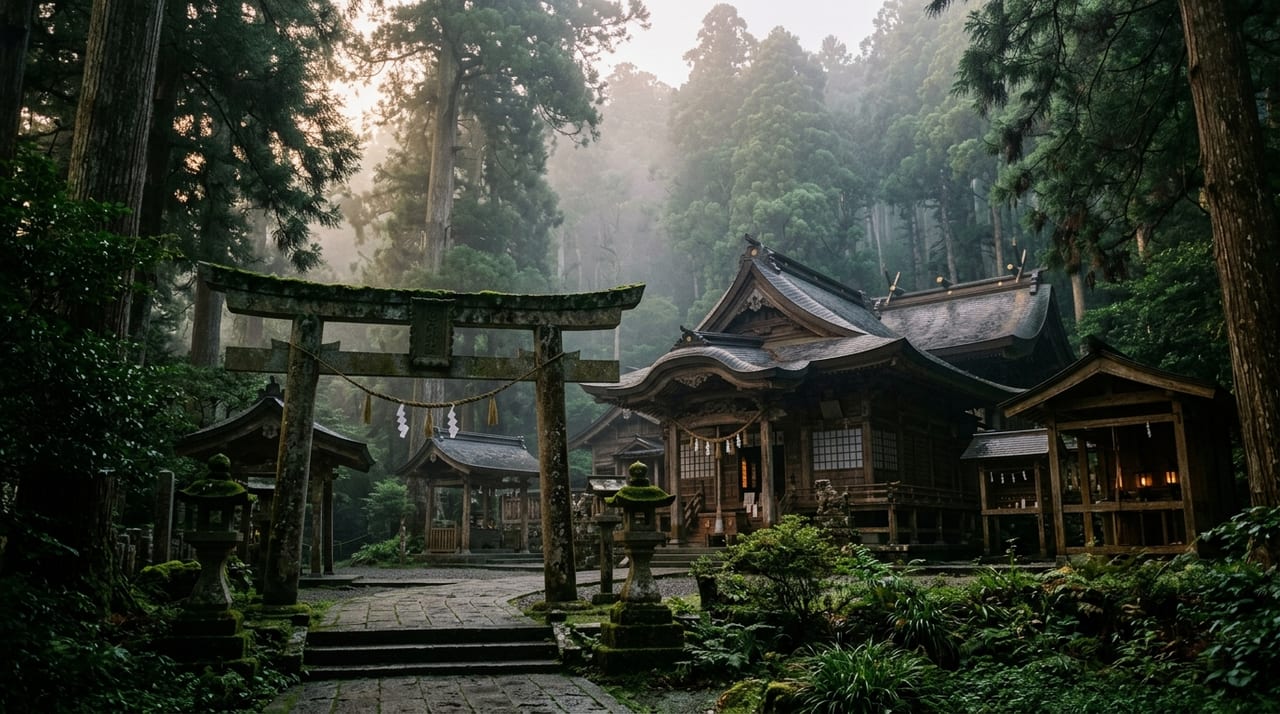
 * Image is for illustrative purposes only.
Imperial Household and the Tradition of Sacred Swords
皇室と御剣の系譜
The Three Sacred Treasures (Imperial Regalia), centered on the Kusanagi no Tsurugi, are the basis of Japanese imperial authority and the most important swords embodying the legitimacy of the emperor in material form. The gyobutsu (Imperial collection) culture, in which successive emperors dedicated and collected famous swords, the custom of dedicating swords to shrines (hōnōtō), and Emperor Meiji's love of swords have together formed the core of Japanese cultural history: the deep connection between swords and imperial authority.
Description
Three Sacred Treasures and the Kusanagi no Tsurugi
The Three Sacred Treasures (mikusa no kandakara), which symbolize the legitimacy of the Japanese imperial house, consist of three items: the Yata no Kagami, the magatama, and the Kusanagi no Tsurugi. The Kusanagi no Tsurugi is said to originate from the sword that Susanoo no Mikoto obtained when he slew the Yamata no Orochi, as recorded in the Kojiki and the Nihon Shoki. It is said to have received its name because Yamato Takeru no Mikoto cut down grass with it during his eastern expedition. The sword is currently enshrined as the goshintai (sacred object of worship) at Atsuta Jingū in Nagoya, Aichi Prefecture, and the actual object is a sacred item that is never made public. The existence of the Three Sacred Treasures shows that the Japanese sword (or the sword that preceded it) is inseparably bound to the very basis of the imperial system, and it forms the ultimate basis for the concept of the sanctity of swords.
Imperial Succession and the Contest for the Regalia
Possession of the Three Sacred Treasures has long been regarded as linked to the legitimacy of imperial succession. During the Genpei War, the treasure sword sank into the sea at Dan-no-ura together with Emperor Antoku's drowning. In the conflict between the Northern and Southern Courts (Emperor Go-Daigo and Ashikaga Takauji), the location of the Regalia became a point of contention over the legitimacy of both courts. The reunification of the Northern and Southern Courts in Meitoku 3 (1392) also made the transfer of the Regalia its primary condition.
Imperial Dedication of Swords
Over successive generations, the imperial house has dedicated fine swords to major shrines, including Ise Jingū, Kasuga Taisha, and Isonokami Jingū. The custom of hōnōtō (dedicated swords) has continued from ancient times to the present, and many dedicated swords are kept in the treasure houses of each shrine. In particular, many Nara-period daitō (large swords) have been transmitted to the Shōsōin (Nara), conveying the technical standards of that era to the present day. Dedicated swords from the Heian and Kamakura periods onward are often masterpieces made by the finest smiths of their time, and many shrine-dedicated swords are included among works designated today as National Treasures or Important Cultural Properties.
Emperor Meiji and the Promotion of Swords
Although the Haitōrei (Sword Abolition Edict of 1876, Dajōkan Proclamation No. 38) was issued during the reign of Emperor Meiji (reign 1867–1912), the emperor himself deeply loved the Japanese sword. Emperor Meiji collected famous swords as part of the gyobutsu (Imperial collection), and in Meiji 39 (1906), Gassan Sadakazu was appointed an Imperial Household Artist (Teishitsu Gigeiin). Emperor Meiji's love of swords held symbolic significance amid the crisis of the 'social end of the sword' brought on by the Haitōrei, as the imperial house functioned as the guardian of sword culture.
Shōwa-Era Smiths and Shrine Sacred Treasures
In the Shōwa period, Living National Treasures Miyairi Akihira (later Miyairi Yukihira), Sumitani Masamine, and Amata Akitsugu, among others, made tachi dedicated as shinpō (sacred treasures) for the Ise Jingū Shikinen Sengū. Even during the postwar period, when sword-making was prohibited, Miyairi Akihira forged sacred swords for the Shikinen Sengū as a special exception. The production of the shrine's sacred treasures played a role symbolizing the continuation of sword culture in the postwar era.
Significance of the Tenran
Tenran (imperial viewing), the occasions on which the emperor personally viewed swords, have often held a special meaning in the history of the sword. Such occasions demonstrate the connection between swords and the imperial house, and they symbolize the cultural role of the imperial house in Japanese sword culture.
Characteristics of This Era
- Three Sacred Treasures (Kusanagi no Tsurugi): the sacred sword that forms the basis of Japanese imperial authority. Its main body is enshrined at Atsuta Jingū as a shintai (sacred object of worship) and is never made public. It is the ultimate basis for the concept of the sanctity of the Japanese sword
- The Genpei and Northern and Southern Courts 'contest for the Regalia': possession of the Three Sacred Treasures functioned as material proof of the legitimacy of imperial succession. It demonstrates, in Japanese history, the political and theological role of swords
- Shōsōin daitō: Nara-period daitō have been transmitted as extant heirlooms, preserving the technology of that era. This is the prototype of sword preservation by the imperial house
- The contradiction between Emperor Meiji's love of swords and the Haitōrei: the image of Emperor Meiji, who collected famous swords while issuing the Haitōrei, symbolizes modern Japan's sword policy of simultaneously promoting social prohibition and cultural property protection
- Cultural significance of tenran: the emperor's viewing of swords demonstrates the connection between swords and the imperial house and symbolizes the imperial house's cultural role in sword culture