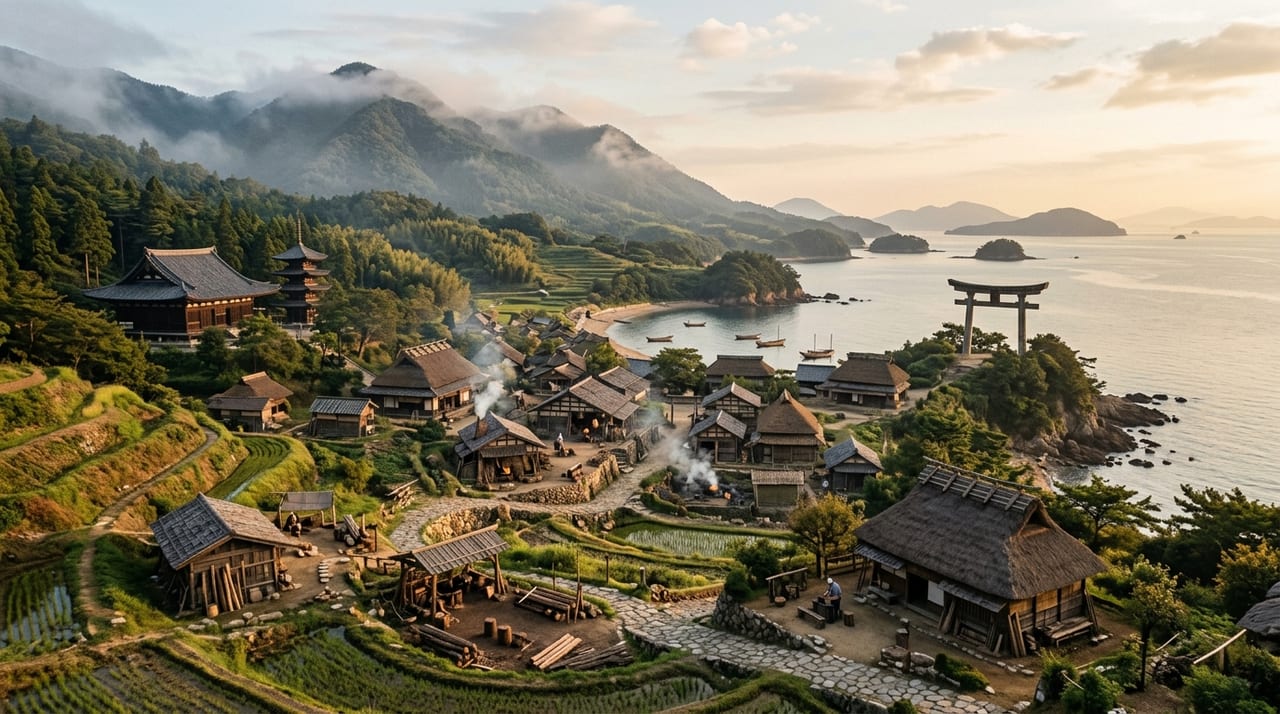
 * Image is for illustrative purposes only.
Hoei Era
宝永(ほうえい)
Hōei (1704–1711) was an era falling between Genroku and Shōtoku, during the reigns of Emperor Higashiyama and Emperor Nakamikado, under shoguns Tokugawa Tsunayoshi and Ienobu. Ikkanshi Tadatsuna, son of the first-generation Awataguchi Ōminokami Tadatsuna, was a leading Osaka shintō smith distinguished for personally carving his own horimono and signing his blades "dōsaku" (carved by the same hand). An Important Cultural Property tachi in the Kyoto National Museum bears the date inscription "Hōei 6, eighth month" (1709).
Description
Placing the Hōei Era
Hōei (1704–1711) fell between Genroku and Shōtoku, spanning the succession from Emperor Higashiyama to Nakamikado and shogun Tsunayoshi to Ienobu. In Hōei 4 (1707), the Hōei earthquake struck, followed by the great Hōei eruption of Mount Fuji, whose ash reportedly reached Edo. As peace endured, sword demand gradually declined — though exceptionally skilled smiths kept working in Osaka.
Ikkanshi Tadatsuna's Self-Carved Horimono
Ikkanshi Tadatsuna, son of the first-generation Awataguchi Tadatsuna, was among Osaka shintō's leading masters. Rather than commissioning a specialist engraver, he personally carved the horimono on his own blades, signing them "dōsaku" to show the same hand both forged and engraved the piece. His kurikara dragon and Sanskrit-character carvings are prized as designs integrated with the blade itself.
The Hōei 6 Tachi and Cultural-Property Status
A tachi in the Kyoto National Museum, inscribed "Hōei 6, eighth month" (1709), is an Important Cultural Property; another by the same smith, formerly a National Treasure, survives at Kunizamahiko Shrine in Tokushima — works attesting to his productive peak during Hōei.
Achievement Amid Disaster and Quiet Demand
Even as earthquakes and Fuji's eruption drew society toward recovery, Tadatsuna's Hōei-era work stands as a high point of Osaka shintō fusing forging technique with sculptural artistry.
Characteristics of This Era
- Hōei (1704–1711) sits between Genroku and Shōtoku, a transitional era as prolonged peace gradually softened sword demand
- Ikkanshi Tadatsuna, son of the first-generation Awataguchi Tadatsuna, was among the leading Osaka shintō smiths
- He personally carved his own horimono rather than commissioning a specialist, signing blades "dōsaku" or "horimono dōsaku"
- A tachi dated "Hōei 6, eighth month" in the Kyoto National Museum is an Important Cultural Property
- Another tachi by the same smith, formerly a National Treasure, survives at Kunizamahiko Shrine in Tokushima
- Represents a high point of Osaka shintō fusing forging technique with sculptural artistry