The History and Types of Naginata: The Deep Bond Between Women Warriors and the Japanese Polearm
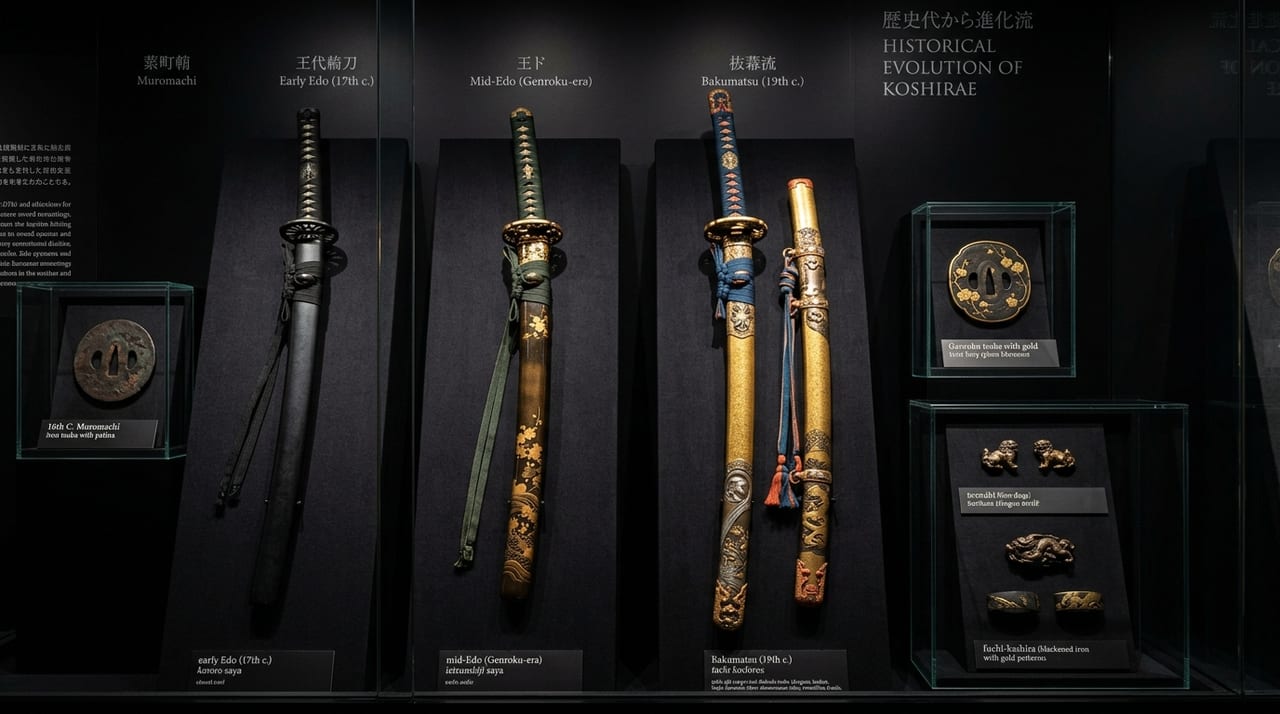 * Image is for illustrative purposes only.
Table of Contents
What is a Naginata — A Traditional Japanese Long-Handled Weapon Comprising Blade and Shaft
The naginata (薙刀) is a traditional Japanese long-handled weapon that combines a curved blade (the cutting edge) and a long shaft. In modern times, according to statistics from the All Japan Naginata Federation, there are approximately 50,000 competitors, making it a relatively popular martial art within Japanese martial traditions.
The blade is crafted using the same forging techniques as Japanese swords (tachi and uchigatana), making it a sister weapon to Japanese blades. However, due to significant differences in purpose and form, it is classified in sword law not as a "blade" but specifically as a "naginata."
Origins of the Naginata — When Did It First Appear?
The Heian Period: An Anti-Mounted Warrior Weapon
The naginata is said to have originated in the Heian period (794–1185). The term derives from the verb "nagu" (薙ぐ), meaning "to fell an enemy by sweeping horizontally," a term that reflects the weapon's characteristic motion.
Warfare during the Heian period centered on mounted archery and cavalry combat, but for infantry to counter mounted warriors, long-handled weapons proved effective. The naginata was particularly suited to targeting a horse's legs, becoming the principal weapon of "anti-cavalry tactics" designed to dismount mounted warriors.
The Weapon of Sohei (Warrior Monks)
From the late Heian period through the Kamakura era, warrior monks (sohei) of major temples such as Enryaku-ji (Mount Hiei) and Kofuku-ji are recorded as favoring the naginata. The image of the "fierce priest wielding a great naginata" became a stock phrase when describing warrior monks of that era.
The naginata's specialization in "leg-sweeping" strikes could also reflect how sohei, clothed in long-hemmed priestly robes, found the weapon ideal for striking near ground level.
Historical Evolution of the Naginata — Changes in Its Role Over Time
Kamakura Through Nanboku-cho Period: Its Peak as a Battle Weapon
From the Kamakura period through the Nanboku-cho period (14th century), the naginata represented the peak of its prominence as a primary weapon of war. "Tachi and naginata" stood as the two great melee weapons of samurai.
During Nanboku-cho conflicts, the importance of infantry (kachi) increased, and scenes of naginata-wielding soldiers engaging mounted warriors became more common. Naginata of this era were typically large, with shafts measuring 1.5 to 2 meters or longer.
Late Muromachi Through Sengoku Period: The Transition to Uchigatana and Spears
From the mid-Muromachi period onward, the nature of combat changed. As heavily armored mounted warriors became less common and group combat centered on ashigaru (light infantry) grew dominant, the "yari" (spear) began to eclipse the naginata as the primary long-handled weapon.
The spear specialized in thrusting attacks more effectively than the naginata and proved better suited for use in dense infantry formations. It also offered the advantage of being simpler to handle and usable with minimal training.
As this shift occurred, the naginata gradually lost its status as a primary battle weapon and transitioned to a role as a personal martial art and self-defense weapon.
Edo Period: Symbol of Women's Martial Arts
During the peaceful Edo period (1603–1868), the naginata became established as a martial art for samurai women. The notion of "swords for men, naginata for women" became widespread in samurai society, and it became customary for samurai daughters to bring a naginata as part of their dowry when they married.
Naginata of this era were not for actual combat but were positioned as "tools for martial training, etiquette, and spiritual cultivation." Various schools of naginata technique were established, and the foundations of naginata-do that continue to this day were created.
Many Edo-period naginata were actually "naginata-naoshi" — old combat naginata modified to be shorter — and served as wedding furnishings and self-defense weapons.
Principal Types and Morphological Features of the Naginata
O-naginata (Large Naginata)
The oldest form used in warfare during the Heian and Kamakura periods. The blade is long (over 60–90 cm), and the shaft is also lengthy (1.5 to 2 meters or more). Few survive today, but their form can be confirmed through museum displays and picture scrolls.
Ko-naginata (Small Naginata)
A miniaturized naginata developed during the Edo period for samurai women. The blade is approximately 40–60 cm, with a shorter shaft. Its form was better suited to "portability, indoor self-defense, and martial practice" than to actual combat.
Choto (Long Sword/Naginata)
The term "choto" (長刀) is sometimes used interchangeably with naginata, but strictly speaking, "naginata" and "choto" (an uchigatana with an elongated blade) are distinct. Care must be taken to avoid confusion in terminology.
Tomoe-gata Naginata and Kama-gata Naginata
Among unusual naginata forms, blades curved in tomoe (spiral) or kama (sickle) shapes survive in weapon museums. These were less practical weapons than special pieces where "aesthetic ornamental qualities as weapons" were pursued.
The Relationship Between Naginata and Japanese Swords — Transformation Through Naginata-Naoshi
The naginata and Japanese sword share a close relationship. From the Muromachi period onward, "naginata-naoshi" — shortening a naginata blade, reworking the nakago (tang), and repurposing it as an uchigatana or wakizashi — became common practice.
Swords made through naginata-naoshi often retain characteristic morphological features from their naginata origins: strong saki-zori (forward curve) and a pronounced taper between blade base and tip. In modern sword appraisal, these morphological characteristics allow experts to identify naginata-naoshi examples.
A famous example of naginata-naoshi work is attributed to Go Yoshihiro (江義弘) of Etchu, one of the Ten Disciples of Masamune. Yoshihiro, also written as Sato Yoshihiro (郷義弘), was a master smith of the late Kamakura period, and his wakizashi "Kotegiri-go" (篭手切江) is renowned as a famous blade.
Modern Naginata-do — An Inherited Martial Way
Modern naginata-do is preserved under the All Japan Naginata Federation in both competitive and artistic forms.
- Competitive Naginata: Practiced as competitive sport with participants wearing protective gear. The activity is primarily promoted through high school and university club sports.
- Enbu and Kata (Forms): Performed as classical martial demonstrations preserving traditional naginata technique. Various schools (Shokushin-kageryu, Masaki-ryu, and others) maintain their distinct traditions.
- As a Women's Martial Art: Many schools adopt naginata for female martial education, and the image of it as "women's martial arts" continues to this day.
Conclusion — What the Naginata Reveals About the Depth of Japanese Weapon Culture
The naginata was born as a mounted-warrior countermeasure weapon in the Heian period, reached its zenith during the Nanboku-cho era, transformed into a symbol of women's martial practice during the Edo period, and continues today as a martial art and sport.
This long historical evolution demonstrates that the naginata is not merely a "weapon" but rather a mirror reflecting changes in Japanese samurai society, women's culture, and martial spirit. To understand Japanese swords deeply, the history of the naginata — its sister weapon — offers an indispensable perspective.