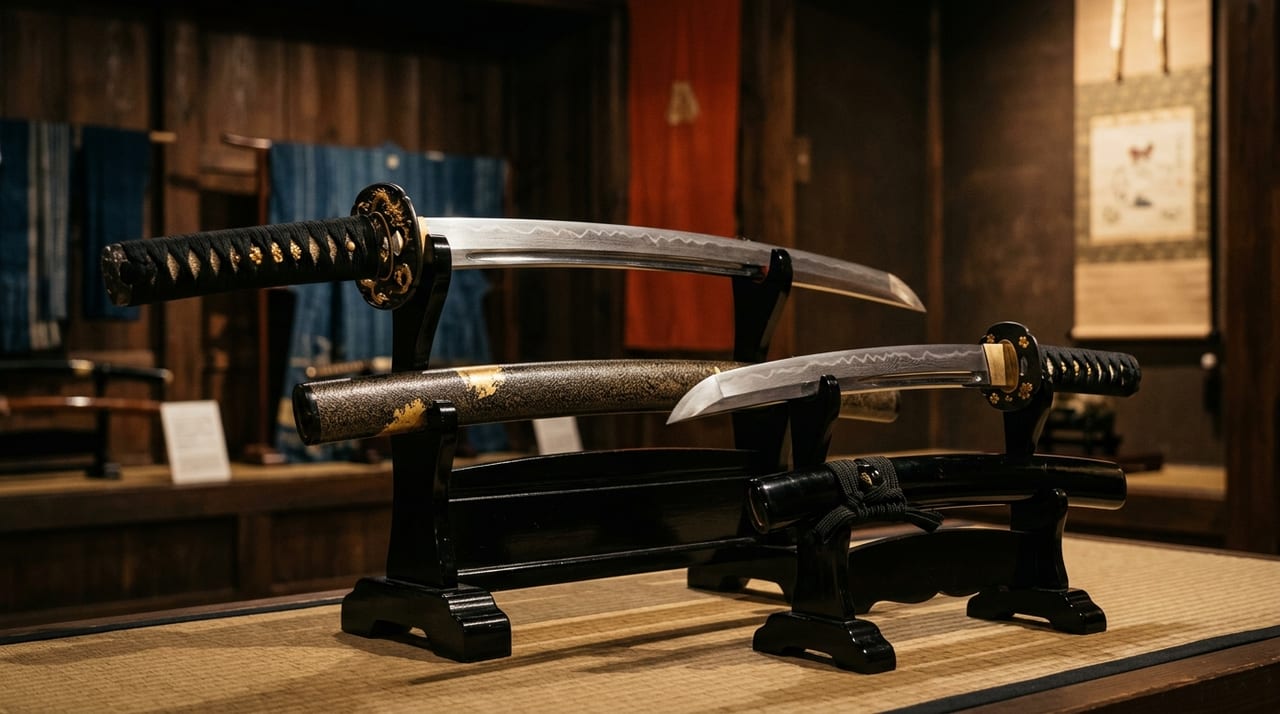
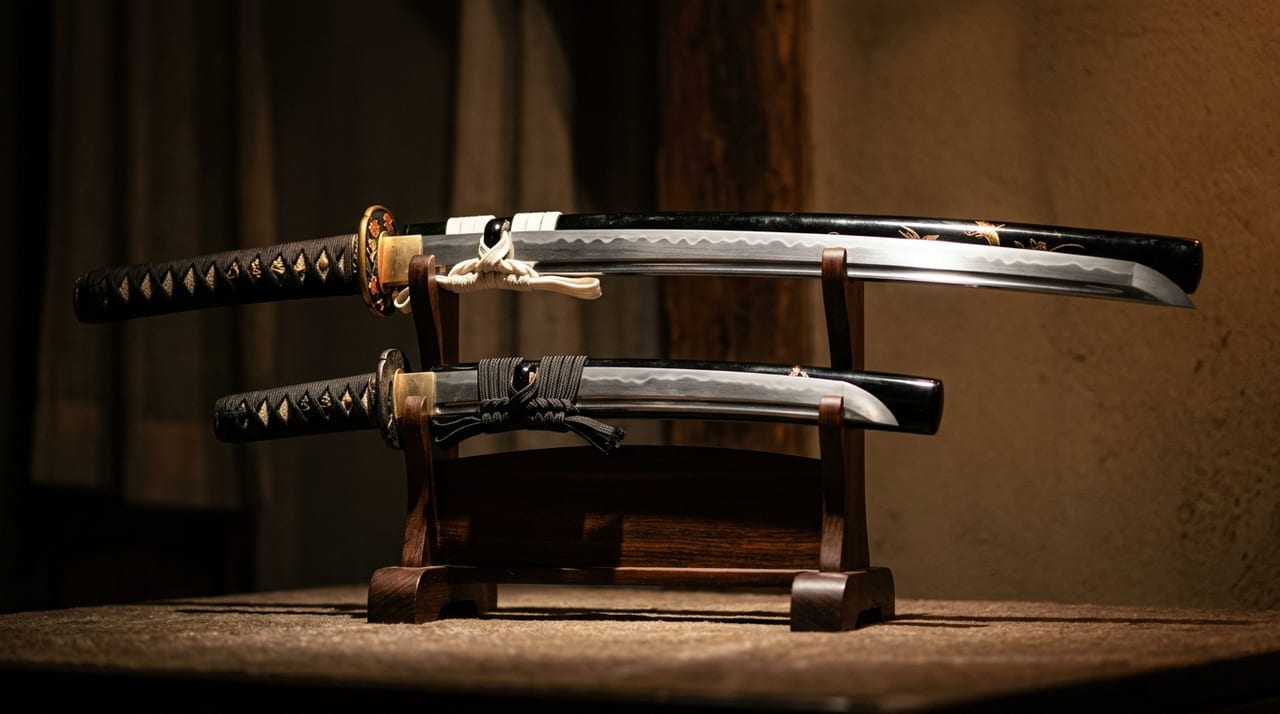
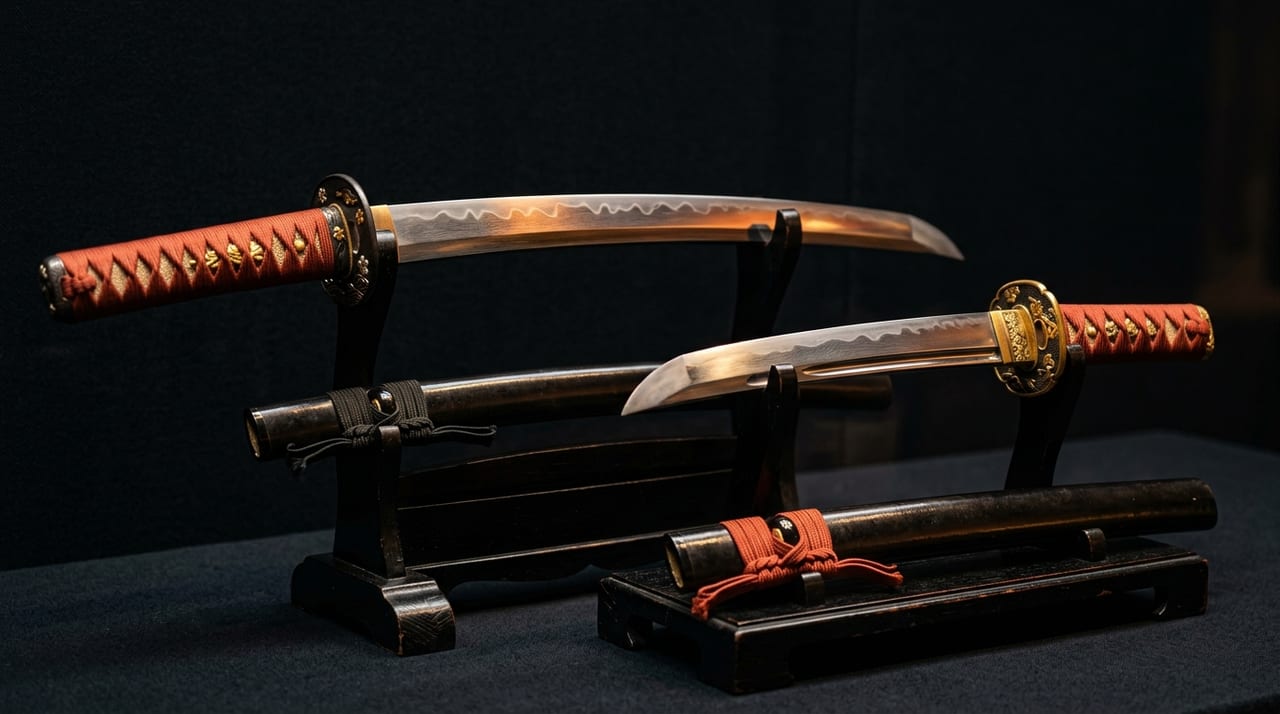
Kenukigata Tachi: The Unique Handle Design of Early Heian Swords and Ancient Japanese Sword Styles
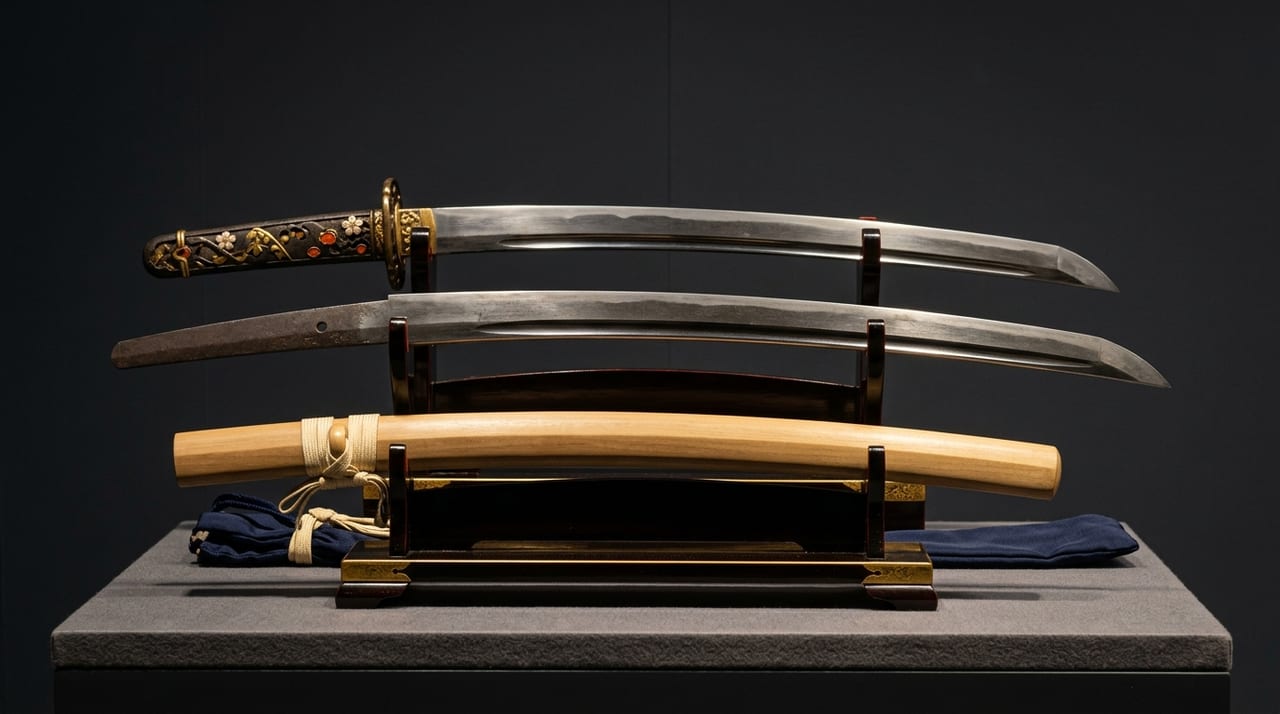 * Image is for illustrative purposes only.
Table of Contents
What is the Kenuki-gata Tachi — A Special Structure with Integrated Blade and Handle
The kenuki-gata tachi is a special style of sword produced from the early to mid-Heian period. Its most distinctive feature is that the blade and nakago are integrally forged as one piece, and moreover, the "shingane" (core iron) that forms the core of the handle (tsuka) is made from iron integrated with the blade itself. This structure results in the blade, nakago, and handle core being literally in a "single-plate" state, fundamentally different from the insertion method of modern uchigatana and tachi, where the nakago is inserted into the handle.
The name "kenuki-gata" derives from the design of the handle's openwork carving (sukashibori). The parallel two-legged openwork motifs resembled the shape of hair-plucking tools (tweezers-like metal implements) used by aristocratic women of the period, and this resemblance gave rise to the name. The openwork motif served not merely as decoration, but also had practical functions—reducing weight and improving grip comfort.
Positioning in Authentication
In the authentication of tachi and uchigatana, the handle is typically removed to examine the nakago, and clues about the production period and maker are often obtained from the presence or absence of a signature (mei) and characteristics such as the tang point and file marks (yasurime). However, since the kenuki-gata tachi has the blade, nakago, and handle core integrally forged as one piece, the handle cannot be disassembled to examine the nakago independently as in later swords. This structural characteristic is said to be one of the factors making it difficult to individually determine the period and origin of kenuki-gata tachi.
Characteristics of Manufacturing Methods — Technical Challenges for Heian Sword Makers
The manufacture of kenuki-gata tachi required a high level of technical expertise from sword makers of the time. In the process of forging the blade, nakago, and handle core as a single piece, it was necessary to achieve different hardness and shapes for each section. While the blade section required high-carbon hard steel for sharpness, the handle section was better suited to tough low-carbon steel to prevent damage, and this contradiction had to be resolved within an integrated structure.
Analysis of surviving kenuki-gata tachi indicates that the composition of the jigane differs between the blade and handle sections, suggesting that carbon content was intentionally varied. Additionally, the openwork carving on the handle section was further finished with files and chisels after forging, demonstrating the high level of metalworking techniques of the period.
The blade length is typically two to two and a half shaku (approximately 60–76 centimeters), somewhat shorter than later tachi. The curve is based on the kosorisori curve, and the kissaki typically has the distinctive Heian-period shape called the small kissaki.
Surviving Kenuki-gata Tachi — Masterpieces Designated as National Treasures and Important Cultural Properties
The number of surviving kenuki-gata tachi is small, and most are designated as National Treasures or Important Cultural Properties. Many remain in the form of donations to shrines and temples throughout the country, and the treasuries of Kasuga Taisha (Nara) and Atsuta Shrine (Aichi) house multiple kenuki-gata tachi as offerings from the Heian period. Many also feature gold and silver inlay (zougan) and mother-of-pearl work (raden), demonstrating that practical utility as weapons and refined artistic completion coexisted.
The kenuki-gata tachi displayed in Atsuta Shrine's treasure museum features delicate motifs not only in the openwork carving of the handle but also in the nakago section, clearly demonstrating the aesthetic role of swords in Heian aristocratic society. The kenuki-gata tachi used and donated in Shinto rites and ceremonies had a strong character as ceremonial swords distinct from practical battlefield blades.
Points of Interest When Viewing
If you have the opportunity to view a kenuki-gata tachi in person, paying attention to the following points will deepen your understanding.
- The openwork motif of the handle — how the parallel leg-shaped design resembles the shape of hair-plucking tools
- The position of the curve's center — whether it is a kosorisori curve
- The size of the kissaki — whether it has the distinctive Heian-period shape called the small kissaki
- The continuity from blade to handle — the texture of seamless integral forging
Note that many of these are managed as National Treasures or Important Cultural Properties, so whether they are open to the public, the timing of exhibitions, and photography policies differ depending on the shrine, temple, or institution holding them. It is advisable to check each institution's guidance before visiting.
Historical Positioning of the Kenuki-gata Tachi — The Transitional Period from Ancient to Medieval Times
The early Heian period (around the 9th century) when kenuki-gata tachi were made represents a transitional period in which Japanese sword styles evolved from the straight swords (chokutou) of "ancient swords" (jouokotou) to "curved tachi." The kenuki-gata tachi occupied an important position as an intermediate form during this transition, playing an experimental role in the process of evolving from straight-sword techniques transmitted from the continent to shapes suited to Japan's unique cavalry tactics. While the structural approach of integral forging later fell out of use, the decorative openwork carving design is thought to have influenced the design of later sword furniture (particularly guards and menuki).
Frequently Asked Questions About Kenuki-gata Tachi
Can an individual own one?
Most surviving kenuki-gata tachi are National Treasures or Important Cultural Properties held by shrines, temples, museums, or galleries such as Kasuga Taisha or Atsuta Shrine. Works designated in this way are kept under the custody and management of each institution, and it is thought that they are rarely traded on the open market.
What is the difference between a kenuki-gata tachi and a normal tachi?
The most significant difference is whether the core of the handle is made from iron integrated with the blade and nakago. Whereas normal tachi and uchigatana have the nakago inserted into and fixed within a separately made handle, in kenuki-gata tachi, the blade extends seamlessly to form the handle core as one piece.
Why is it called kenuki-gata?
The name derives from the fact that the openwork carving pattern on the handle resembled the shape of hair-plucking tools used by aristocratic women of the time.
Sword Culture Before the Establishment of Samurai Society
The era in which kenuki-gata tachi were made was also a time when the social class of "samurai" had not yet been clearly established. The primary users of swords were court aristocrats, powerful local lords, and kebiishi (officials who maintained order in the capital), existing within a different social context from the view of swords as "the soul of the samurai" that developed after the Sengoku period.
Swords of the time were part of court ceremonies and aristocratic formal wear, with aesthetic considerations paramount. As warrior governments became established, swords took on a stronger character as practical weapons, and the complex integral-forging structure of kenuki-gata tachi fell out of use due to manufacturing costs and durability concerns.
The kenuki-gata tachi is a product of an era when Japanese swords functioned not merely as weapons but as expressions of social status, authority, and aesthetic sensibility. Its distinctive handle structure and refined ornamentation continue to captivate researchers and enthusiasts alike as valuable testimony to Heian aristocratic culture's aesthetic standards and the pinnacle of metalworking and sword-making techniques of the time. TOUKENZA's online catalog presents commentary grounded in this depth of sword history, and you can view and purchase Japanese swords from our sword collection page.