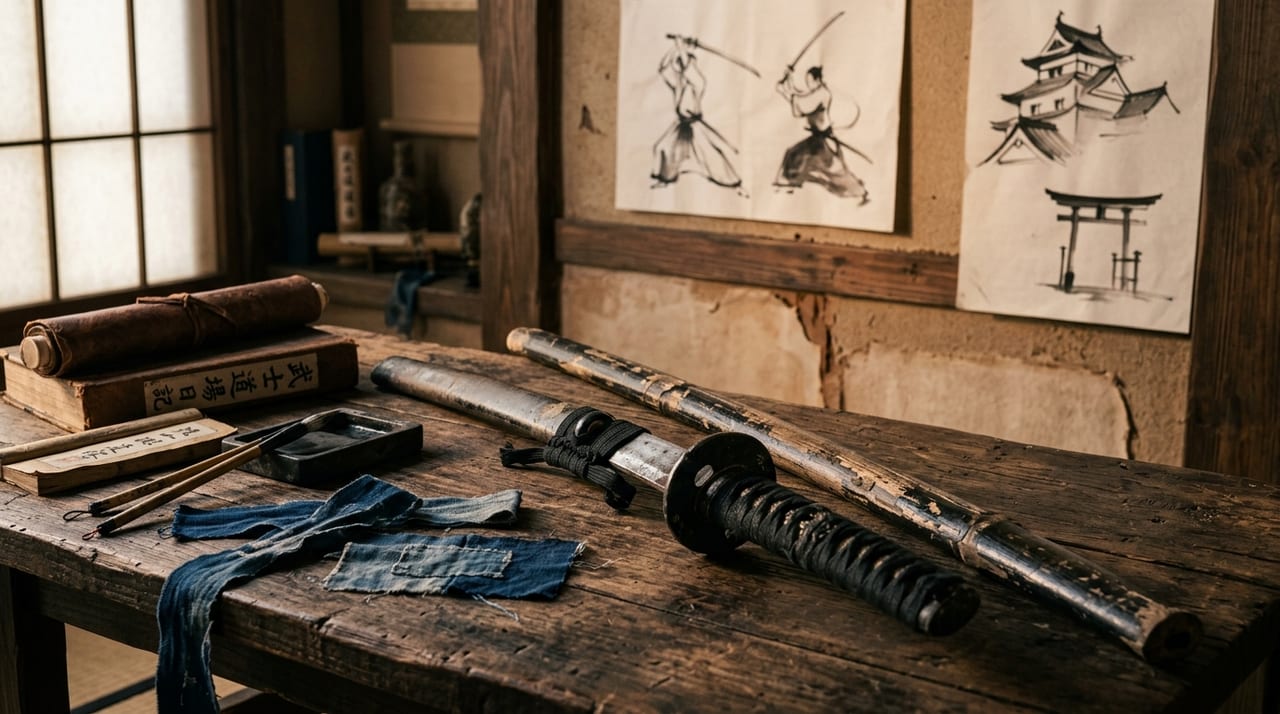
 * Image illustrative uniquement.
Twilight Samurai
たそがれ清兵衛
Un chef-d'œuvre de 2002 du réalisateur Yoji Yamada, basé sur les nouvelles de Shuhei Fujisawa. Il suit un samouraï de bas rang du domaine de Shōnai qui élève tranquillement ses filles dans la pauvreté après la mort de sa femme — un film qui honore la vérité humaine derrière le sabre plutôt que son spectacle.
Description
Twilight Samurai (Tasogare Seibei, 2002) est un film historique réalisé par Yoji Yamada, basé sur des nouvelles de Shuhei Fujisawa. Il suit Iguchi Seibei, un samouraï de bas rang du domaine de Shōnai au nord-est du Japon, à la fin de la période Edo, qui a gagné le surnom 'Seibei Crépuscule' parce qu'il rentre précipitamment à la maison au coucher du soleil chaque jour plutôt que de socialiser avec ses collègues — il est trop pauvre, trop accablé par le soin de ses filles et sa mère malade.
Le film a révolutionné le genre du jidaigeki (drame historique) en dépouillant le maniement d'épée romanticisé. Lorsque le devoir force Seibei dans un duel à mort, il ne prend pas une lame polie mais une épée d'entraînement à cœur de bambou (takezō), n'utilisant que l'instinct de survie désespéré. Ce choix cristallise le thème littéraire de Fujisawa : ce qui compte n'est pas la beauté du sabre, mais l'être humain qui le tient.
Nominé pour l'Academy Award du Meilleur Film en Langue Étrangère en 2004, Twilight Samurai a déclenché une réévaluation mondiale du cinéma historique japonais et a lancé la trilogie de samouraï acclamée de Yamada aux côtés de 'The Hidden Blade' (2004) et 'Love and Honor' (2006).
Chez TOUKENZA, nous proposons des sabres de la période Edo provenant exactement du type de ménages de samouraï modestes mais dignes que Twilight Samurai dépeignait — des lames pratiques, bien fabriquées, sans ornementations excessives, représentant l'artisanat honnête qui a soutenu la vraie vie des samouraïs.
Sabres réels présentés
Shōnai Domain Swords (Domain Official Smithy)
The Shōnai Domain (Sakai family, modern Tsuruoka, Yamagata Prefecture) maintained a hereditary line of official swordsmiths to supply practical blades for domain samurai. Swords forged in the Shōnai region typically exhibit unadorned, straightforward craftsmanship, representing the sword lineage most consistent with the lower-class samurai life depicted in *Tasogare Seibei*. The Taidō Museum in Tsuruoka preserves numerous swords and weapons associated with the Shōnai Domain, allowing viewers to confirm the film's cultural background with authentic artifacts. Though unpretentious, Shōnai swords embody sincere craftsmanship and represent the true nature of the Japanese sword.
Hizen Tadayoshi (Early Edo Period)
Hizen Tadayoshi, descended from master smith Hashimoto Tadayoshi the First of Hizen Province (Saga and Nagasaki), represents the archetypal practical samurai sword most widely distributed throughout the Edo period. With refined steel and gentle blade patterns, Hizen swords combined utility with aesthetic appreciation, becoming the standard weapon for middle and lower-rank samurai nationwide. As the quintessential example of "not a famous sword, yet honestly crafted"—precisely the type carried by Seibei in *Tasogare Seibei*—Hizen swords offer the most historically authentic choice. Their abundance makes them accessible to beginning collectors, and they are regularly handled by sword specialists.
Takezō (Bamboo Practice Sword)
Takezō is a wooden training sword fashioned from bamboo, used for practice and as a substitute since the Edo period. In the film *Tasogare Seibei*, the impoverished Seibei sells his long sword and carries a takezō sheathed instead, embodying the historical reality of lower-class samurai poverty. At the climax, the opponent Yago Zenzaemon recognizes the bamboo sword and scorns Seibei; however, Seibei is a master of the short sword (wakizashi) and secures victory through sheer skill in desperate combat. This episode—demonstrating that spiritual strength and short sword mastery transcend the weapon's rank—perfectly visualizes Fujisawa Shūhei's humanistic worldview.
Dewa-no-kami Yoshitsugu (Tōhoku New-Sword School)
Regional domains in northern Honshu likewise maintained recognized smiths, with Dewa Province (modern Yamagata and Akita Prefectures) producing independent new-swords. Though less renowned than works of master craftsmen in major urban centers like Kyoto and Osaka, these swords possessed honest craftsmanship and practicality rooted in the life of local samurai. Within the Tōhoku samurai culture depicted in *Tasogare Seibei*, regional swordsmiths' work represents the most historically authentic sword category. Regional swords are undergoing re-evaluation among scholars and collectors, and sword specialists occasionally handle works from Tōhoku and other provincial smiths.
Minamoto Kiyomaro (Late Edo Mastersmith)
Yamauara Kiyomaro (Minamoto Kiyomaro), originally from Matsushiro Domain in Shinshū, is regarded as the greatest swordsmith of the late Edo period, known for intensely dramatic blade patterns and bold steel. During the late Edo setting of *Tasogare Seibei*, new-new swords in the Kiyomaro style were considered the finest practical blades, particularly favored by combat-oriented swordsmen. As an ideal sword should a capable lower-class samurai like Seibei ever possess a masterwork, Kiyomaro's forged blades represent one of the most fitting examples. Many collectors continue to pursue Kiyomaro works, which occasionally appear in the inventory of sword specialists.
Voir les sabres japonais authentiques
Voir les sabres japonais authentiquesCette page a pour but de présenter la culture du sabre japonais et n'est affiliée à aucune des œuvres mentionnées.