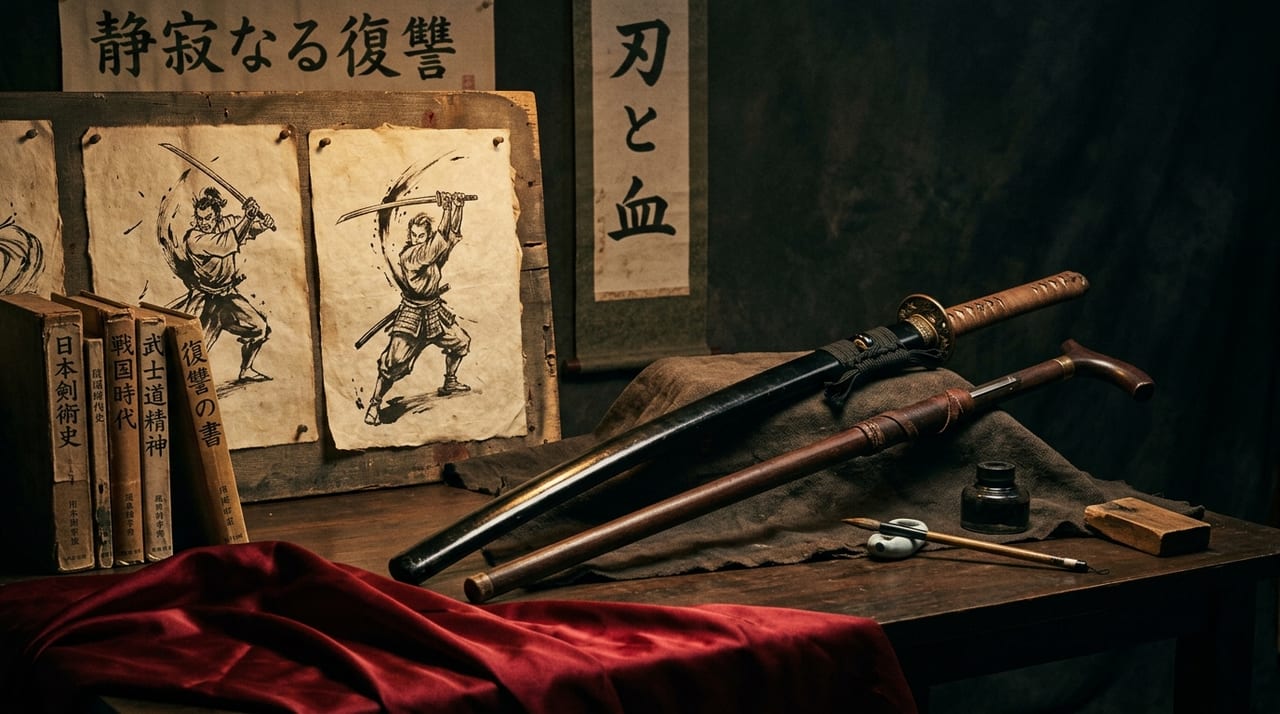
 * Image illustrative uniquement.
Lady Snowblood
修羅雪姫
Un film de vengeance japonais de 1973 mettant en vedette Meiko Kaji, basé sur le manga de Kazuo Koike. L'histoire d'une femme élevée comme arme de vengeance au Japon de l'ère Meiji, c'était une influence majeure sur Kill Bill de Quentin Tarantino.
Description
Lady Snowblood (Shurayukihime) est un jalon du cinéma japonais — un drame de vengeance de 1973 réalisé par Toshiya Fujita, mettant en vedette l'emblématique Meiko Kaji, basé sur le manga de Kazuo Koike. Situé au Japon de l'ère Meiji après l'Édit d'abolition des sabres de 1876, il suit Yuki Kashima, une femme née et élevée uniquement comme instrument de vengeance contre ceux qui ont détruit sa famille.
Le film est célèbre pour sa poésie visuelle frappante : du sang rouge cerise sur la neige blanche, le iai-draw fluide d'un sabre dissimulé dans une canne (shikomizue), et la performance hypnotique de Kaji. Ces éléments ont établi une nouvelle norme pour le cinéma d'action japonais et ont influencé des générations de cinéastes du monde entier.
Kill Bill (2003) de Quentin Tarantino a ouvertement rendu hommage à Lady Snowblood, incorporant la chanson thème de Kaji « The Flower of Carnage » et reflétant son style visuel. Cela a apporté une redécouverte internationale du film et de l'ère du cinéma japonais « Pinky Violence » qu'il représentait.
Chez TOUKENZA, nous proposons des sabres anciens et des armes blanches connexes de la période Meiji et antérieures — l'époque exacte dans laquelle Lady Snowblood se situe — y compris des exemples occasionnels de shikomizue (cannes à lame cachée) et d'uchigatana de l'ère Meiji.
Sabres réels présentés
Shikomizue (Meiji-era Concealed Blade Cane)
After the Sword Abolishment Edict of 1876, former samurai and those needing self-defense commissioned shikomizue — walking sticks or canes concealing a blade of tantō to wakizashi length. This is the signature weapon of Lady Snowblood's Yuki, and creates the film's most iconic visual moments. Authentic Meiji-era shikomizue are rare collector items today, serving as physical relics of Japan's pivotal transition from samurai to modern society.
Minamoto Kiyomaro Uchigatana (Late Edo)
Yamaura Kiyomaro (known as Minamoto Kiyomaro) is considered the greatest swordsmith of the late Edo period, prized for dramatic hamon and powerful jihada. His blades were highly sought by serious swordsmen of the Meiji era — exactly the type of working sword a skilled avenger like Yuki's masters would have used. Some Kiyomaro blades were reportedly preserved in secret by martial artists even after the Sword Abolishment Edict.
Bizen Osafune Kanemitsu (Nanbokuchō Period)
The great Nanbokuchō-era master Kanemitsu produced powerful ōdachi and nodachi that were often later shortened (suriage) and repurposed as practical uchigatana well into the modern era. Many Meiji-period working swords were such reforged ancient blades, adding historical layering to any Meiji-era sword drama like Lady Snowblood.
Satsuma Shintō (Edo–Meiji Period Satsuma Blades)
Satsuma domain maintained a fierce sword culture; their characteristic blades — robust, with deep curvature — remained in use among Satsuma samurai through the Seinan War of 1877, the last armed samurai conflict. In the Meiji world of Lady Snowblood, Satsuma-style swords and their distinctive black-lacquered koshirae represent the dying spirit of samurai resistance.
Hizen Tadayoshi (Early Edo Period)
The Hizen school founded by Hashimoto Tadayoshi produced some of the most widely distributed practical swords of the Edo period, prized for their clear jihada and elegant hamon. Found in samurai households across Japan, Hizen blades would have been a realistic possession for the provincial samurai families of Lady Snowblood's Meiji setting.
Voir les sabres japonais authentiques
Voir les sabres japonais authentiquesCette page a pour but de présenter la culture du sabre japonais et n'est affiliée à aucune des œuvres mentionnées.