Nouveautés — Découvrez les dernières arrivées dans notre catalogue. Voir →
1028–1031 (Chōgen 1–4)
Provinces de Kazusa, Shimōsa et Awa (les trois provinces de Bōsō, département actuel de Chiba)
Forces
Forces de Taira no Tadatsune
Forces punitives de la cour (d'abord Taira no Naokata, finalement Minamoto no Yorinobu)
Environ 18 min de lecture
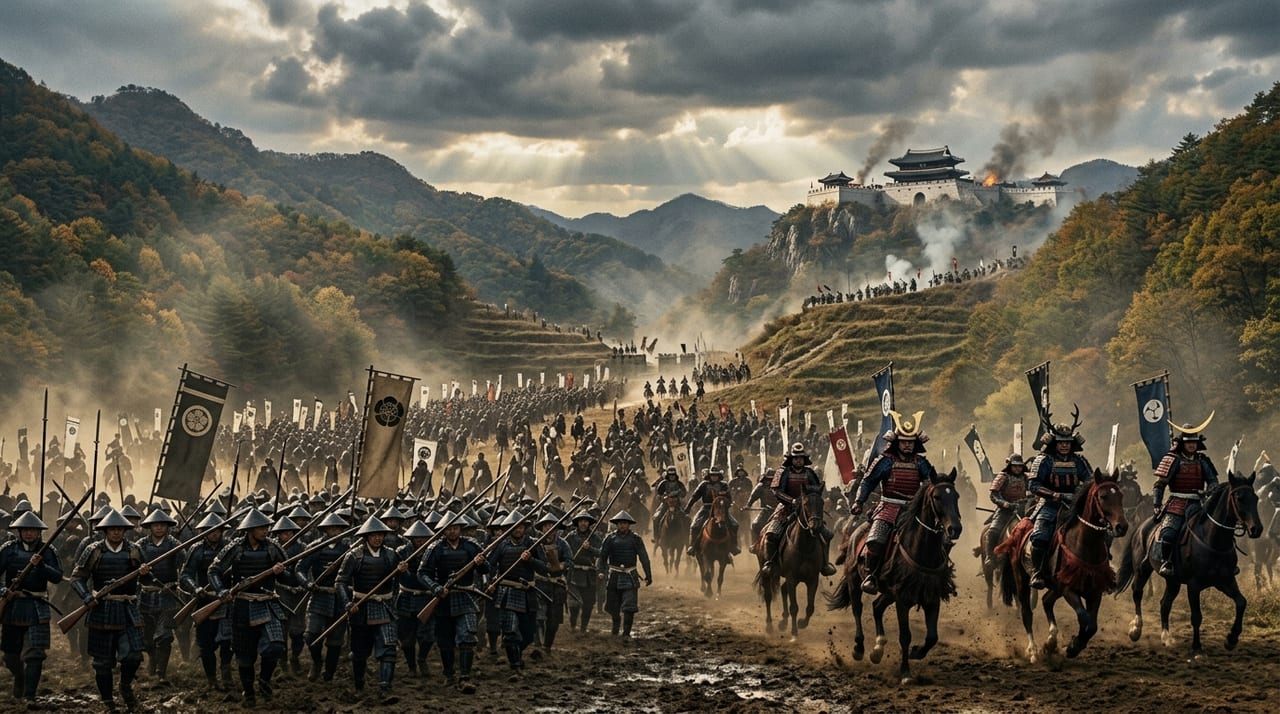
En Chōgen 1 (1028), une rébellion éclata dans les trois provinces de Bōsō (Kazusa, Shimōsa et Awa, correspondant à l'actuelle préfecture de Chiba), bouleversant profondément la société de l'est du Japon à l'époque du Heian moyen. Il s'agit de la rébellion de Taira no Tadatsune. Cet événement dépasse largement la révolte d'un simple chef local; il revêt dans l'histoire du Japon une grande importance, en tant que point de départ majeur de l'essor des forces guerrières qui mèneraient à l'établissement du shogunat de Kamakura.
Taira no Tadatsune est réputé descendre de Taira no Yoshifumi, l'une des branches majeures des Taira du rameau Kanmu. C'était un chef local disposant de vastes domaines et d'une puissance militaire considérable dans les provinces de Kazusa et de Shimōsa. Il aurait négligé les kuji (obligations de l'État, telles que l'impôt et les corvées) dans les trois provinces de Bōsō et maintenu une attitude indépendante, allant jusqu'à ne pas obéir aux ordres des zuryō (gouverneurs provinciaux). Il régnait alors en maître de fait sur la région de Bōsō.
L'époque du Heian moyen fut celle où, avec le relâchement du système ritsuryō, la tension monta entre l'autorité des gouverneurs provinciaux et la force réelle des notables locaux. Des guerriers locaux puissants comme Tadatsune bâtirent leurs propres forces armées tandis que l'autorité publique se vidait de sa substance. On peut dire qu'un affrontement avec le gouvernement central n'était qu'une question de temps.
En Chōgen 1 (1028), au sixième mois, Tadatsune attaqua Taira no Koretada, gouverneur de la province d'Awa, et le brûla vif. Cet incident déclencha l'occupation par Tadatsune du kokuga (organe de gouvernement provincial) de Kazusa, et le conflit se transforma en une rébellion de grande ampleur englobant les trois provinces de Bōsō.
La cour décida aussitôt d'envoyer une force punitive, et Taira no Naokata, l'un des notables de la lignée Sadamori du clan Taira, fut nommé premier commandant de cette expédition. Naokata bénéficiait du soutien du régent et chancelier Fujiwara no Yorimichi, mais la puissance de Tadatsune dans la région de Bōsō se révéla bien supérieure aux prévisions, et Naokata lutta pendant trois années entières sans succès. Au cours de ce conflit prolongé, les combats infligèrent de graves dommages aux villages agricoles et à la société locale des provinces de Bōsō. Les champs dévastés et les populations dispersées devinrent une préoccupation jusque dans la cour.
En Chōgen 3 (1030), à la suite de l'échec de Naokata à réprimer la rébellion, la cour décida de changer de cap. Au septième mois de cette année, la cour décida le rappel de Naokata. Au neuvième mois de la même année, Minamoto no Yorinobu, alors gouverneur de Kai, fut nommé nouveau commandant de la force punitive.
Yorinobu était le chef des Kawachi Genji (la branche des Seiwa Genji ayant son siège dans la province de Kawachi) et était déjà connu comme figure militaire dans l'est du pays. Fait intéressant, Tadatsune avait remis à Yorinobu, avant la rébellion, un myōbu (document établissant un lien de vassalité) et était devenu son vassal. Il est admis qu'une relation de type seigneur-vassal existait déjà entre les deux hommes.
Au printemps de Chōgen 4 (1031), alors que Yorinobu s'apprêtait à partir pour la province de Kazusa, Tadatsune, épuisé par la longue guerre, se rendit sans combattre. Yorinobu prit la route du retour vers Kyōto avec Tadatsune, mais celui-ci mourut de maladie dans la province de Mino au cours de son escorte.
La plus grande signification historique du processus de répression de la rébellion de Taira no Tadatsune réside dans le fait que les Kawachi Genji obtinrent une assise pour contrôler l'est. Lorsque Yorinobu se rendit dans l'est en tant que commandant de la force punitive, il emmena avec lui un moine, fils de Tadatsune. Après la rébellion, de nombreux groupes guerriers des Taira du Bandō (Kantō) qui avaient servi sous Tadatsune firent allégeance à Yorinobu.
Ainsi, les Taira du Bandō, qui s'étaient auparavant constitué une base militaire indépendante, furent placés sous l'autorité des Kawachi Genji, une maison aristocratique militaire centrale, et l'influence des Genji dans l'est s'accrut considérablement. Ce schéma fut repris par le fils de Yorinobu, Minamoto no Yoriyoshi, et son petit-fils Minamoto no Yoshiie (Hachimantarō Yoshiie). À travers la guerre des Neuf Ans antérieure et la guerre des Trois Ans postérieure, il devint le point de départ du processus par lequel les Kawachi Genji s'imposèrent comme chefs des groupes guerriers de l'est. Par ailleurs, cette lignée, en passant de Yoriyoshi et Yoshiie sur plusieurs générations, aboutit à la fondation du shogunat de Kamakura par Minamoto no Yoritomo.
Le début du XIe siècle, époque de la rébellion de Taira no Tadatsune, marqua également un tournant majeur dans l'histoire stylistique du sabre japonais. La transition des lames droites (chokutō) vers les lames courbes (wantō) progressa. Avec le développement du combat monté, le style tachi, adapté au dégainage et à la taille d'une seule main, s'imposa. Le processus par lequel les groupes guerriers de l'est, comme ceux des provinces de Bōsō, accumulèrent une puissance militaire propre est étroitement lié à ces progrès des techniques du sabre et des styles de combat. La rébellion de Taira no Tadatsune est donc considérée comme un événement important pour comprendre tant la formation de la classe guerrière en tant que couche sociale à l'époque Heian que le développement de la culture du sabre qui la soutenait.
En remontant aux origines de Taira no Tadatsune, on aboutit à Taira no Yoshifumi (Muraoka Gorō), une branche des Taira du rameau Kanmu. Yoshifumi, dont la base était Muraoka dans la province de Musashi (aujourd'hui les environs de la ville de Kumagaya, dans la préfecture de Saitama), étendit aussi son influence sur le district de Sōma de la province de Shimōsa. C'est par son fils Taira no Tadayori que Tadatsune naquit. La lignée Yoshifumi des Taira est, aux côtés de la lignée Sadamori des Taira (issue de Taira no Sadamori, qui vainquit Taira no Masakado), une branche influente des Taira du Bandō. Tadatsune, figure puissante de cette lignée Yoshifumi dans l'est, s'était établi dans la région de Bōsō. Au début de la rébellion, il est dit que c'est le ministre de droite Fujiwara no Sanesuke qui recommanda Yorinobu comme commandant de la force punitive lors du jinsadame. Son journal, le Shōyūki, consigne le déroulement des délibérations de la cour pendant que la répression de Taira no Naokata s'enlisait, ainsi que la manière dont Yorinobu fut recommandé. Sanesuke est connu comme le plus grand chroniqueur de son temps, ayant consigné en détail la réalité de la politique des régents et chanceliers. Son journal est l'une des rares sources contemporaines sur la rébellion de Taira no Tadatsune.
Les dégâts que la rébellion de Taira no Tadatsune infligea aux trois provinces de Bōsō furent considérables. Selon un rapport de Fujiwara no Tokishige, kazusa no suke, les terres cultivées (sakuta) de la province de Kazusa, qui auraient atteint 22 000 chō avant la rébellion, tombèrent après celle-ci à seulement 18 chō. Cela montre que les trois provinces de Bōsō avaient sombré dans un état proche de la ruine. Il est intéressant de noter que le Sakeiki affirme clairement que la cause directe de cette dévastation ne fut pas seulement la destruction par les forces de Tadatsune, mais aussi le pillage par les soldats de différentes provinces placés sous le commandement de Taira no Naokata et envoyés pour poursuivre les rebelles. La poursuite de trois ans conduisit les forces de répression elles-mêmes à piller et réquisitionner à plusieurs reprises sur place, révélant les limites de la capacité de gouvernement de la cour. Par ailleurs, le Konjaku Monogatarishū rapporte une anecdote liée à cette rébellion: Tadatsune ayant été un kenin (vassal) de Yorinobu avant même la rébellion, lorsque Yorinobu descendit vers l'est en tant que commandant de la force punitive, Tadatsune se serait rendu presque sans résistance. Cette anecdote est souvent citée comme exemple montrant que les liens de la relation seigneur-vassal dans la société guerrière de l'époque Heian pouvaient agir plus fortement que la mobilisation militaire de la cour.
Le sort réservé aux descendants de Tadatsune après la rébellion reflète également le processus de réorganisation de la société guerrière de l'est. Ses descendants seraient restés dans la région de Bōsō, bien que leurs domaines aient été fortement réduits. Les familles Taira de Bōsō, dont les clans Kazusa et Chiba, qui devinrent par la suite d'importantes maisons guerrières de l'est, sont considérées comme des lignées issues de Tadatsune. En particulier, le clan Chiba resta, après la période Kamakura, une maison guerrière influente de l'est. Lors du soulèvement de Minamoto no Yoritomo, le clan joua un rôle central de soutien. Ainsi, le sang de Tadatsune est jugé avoir continué à former le noyau des groupes guerriers de l'est pendant près de 150 ans après la rébellion.
À travers cette rébellion, la cour mesura cruellement la réalité selon laquelle la mobilisation militaire par les gouverneurs provinciaux, dans le cadre du système ritsuryō, ne pouvait pas faire face aux notables locaux puissants. Par la suite, la coutume de nommer comme commandants de force punitive des aristocrates militaires spécialisés, tels que les Kawachi Genji, s'installa.
Cette leçon servit également de précédent pour la nomination de commandants de force punitive dans la guerre des Neuf Ans antérieure et la guerre des Trois Ans postérieure, héritées par le fils de Yorinobu, Yoriyoshi, et son petit-fils, Yoshiie. Elle prépara le contexte institutionnel qui permit aux Kawachi Genji d'établir héréditairement leur position d'aristocrates militaires de l'est.