Nouveautés — Découvrez les dernières arrivées dans notre catalogue. Voir →
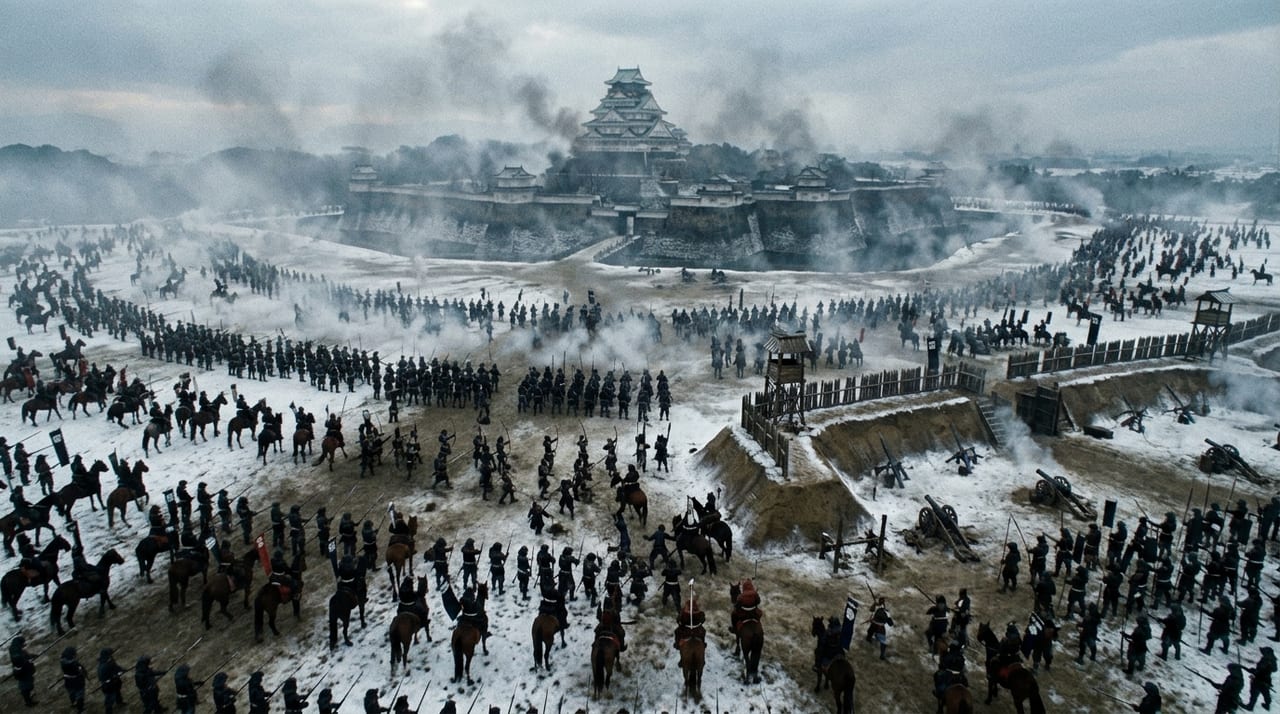
28e jour du 2e mois, Tenshō 19 (1591)
La résidence Juraku de Rikyū au Jurakudai, Kyoto
Forces
Camp des Toyotomi (émetteur de l'ordre)
Camp de Sen no Rikyū
Environ 19 min de lecture
Sen no Rikyū (1522–1591) est né dans une famille de marchands (nayashū) à Sakai, dans la province d'Izumi. Dès l'enfance, il a étudié la cérémonie du thé. Sous la direction de Takeno Jōō, il a maîtrisé l'essence du wabi-cha (thé rustique), et il a plus tard affiné cet esthétique jusqu'à ses limites. L'histoire le retient comme la personne qui a établi un style de thé incarnant le wabi et le sabi.
Autour de 1583 (Tenshō 11), Rikyū devint maître du thé en chef (sadō) de Toyotomi Hideyoshi. Hideyoshi a habilement utilisé la cérémonie du thé comme outil politique. À travers les réunions de thé auxquelles étaient invités les hommes puissants, il mettait en scène la diplomatie, la conciliation et l'affichage du pouvoir. Rikyū devint un metteur en scène indispensable de ces événements.
La « chambre de thé portable » de Hideyoshi, connue pour son or, était un design tape-à-l'œil qui semble se situer au pôle opposé de l'esthétique wabi de Rikyū. Néanmoins, Rikyū aurait participé à sa conception. En tant que maître du thé de Hideyoshi, Rikyū a dirigé de nombreuses réunions de thé et constitué un vaste réseau de contacts comprenant des seigneurs de guerre, des nobles de la cour et des marchands. Au fil du temps, son influence s'étend au domaine politique.
De la période Sengoku jusqu'à la période Azuchi-Momoyama, les ustensiles à thé étaient considérés comme des trésors de la classe guerrière, égaux en importance aux épées. Les « ustensiles à thé célèbres » (meibutsu chaki) étaient considérés comme ayant la même valeur que les territoires et les châteaux, et ils étaient parfois remis aux daimyō à titre de récompense. La « règle du thé » (chanoyu no goseiji) promue par Oda Nobunaga a été poursuivie par Hideyoshi, et posséder des ustensiles à thé devint un symbole d'autorité.
De la même manière que les épées célèbres étaient censées incarner l'art d'un forgeron et un pouvoir spirituel, les ustensiles à thé célèbres étaient révérés comme des concentrations de l'esprit du forgeron et de l'esprit de leur époque. Les « bols à thé wabi » que préférait Rikyū étaient mal formés, sobres et apparemment grossiers à première vue. Ils contrasteraient fortement avec les montages ornementés des tachi (koshirae), mais ils étaient le produit du même esprit, qui recherchait la « beauté véritable ».
Un forgeron affine l'acier tamahagane à partir du sable de fer et forge une lame par pliage répété. De la même manière, Rikyū incarnait la philosophie de l'ichigo ichie (« un temps, une rencontre ») en polissant la beauté qui habite les ustensiles de tous les jours. Un samouraï polit son épée au péril de sa vie, et Rikyū a poli la beauté au péril de sa vie. En ce sens, Rikyū et le forgeron d'épée se tenaient sur le même terrain spirituel.
Le monde des épées possède une « beauté de la soustraction », dans laquelle la décoration excessive est éliminée afin que seule l'essence de la lame ressorte. La cuillère à thé en bambou que Rikyū a choisie, le pot à eau Shigaraki sans prétention et le tissu fukusa rapiécé étaient tous des produits du même sens esthétique que la surface nue d'une célèbre lame. Le thé wabi et l'épée peuvent sembler appartenir à des mondes opposés, mais ils étaient entièrement d'accord dans leur esprit de « concentration sur l'essence ».
Les historiens ne sont pas parvenus à un accord sur la vraie cause de l'ordre de seppuku de Rikyū, et diverses théories sont encore débattues. Les principales théories sont résumées ci-dessous.
En 1589 (Tenshō 17), le niveau supérieur de la porte Kinmōkaku au Daitokuji à Kyoto a été achevé grâce au don de Rikyū. Une statue en bois de Rikyū, portant des sandales setta, a été installée à ce niveau supérieur. La porte est un endroit que beaucoup de gens franchissent, donc chaque fois que Hideyoshi y passait, il passerait sous les pieds de Rikyū. On dit qu'il aurait pris cela comme une insulte et aurait été furieux.
Quand Rikyū, agissant comme un expert en porcelaine à thé, intermédiait les ustensiles à thé auprès de ses disciples, il aurait fixé des prix déraisonnablement élevés et s'enrichirait. Sous le régime de Hideyoshi, la transparence dans les transactions commerciales était une question politique importante. Selon cette théorie, la conduite de Rikyū aurait gagné la méfiance du souverain.
Une autre théorie persistante veut que Rikyū ait refusé d'offrir sa fille (ou sa fille adoptive) à Hideyoshi, ou que des frictions avec les proches conseillers de Hideyoshi, qui s'opposaient à Rikyū, en soient la cause. Il y a aussi l'avis que le vaste réseau de Rikyū fonctionnait parfois comme un « second centre de pouvoir » aux côtés des politiques de Hideyoshi, et que cela a suscité la suspicion de Hideyoshi.
En 1591, l'année avant la campagne Bunroku (1592), Hideyoshi se préparait à envahir la Corée. On dit que l'opposition de Rikyū à ce plan a déclenché l'affaire, mais les preuves historiques de cela sont minces.
Aucune de ces théories n'a un soutien documentaire décisif, donc la véritable cause du seppuku reste un mystère. Précisément pour cette raison, la mort de Rikyū a continué à remuer puissamment l'imagination des figures culturelles ultérieures, notamment dans le roman de Nogami Yaeko et dans de nombreux films. Le seppuku de Rikyū est resté un thème dans la culture japonaise auquel les gens reviennent sans cesse.
Au deuxième mois de 1591 (Tenshō 19), Rikyū a reçu l'ordre de Hideyoshi de se confiner à Sakai. Après un séjour à Sakai, l'ordre de seppuku est venu peu après.
Le jour de son seppuku, on dit que Rikyū a tenu une dernière réunion de thé avec ses disciples. Comme Okakura Tenshin le décrit dans The Book of Tea, Rikyū a donné ses ustensiles à thé aux invités un par un comme souvenirs. Il n'a conservé que le bol à thé, qu'il a cassé, en disant : « Ce récipient ne doit jamais toucher à une bouche impure. » En cet instant, le sage du thé a suivi la logique de la beauté jusqu'au bout.
Rikyū est décédé à l'âge de 70 ans selon le décompte traditionnel japonais. Son poème d'adieu est le suivant.
> 人生七十 力囲希咄 吾這寶劒 祖仏共殺
(Soixante-dix ans de vie humaine. La phrase rikii-kitsu est parfois lue comme un cri, mais son interprétation n'a pas été établie. Avec cette épée précieuse, j'abats le patriarche et le Bouddha.)
L'apparition de la phrase « épée précieuse » (hōken) dans un poème d'adieu est symbolique. Bien que Rikyū soit un maître du thé, il comprenait profondément la spiritualité de l'épée. L'esthétique du wabi et la résolution de la lame partagent les mêmes racines dans les deux sources spirituelles du Japon, le bushidō et la Voie du Thé. Ce poème d'adieu se lit davantage comme les paroles d'un moine zen ou d'un guerrier que comme celle d'un maître du thé. Il exprime un état au-delà de la vie et de la mort, qui était le point ultime que Rikyū a atteint dans l'esprit du thé et de l'épée.
Après la mort de Rikyū, ses disciples ont formé un groupe de maîtres du thé connus sous le nom des « Sept Disciples de Rikyū » (Rikyū Shichitetsu), et ils ont diffusé la tradition du thé wabi à travers le pays. Hosokawa Tadaoki (Sansai), Gamō Ujisato et Furuta Oribe étaient des guerriers renommés qui étaient aussi d'excellents maîtres du thé. Ils incarnaient l'esthétique du guerrier, qui valorisait également les épées et les ustensiles à thé.
Furuta Oribe a succédé à Rikyū en tant qu'instructeur de thé auprès de Hideyoshi puis auprès des Tokugawa, et il a développé une esthétique distinctive connue sous le nom d'« Oribe-gonomi ». En 1615 (Keichō 20), Oribe a également reçu l'ordre de se faire seppuku, soupçonné d'implication dans le Siège d'Ōsaka. La tragédie de deux générations de maître et disciple, tous deux se voyant ordonner de mourir par seppuku, incarne le thème éternel du conflit entre le pouvoir et la sensibilité esthétique.
Même aujourd'hui, à l'ère Reiwa, l'esprit de l'ichigo ichie de Sen no Rikyū et l'esprit qui habite chaque épée japonaise célèbre résonnent profondément l'un avec l'autre. Le sentiment d'arrêt du temps qu'un spectateur ressent lorsqu'il se tient devant une célèbre épée dans un musée est essentiellement le même que le calme non-quotidien que Rikyū cherchait dans la salle de thé. Rikyū était né fils d'un marchand de Sakai et a continué à polir la beauté au côté du maître du royaume. Par sa mort, sa vie a montré que les voies de l'épée et du thé coulaient de la même source. Les daimyō qui collectionnaient des ustensiles à thé aimaient aussi les épées, et les seigneurs de guerre qui aimaient les célèbres épées appréciaient aussi le thé. Ces deux sensibilités esthétiques ont toujours été deux facettes d'une même pièce. Le seppuku de Rikyū, en tant que record du moment où la logique de la beauté a été défendue au prix de la vie, reste au cœur même de l'histoire spirituelle de l'épée japonaise.
Hosokawa Tadaoki (1563–1646) était à la fois l'un des plus grands disciples de Rikyū et un seigneur de guerre renommé qui a représenté la période du Sengoku jusqu'à l'ère Edo précoce. Parmi les épées qu'il possédait figure le « Kasen Kanesada », une lame d'Izumi no Kami Kanesada (également écrit 之定), qui est conservée à la Eisei Bunko. Tadaoki est également connu pour son mariage tragique avec Gracia, et sa vie est un bon exemple de la façon dont l'épée et le thé étaient inséparablement liés dans l'esprit du guerrier.
Gamō Ujisato (1556–1595) était également l'un des principaux disciples de Rikyū. En tant que seigneur d'Aizu dans la province de Mutsu, il a protégé les forgerons d'épée. Sous son règne, les forgerons d'Aizu se sont développés, et on dit que les fondations des épées d'Aizu ultérieures ont été posées. Que Rikyū soit décédé en 1591 et qu'Ujisato soit décédé en 1595, si près l'un de l'autre, montre comment les cultures du thé et des épées ont vécu dans le même esprit de l'époque.
De cette façon, les disciples de Rikyū n'étaient pas seulement les porteurs de la tradition du thé, mais aussi les vecteurs de la culture des épées. Alors que l'esprit du wabi s'unissait à un œil discerning pour les épées, la culture guerrière de la fin de la période Sengoku au début de l'ère Edo a acquis une profondeur riche. Le seppuku de Rikyū, en tant que mort d'une personne se tenant à ce carrefour culturel, est un événement qui ne doit pas être oublié dans l'histoire de l'épée japonaise.