Nouveautés — Découvrez les dernières arrivées dans notre catalogue. Voir →
3e–4e mois, Tenshō 13 (1585)
Château d'Ōta, province de Kii (actuelle ville de Wakayama)
Forces
Forces Toyotomi
Ligue Ōta (défenseurs)
Environ 8 min de lecture
Le siège par inondation du château d'Ōta, en Tenshō 13 (1585), dans la province de Kii (aujourd'hui ville de Wakayama), fut le dernier grand siège de la campagne de Kishū menée par Toyotomi Hideyoshi. Avec ceux du château de Bitchū-Takamatsu et du château d'Oshi, il compte parmi les « trois grands sièges par inondation du Japon ».
Dans la province de Kii, les Saika, célèbres pour leurs arquebuses, et les Negoro, une milice de moines guerriers, formaient de puissantes forces armées autonomes. S'appuyant sur l'autorité des temples et sur leur maîtrise des arquebuses, elles conservaient leur indépendance et s'opposèrent à plusieurs reprises au pouvoir central. Au 3e mois de Tenshō 13 (1585), Hideyoshi, qui poursuivait l'unification du pays, envoya son frère cadet Hidenaga comme commandant adjoint à la tête d'une armée d'environ 100 000 hommes dans le Kishū. Les forces de Hidenaga prirent les unes après les autres les places ennemies, incendièrent le temple Negoro-ji, principal bastion des Negoro, et soumirent également les bases des Saika.
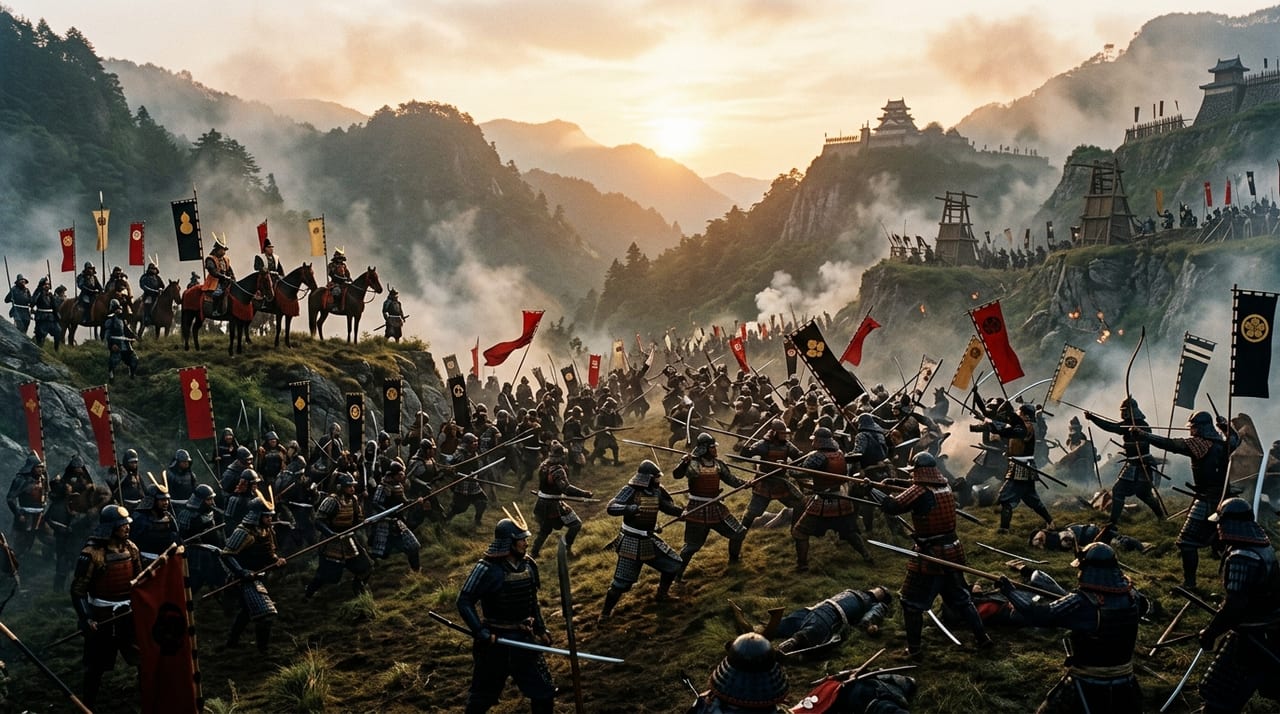
Le dernier bastion de la résistance de Kishū fut le château d'Ōta, tenu par la ligue d'Ōta. Entouré de terres basses et marécageuses, c'était une forteresse solide qui ne tombait guère par l'assaut direct. Sa garnison aurait compté entre 3 000 et 5 000 hommes. Les forces de Hideyoshi, qui auraient été de 60 000 à 100 000 hommes, encerclèrent le château, mais se heurtèrent à ses solides défenses sans parvenir à progresser.
Fort du succès du siège par inondation du château de Bitchū-Takamatsu (Tenshō 10), Hideyoshi choisit lui aussi l'inondation pour Ōta. Pour détourner les eaux de la rivière Kino qui coule à proximité, on éleva une digue immense encerclant le château. Sa longueur totale atteindrait environ 7 km, et sa taille aurait dépassé celle de la digue de Bitchū-Takamatsu. On rapporte en outre qu'elle fut achevée en seulement 5 à 6 jours, grâce à la mobilisation d'environ 460 000 travailleurs au total, un délai stupéfiant.
Une partie de la digue subsiste aujourd'hui à Demizu, dans la ville de Wakayama. Elle mesure environ 24 mètres de large, 66 mètres de long dans l'état actuel et environ 2,6 mètres de haut par rapport aux rizières voisines. Lors des fouilles, on a découvert dans la terre de la digue des balles de plomb d'arquebuse, ce qui a confirmé qu'elle avait été érigée à l'époque Shokuhō. Les vestiges de la digue du siège d'Ōta ont été classés bien culturel de la préfecture de Wakayama au cours de l'exercice 2023, et témoignent aujourd'hui de l'ampleur des travaux de génie civil de l'époque.
Transformé en lac après que l'eau de la rivière Kino y fut détournée, le château d'Ōta continua pourtant de résister avec acharnement. Mais lorsque les forces de Toyotomi déployèrent leur flotte et attaquèrent depuis des barques à coups d'arquebuse, le commandant du château Ōta Sakon et ses compagnons, à court de vivres, renoncèrent enfin à la résistance et demandèrent la reddition après environ un mois de siège. Hideyoshi accorda la vie sauve à une grande partie des assiégés, mais exigea, comme condition de la reddition, que 53 instigateurs, à leur tête Ōta Sakon, se donnent la mort. Les 53 têtes tranchées furent exposées à Tennōji et Abeno, à Osaka. On rapporte que la sanction s'étendit aussi aux femmes et aux enfants, ce qui témoigne de la rigueur du siège par inondation comme de la sévérité du règlement d'après-guerre.
Cette bataille pacifia la province de Kii, et les forces armées autonomes médiévales, Saika et Negoro, furent dissoutes. Le fait que des forces locales, qui avaient maintenu leur indépendance grâce aux arquebuses, aient cédé devant le pouvoir central symbolisait le tournant de l'époque. Pour le pouvoir de Hideyoshi, qui poursuivait la chasse aux sabres et la séparation des guerriers et des paysans, la prise du château d'Ōta incarnait précisément cette politique. Ceux qui s'étaient retranchés par la force furent intégrés au pouvoir unifié. Le siège par inondation d'Ōta reflète ainsi le point de bascule d'une époque où l'ère Sengoku des sabres et des lances touchait à sa fin.