Les types de tantō : explication complète des différences entre aiguichi, yoroidōshi, koshigatana, kaiken et kōgai
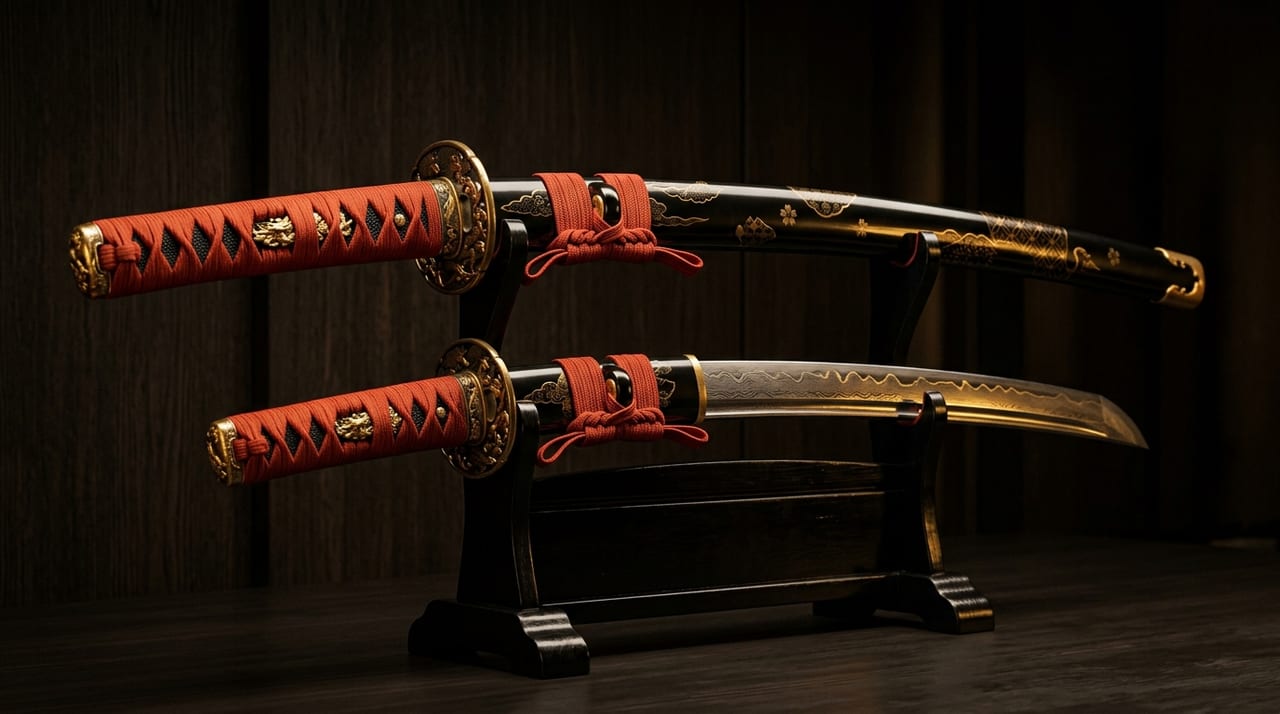 * Image illustrative uniquement.
Sommaire
Qu'est-ce que le tantō ? — Critères de nagasa et définition
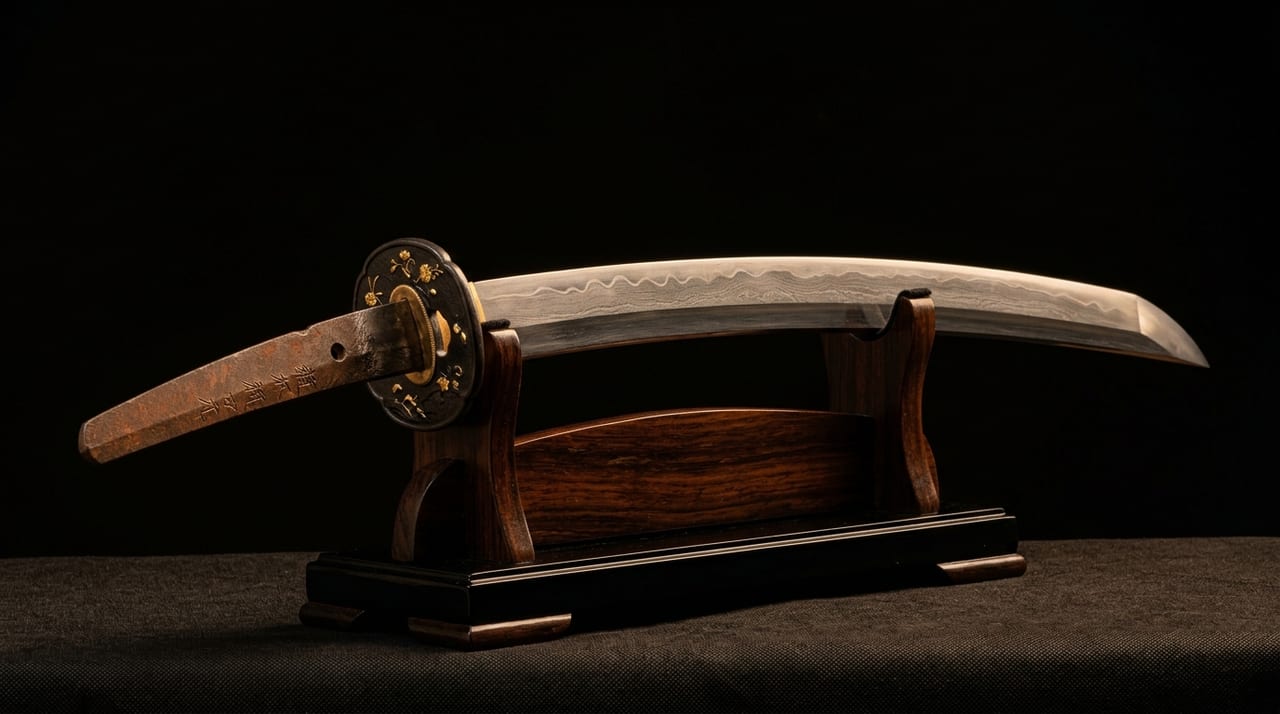
Dans la classification des nihontō, le « tantō » est l'appellation générale désignant les lames dont le nagasa (blade length) est inférieur à 1 shaku (environ 30,3 cm). En réalité, cependant, le terme « tantō » est un terme générique englobant plusieurs formes et types, chacun ayant un nom et des caractéristiques propres.
Dans cet article, nous examinerons en détail chacune des formes qui se trouvent sous l'ombrelle du « tantō », sous les angles de leur structure, de leur usage et de leur contexte historique.
Aiguichi — le type de référence des lames de protection sans tsuba
Définition et structure
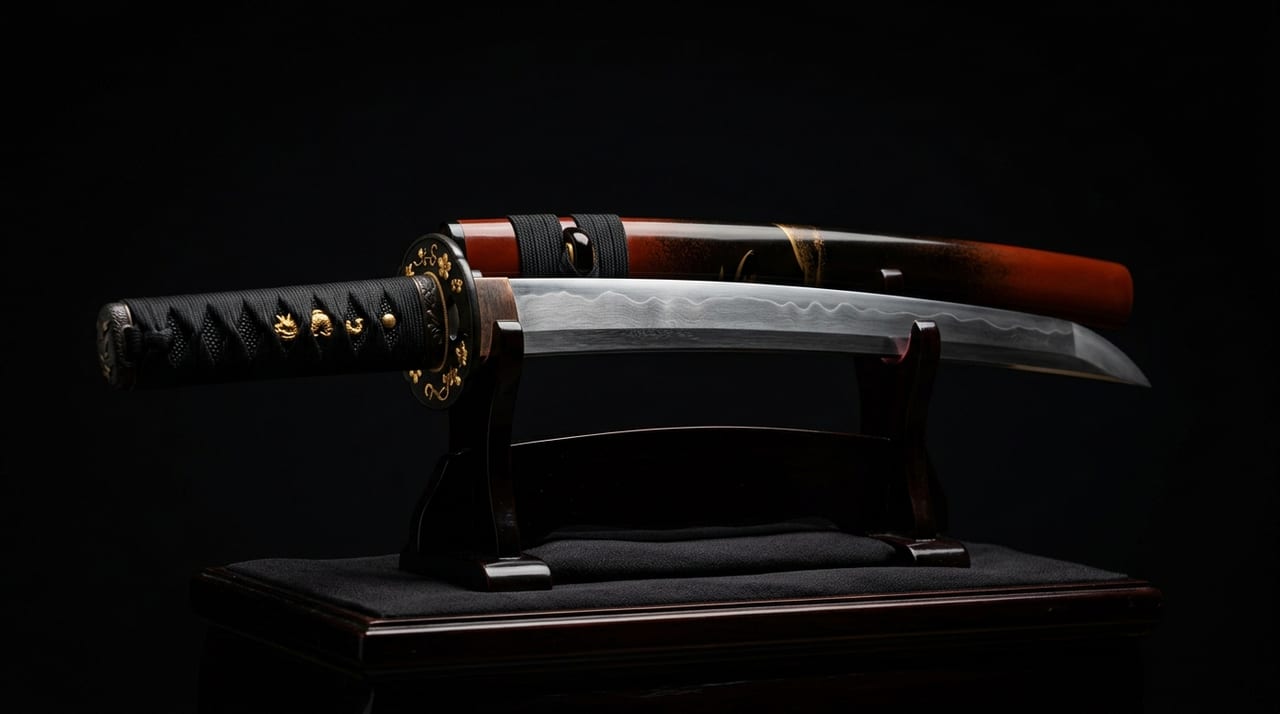
L'aiguichi est la forme la plus représentative du tantō sans tsuba (hand guard). Le nom « aiguichi » vient du fait que la jonction entre la lame et le tsuka (hilt) s'emboîte « bouche contre bouche » sans tsuba. Sans tsuba à la jonction entre la lame et le tsuka, il présente un aspect épuré et aérodynamique, avec le koiguchi et l'embase de la main étroitement assemblés.
Époque et usage
L'aiguichi s'est répandu en particulier à l'époque Edo comme instrument de protection personnelle des femmes de la classe guerrière et des marchands de haut rang. Sans tsuba, sa force de frappe est faible, mais il ne gêne pas lorsqu'on le glisse dans les habits et permet un dégainement rapide. Il était précieusement considéré comme un instrument de protection indispensable dans l'oku-muki (quartier des femmes) des résidences de guerriers.
Aspect décoratif
Outre sa fonction d'instrument de protection, de nombreux aiguichi présentent une haute valeur décorative. Les aiguichi ornés de chinkin, de makie et de raden étaient précieusement recherchés comme mobilier de mariage et comme cadeaux. Les pièces remarquables dotées de décors raffinés jouissent également d'une haute considération dans le domaine de la collection.
Yoroidōshi — une arme de combat conçue pour viser les interstices de l'armure
Définition et structure
Le yoroidōshi est un tantō conçu pour être planté dans les interstices d'une armure (kacchū). Il se caractérise par une section transversale losangique proche du triangle ou du quadrilatère, une largeur de lame étroite et une haute rigidité. On en trouve souvent dotés de « moroha » (tranchant double face). Les détails de sa structure sont expliqués dans la structure et les usages du kacchudoshi.
Contexte technique
Alors que le sabre ordinaire est principalement conçu pour les coupures avec une lame mince et tranchante, le yoroidōshi est conçu en donnant la priorité absolue à la « pénétration par estoc ». C'est une lame spécialisée dans un usage extrêmement pratique au combat : neutraliser l'ennemi en la plantant dans les interstices des plaques de fer de l'armure — aisselles, espace entre le cou et le casque, orifices des yeux.
Contexte historique
Le yoroidōshi était le plus nécessaire à la période Nanbokuchō et à l'époque Sengoku (XIVe–XVIe siècle), où les armures kacchū connurent un grand développement. À cette époque, où les guerriers se rendaient sur le champ de bataille revêtus d'armures élaborées comme le dōmaru, le ōyoroi et le tōsei gusoku, une demande naquit pour des armes capables de percer les armures. À partir de l'époque Edo, à mesure que le port de l'armure devint formel, la demande de combat réel déclina, mais sa valeur de collection reste élevée de nos jours.
Évaluation sur le marché actuel
Pour le déclin rapide à partir de l'époque Edo, on cite comme cause directe, outre la formalisation du port de l'armure, le fait que la fonction spécialisée dans « l'estoc » perdit toute valeur marchande en temps de paix prolongée. Du fait du faible nombre d'exemplaires existants, la rareté tend à être hautement valorisée sur le marché actuel des lames japonaises, et les pièces complètes conservant une section transversale clairement losangique se négocient à des prix particulièrement élevés.
Koshigatana — la lame de port quotidien des périodes Muromachi et Sengoku
Définition et usage
Le koshigatana est une lame d'une taille intermédiaire entre le tantō et le wakizashi (environ 1 à 1 shaku 5 sun), portée à la ceinture pour un usage quotidien. Dans la classification actuelle, il se situe dans la zone frontière entre le « tantō » et le « wakizashi ».
Place dans l'histoire
À l'époque Muromachi, la coutume de porter en paire le « daishō » — tachi ou uchigatana et wakizashi — se répandit, mais pendant la période de transition qui précéda l'établissement de cette culture, le koshigatana fonctionnait comme la lame de port quotidien du guerrier. Le nom même de « koshigatana » reflète une dénomination descriptive de sa fonction, « lame portée à la ceinture », et l'on peut dire qu'il est le produit d'une époque où la fonction primait sur la forme.
Kōgai — une présence unique, à la fois équipement martial et objet utilitaire
Définition et structure
Le kōgai est une tige métallique allongée en forme d'outil de coiffure, rangée sur le côté de la saya (scabbard) en paire avec le kozuka. Sa fonction en tant que lame est secondaire ; il fonctionnait principalement comme un accessoire polyvalent, utilisé pour coiffer les cheveux ou comme outil pratique.
Relation avec les lames
Le kōgai n'est pas une « lame » indépendante ; il est rangé dans la saya en tant qu'accessoire du wakizashi ou de l'uchigatana. Cependant, comme il est classé comme équipement de sabre, dans le contexte de la collection de lames japonaises, il est souvent échangé comme « ensemble avec kōgai ». La présence ou l'absence du kōgai est un point d'évaluation important pour apprécier le niveau de finition du koshirae (mounting).
Époque et décoration
Le kōgai connut un développement décoratif à l'époque Azuchi-Momoyama et à l'époque Edo. Le kōgai doté de ciselures raffinées réalisées par des kanakōshi (métallurgistes) est encore aujourd'hui hautement apprécié comme une œuvre d'art importante constituant le koshirae (mounting) d'une lame.
Kaiken — la lame de protection personnelle portée par les femmes
Définition et caractéristiques
Le kaiken est un tantō de protection personnelle que les femmes glissaient dans leur sein, appelé aussi « futokorogatana ». Il prend souvent la forme aiguichi (sans tsuba), avec un extérieur élégant en shirasaya (plain storage scabbard) ou décoré de makie, raden, etc. Ses origines et sa place dans le contexte moderne sont également traitées en détail dans Qu'est-ce que le kaiken ?.
Mariage et kaiken
Dans la société guerrière, le kaiken était l'un des « trousseau de mariée (mobilier nuptial) » de la jeune épouse. Le kaiken utilisé lors de cérémonies nuptiales comme le « rite du sangon » avait une signification symbolique, témoignant de la chasteté et du courage de la mariée. Aujourd'hui encore, dans les cérémonies de mariage traditionnel shinto au Japon, la coutume pour la mariée vêtue de shiro-muku de porter un kaiken se perpétue, et cette transmission culturelle vit encore.
Comme préparatif au jigai
Outre son aspect de mobilier nuptial, le kaiken présentait aussi l'aspect d'une préparation au « jigai », l'acte par lequel une femme de la classe guerrière mettait fin à ses jours si elle tombait aux mains de l'ennemi. Des kaiken dont le tsuka a été façonné étroit et court nous sont parvenus, et la philosophie de conception d'un instrument de protection à usage réel réside à l'intérieur de leur décor.
Dimensions
Le nagasa d'un kaiken ordinaire est d'environ 5 à 8 sun (15 à 24 cm), ce qui en fait l'un des plus petits parmi les tantō. Il est conçu pour se ranger d'un seul tenant du tsuka jusqu'à la saya, et son compacité, qui ne gêne pas le port, est l'une de ses caractéristiques.
Gomabashi et nakiri — tantō rituels et utilitaires
Leur rang en tant que « lames » est modeste, mais ils témoignent de l'étendue de la culture des lames japonaises.
Gomabashi : outil cérémoniel en forme de tantō utilisé lors des rituels bouddhiques goma. Il n'a presque pas de tranchant et possède une signification religieuse plutôt qu'une fonction de coupe pratique. Son caractère d'objet de culte est fort, et il est considéré comme un symbole religieux empruntant la forme d'une lame.
Nakiri : couteau de type tantō dérivé pour un usage culinaire. Ce n'est pas un « nihontō » au sens strict, mais c'est une présence importante attestant que les techniques des kaji japonais ont également été appliquées aux couteaux ménagers.
Tableau comparatif des types
| Type | Tsuba | Usage principal | Utilisateurs principaux | Apogée |
|---|---|---|---|---|
| Aiguichi | non | Protection personnelle / cadeaux | Femmes de la classe guerrière / marchands de haut rang | Époque Edo |
| Yoroidōshi | oui/non | Combat réel (estoc) | Guerriers (en armure) | Nanbokuchō–Sengoku |
| Koshigatana | oui | Port quotidien | Guerriers en général | Muromachi–Sengoku |
| Kōgai | — | Coiffure / port | Guerriers / marchands de haut rang | Azuchi-Momoyama–Edo |
| Kaiken | non | Protection / mariage | Femmes de la classe guerrière | Edo–époque actuelle |
Lecture de koshigatana et différence avec le wakizashi
Koshigatana se prononce « koshigatana ». On ne dit pas « yōtō ». C'est une appellation qui apparaît fréquemment dans les documents médiévaux et désignait toutes les petites lames portées à la ceinture.
La différence entre le koshigatana et le wakizashi est, fondamentalement, une « différence de dénomination selon l'époque ». Les lames de port quotidien jusqu'à la période Muromachi étaient appelées koshigatana, et le koshirae aiguichi (sans tsuba) était la norme. Lorsque, à l'époque Edo, le système des deux lames daishō s'établit, les lames mesurant de 1 shaku à moins de 2 shaku portées en complément de la grande lame furent désignées comme « wakizashi », et le koshirae avec tsuba se généralisa. En d'autres termes, le wakizashi est la dénomination de l'époque moderne institutionnalisée, tandis que le koshigatana est la dénomination médiévale qui en est la source.
Comment appelle-t-on ce qui se situe « entre le sabre et le tantō » — sunnobi tantō et ko-wakizashi
Pour qui cherche une « lame dont la longueur se situe entre le sabre et le tantō », il s'agit du sunnobi tantō dont le nagasa est d'environ 1 shaku (environ 30,3 cm), ou du ko-wakizashi légèrement supérieur à 1 shaku. Du point de vue de la classification légale, les lames inférieures à 1 shaku sont des tantō, et celles de 1 shaku à moins de 2 shaku sont des wakizashi, mais leur forme est continue, et à la période Nanbokuchō, de nombreux tantō de grande taille d'environ 1 shaku furent fabriqués. Les détails sur le sunnobi tantō sont expliqués dans le guide des types de sunnobi tantō.
Différence entre l'aiguichi et le dosu
« Dosu » est un terme populaire issu de l'argot des joueurs et des chevaliers errants, désignant le plus souvent des tantō de koshirae aiguichi de fabrication grossière. Du point de vue de la forme, c'est la même « lame sans tsuba » que l'aiguichi, mais la facture et la valeur d'un tantō de koshirae aiguichi en tant que lame artistique et celles d'un tantō utilitaire mumei (unsigned) produit en masse sont totalement différentes. En vertu de la législation actuelle, la possession d'un tantō enregistré en tant que lame artistique est légale, mais le port d'une lame non enregistrée est soumis aux réglementations de la loi sur le contrôle des armes à feu et des épées (Firearms and Swords Control Act — Jūtōhō) et de la loi sur les infractions mineures (Minor Offenses Act).
Différence entre kaiken et futokorogatana
Le kaiken et le futokorogatana désignent tous deux un tantō de protection personnelle que l'on glisse dans son sein, et dans la réalité, il s'agit pratiquement de la même chose. « Kaiken » est utilisé dans un contexte cérémoniel comme les vêtements de mariage, tandis que « futokorogatana » est également employé comme métaphore désignant un proche conseiller, comme dans l'expression « le futokorogatana du seigneur ». La tradition selon laquelle les femmes de la classe guerrière recevaient un kaiken en shirasaya ou enveloppé de brocart comme trousseau de mariée subsiste dans les mariages en tenue traditionnelle japonaise actuelle.
Conclusion — les strates de la culture japonaise que reflète la diversité du tantō
Chaque type de tantō est le produit de la culture japonaise des lames, optimisé selon son époque, sa classe sociale et son usage. Plutôt que de simplement définir une « lame d'un nagasa inférieur à 1 shaku », comprendre le contexte historique et la fonction de chaque type permet de voir plus clairement la profondeur du nihontō.
Pour les collectionneurs et les amateurs, comprendre les caractéristiques de chaque type est la première étape pour élargir l'horizon de l'appréciation. En particulier, l'aiguichi et le kaiken ont une haute valeur artistique, et de nombreuses pièces remarquables dotées d'un koshirae raffiné nous sont parvenues.