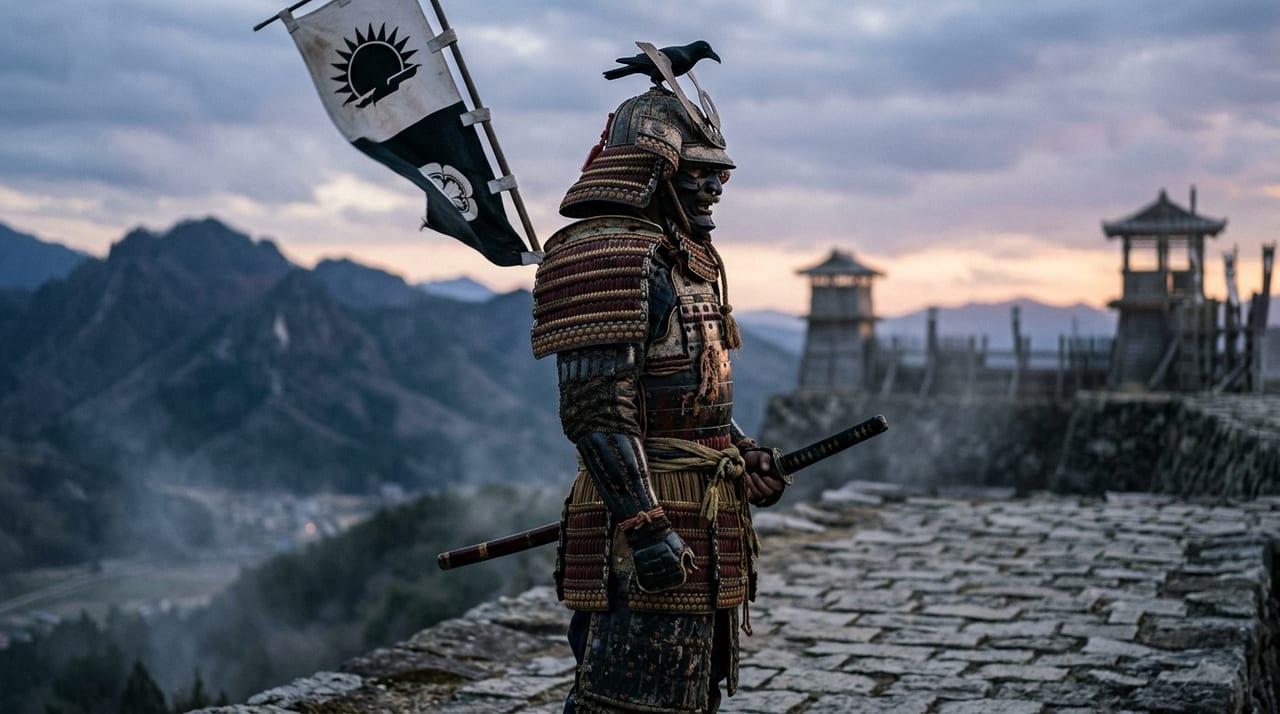
 * Image is for illustrative purposes only.
Takuan Sōhō
沢庵宗彭
The Rinzai Master Who Fused Zen and the Sword — Author of the Fudōchi Shinmyōroku
Description
Takuan Sōhō (1573-1646) was a Rinzai Zen priest of the early Edo period whose writings linking swordsmanship and Zen left a decisive mark on the history of Japanese martial arts.
Ordination and Daitoku-ji
Born in Izushi, Tajima Province, he took holy orders at the age of ten and trained at Daitoku-ji. In 1609 he was appointed the 153rd abbot of Daitoku-ji, but — being a man indifferent to fame and gain — is said to have resigned the abbacy after only three days and returned to Sakai. The anecdote is often cited as capturing his attitude toward authority and rank.
The Purple Robe Incident
In 1627 the shogunate voided Emperor Go-Mizunoo's imperial grant of the purple robe, in what became known as the Purple Robe Incident — an intervention by the shogunate into the traditional prerogatives of the imperial court. Takuan objected strongly and led the movement of protest, and as a result was exiled in 1629 to Kaminoyama in Dewa Province. There he was treated generously by the domain lord and is said to have lived in a hermitage called Shun'u-an. His refusal to bend his convictions before shogunal power made his name widely known.
Pardon and Tokugawa Iemitsu
Pardoned in 1632, he was granted an audience with the third shogun, Tokugawa Iemitsu. Iemitsu became a devoted patron, and Takuan remained in Edo in close attendance. In 1639 he was installed as founding abbot of Tōkai-ji, a temple established by Iemitsu. That a priest once sentenced to exile should come to found a major Edo temple under shogunal patronage speaks to the force of his character.
Yagyū Munenori and the Unity of Sword and Zen
Takuan maintained a close association with Yagyū Munenori, the Yagyū Shinkage-ryū swordsman who served as martial instructor to the shogunal house, and taught him the doctrine of the unity of sword and Zen. The resulting text is the Fudōchi Shinmyōroku ("Record of the Mental Sublimity of Immovable Wisdom"), which expounds the state of "immovable wisdom" — a mind that settles nowhere — and connects the Zen concept of no-mind directly to the deepest principles of swordsmanship. As the pioneering work explicitly binding Zen to the essence of martial practice, it exerted a long influence over subsequent Japanese martial thought. Though a priest who carried no sword, Takuan ranks among the most important figures in the intellectual history surrounding the Japanese blade.