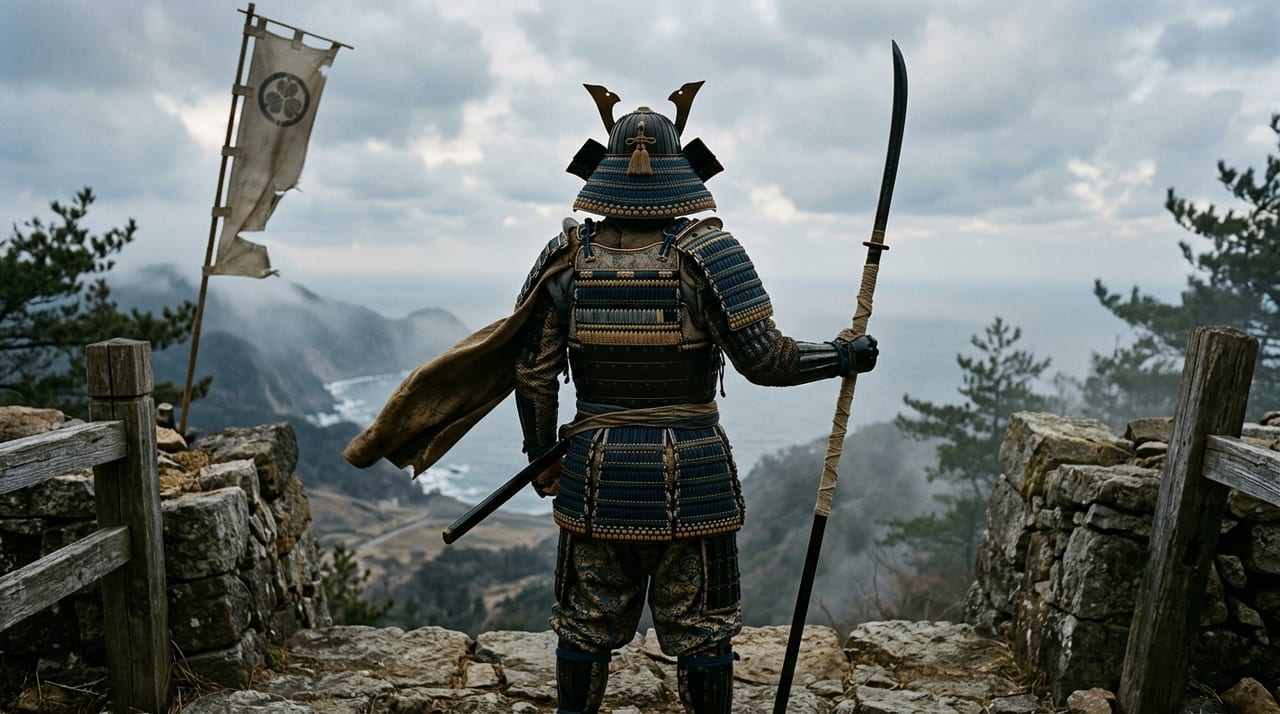
 * Image is for illustrative purposes only.
Takahashi Deishū
高橋泥舟
A master spearman counted among the "Three Boats of the Bakumatsu," who quietly helped bring about the bloodless surrender of Edo Castle
Description
Takahashi Deishū (1835-1903) was a shogunate retainer active from the Bakumatsu period into the Meiji era. Renowned as a master of the spear, he is counted alongside Katsu Kaishū and Yamaoka Tesshū among the "Three Boats of the Bakumatsu" (Bakumatsu no Sanshū).
Origins and Training in Spearmanship
Deishū was born the second son of the bannerman Yamaoka Masanari and was later adopted into the Takahashi family on his mother's side. His birth family, the Yamaoka, was a noted house of the Jitokuin-ryū (also called Ninshin-ryū) spear school; he trained under his elder brother Yamaoka Seizan and is said to have reached a level of skill described as "peerless in the realm" and "divine." When Seizan died suddenly at twenty-seven, Deishū reportedly considered following him in death, reflecting the depth of the bond between them.
From Kōbusho Instructor to Yūgekitai Commander
In 1856 he was appointed an instructor of spearmanship at the Kōbusho (shogunal military academy), rising to head instructor in 1860. In 1866 he was appointed commander of the newly formed Yūgekitai and head instructor of spearmanship, holding senior posts as a shogunate retainer.
The Three Boats of the Bakumatsu
Deishū is grouped with Katsu Kaishū and his brother-in-law Yamaoka Tesshū as the "Three Boats of the Bakumatsu." As a close aide to Tokugawa Yoshinobu, he supported the policy of submission after the Battle of Toba-Fushimi and guarded Yoshinobu during his confinement at Kan'ei-ji in Ueno. He was originally chosen by Yoshinobu to serve as envoy to Saigō Takamori, but, unable to leave his lord's side, recommended his brother-in-law Tesshū in his place — and it was Tesshū's subsequent negotiations with Saigō that are credited with paving the way to the bloodless surrender of Edo Castle.
Relationship with Yamaoka Tesshū
Tesshū had married into the Yamaoka family as the adopted husband of Deishū's sister Eiko, making the two brothers-in-law. Deishū is said to have helped Tesshū out of financial difficulty on more than one occasion, and the two maintained a deep bond of trust throughout their lives.
Anecdotes and Legacy
One anecdote holds that Deishū once told a moneylender, "This face is my collateral," and secured a loan on that basis alone. Katsu Kaishū described him as "a great fool — a man who, through ferocious training, became Lord of Ise with nothing but a spear," a barbed remark that nonetheless conveys respect for a life devoted single-mindedly to the spear. After the abolition of the domains he lived in quiet retirement in Tokyo, appraising calligraphy and antiques, and died in 1903.