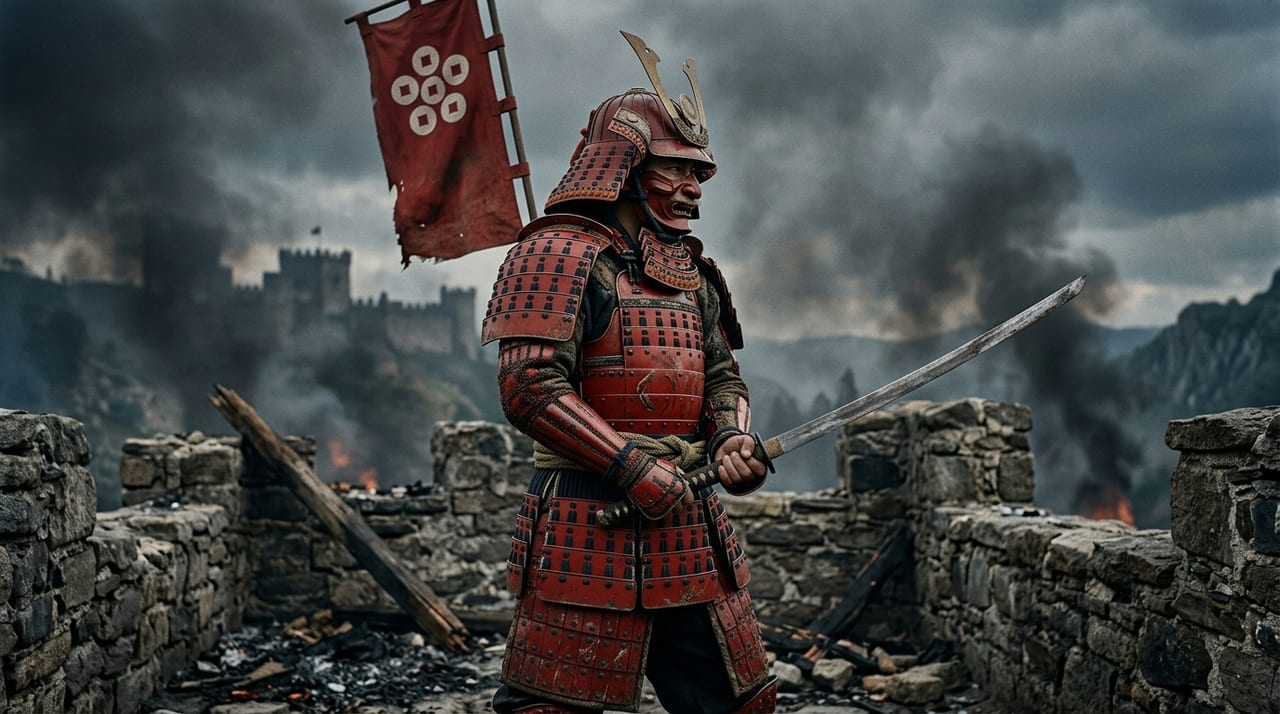
 * Image is for illustrative purposes only.
Kirino Toshiaki (Nakamura Hanjirō)
桐野利秋(中村半次郎)
One of the "Four Great Assassins" of the Bakumatsu Era, Imperial Army Major General
Description
Life
Born in 1838 in Kagoshima, Satsuma Province, as the third son of Nakamura Yoemon (also known as Kirino Kaneaki), a samurai of the castle town. His original name was Nakamura Hanjirō. Born into a poor family, he is said to have had no systematic teachers in scholarship or martial arts, but is reported to have mastered swordsmanship through self-study, reaching the level of an expert.
Swordsmanship
Some accounts hold that he trained under Yakumaru Kaneyoshi of the Yakumaru Jigen-ryū school, or under the Ijūin family of the Ko-Jigen-ryū line, though his exact line of teachers is not clear. He is said to have perfected, through his own efforts, the Jigen-ryū-style swordsmanship widely practiced among Satsuma retainers.
From the Bakumatsu Period to the Satsuma Rebellion
During the Bakumatsu period he took part in the Sonnō Jōi and anti-shogunate movements in Kyoto, serving as a close attendant of Saigō Takamori and acting in concert with him. In the Boshin War he served as a military inspector attached to the Imperial expeditionary headquarters and was responsible for receiving the surrender of Aizuwakamatsu Castle. Under the Meiji government he rose to major general and commander of the Kumamoto garrison, but in the political crisis of 1873 he resigned along with Saigō and returned to Kagoshima. In the Satsuma Rebellion of 1877 he commanded the 4th battalion as one of Saigō's field commanders. On September 24 of that year, in the final battle at Shiroyama, he was shot through the forehead and killed in action. He was 40 years old.
An Anecdote Involving Swords
It is reported that when Aizuwakamatsu Castle surrendered during the Boshin War, the former domain lord Matsudaira Katamori presented him with a pair of long and short swords mounted in gold and silver fittings. This episode, in which a defeated enemy commander gave swords to a victorious officer, is passed down as an illustration of both his martial renown and the weight that swords carried in the samurai society of the time.
Later Assessment
Feared under his original name Nakamura Hanjirō as "Hanjirō the Man-Slayer," he nevertheless served as a close confidant of Saigō Takamori, survived the upheavals of the Meiji Restoration, and ultimately died alongside Saigō in the Satsuma Rebellion. His life is still widely recounted today, and he is regarded as one of the figures who embody the Bakumatsu-Restoration era.