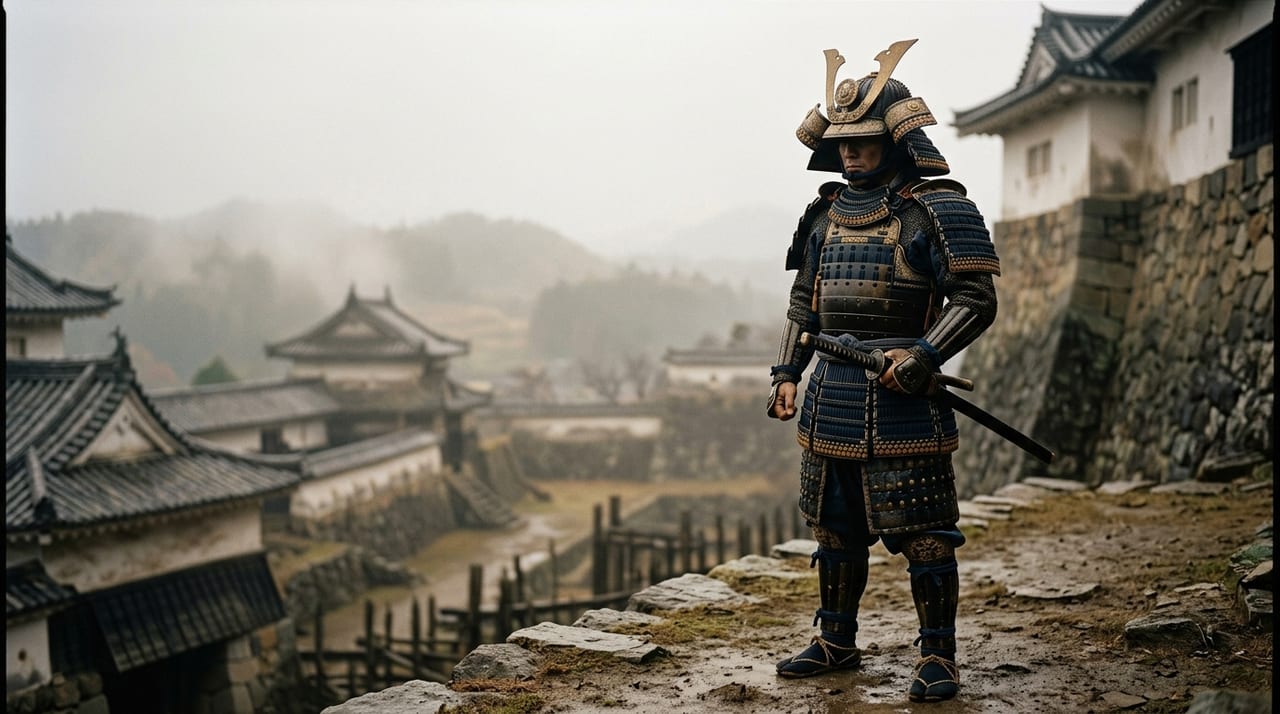
 * Image is for illustrative purposes only.
Shinagawa Yajirō
品川弥二郎
Disciple of Shōka Sonjuku, Minister of Home Affairs of Meiji Government
Description
Shinagawa Yajirō (1843–1900) was a late-Edo-period samurai activist from Chōshū Domain and a politician of the Meiji era. He was one of the youngest-class disciples who studied under Yoshida Shōin at Shōka Sonjuku. After contributing to the overthrow of the shogunate and the Meiji Restoration, he held key posts in the Meiji government, serving as Minister of Home Affairs, Minister to Germany, and others. He is also remembered in history as the instigator of the election interference (the Great Election Interference) in the 1892 (Meiji 25) 2nd general election for the House of Representatives.
Shinagawa was born the son of a Chōshū Domain samurai. He entered Shōka Sonjuku in his teens as one of its youngest-class disciples. When Yoshida Shōin was executed, Shinagawa was still only 16, but he inherited his teacher's spirit and threw himself into the movement to overthrow the shogunate. Working alongside Takasugi Shinsaku and others in the sonnō jōi (revere the emperor, expel the barbarians) movement, he fought as captain of the Hachiman-tai at the Kinmon Incident and later organized the Mitate-tai. In the Boshin War he served as staff officer of the Governor-General for the Pacification of Ōu, fighting across various regions, and contributed to the Meiji Restoration.
After the Restoration, he traveled to Europe in 1870 to observe the Franco-Prussian War and studied in Germany and other countries. After returning home, he served in posts such as Vice-Minister of Home Affairs (shōyū) and Vice-Minister of Agriculture and Commerce (taifu). He served as Minister to Germany from 1885 to 1887. After returning home, he held posts such as Privy Councillor and Director of the Imperial Estates Bureau of the Imperial Household Ministry. In 1891 he became Minister of Home Affairs in the first Matsukata cabinet.
The Great Election Interference, which Shinagawa carried out as Minister of Home Affairs, took place the following year, 1892. Fearing the Freedom and People's Rights Movement and the rise of party politics, Shinagawa worked with vice-minister Shirane Sen'ichi. Through the Home Ministry, they mobilized local administrative organs and systematically suppressed candidates of the people's parties (the Liberal Party (Jiyūtō), the Progressive Party (Kaishintō), and others) that opposed the clique government. The interference caused 25 deaths and 388 injuries nationwide, and Shinagawa was forced to resign.
During the turmoil of the late Edo period, he was active as a samurai activist who wore swords. He took part, together with Takasugi Shinsaku and others, in the burning of the British legation. The song “Tokoton'yare-bushi” (“Miya-san, Miya-san”), which the new government army sang during the Boshin War, is attributed to Shinagawa as its lyricist.
Related Warriors
伊藤博文
Late Edo Period (Bakumatsu) to Meiji EraItō Hirobumi
First Prime Minister of Japan, Architect of the Meiji Constitutional System
大村益次郎
Late Edo Period (Bakumatsu) to Meiji EraŌmura Masujirō
Father of the Meiji Army, Reformer of Modern Military System
前原一誠
Late Edo Period (Bakumatsu) to Meiji EraMaehara Issei
Disciple of Shōka Sonjuku, Leader of the Hagi Rebellion