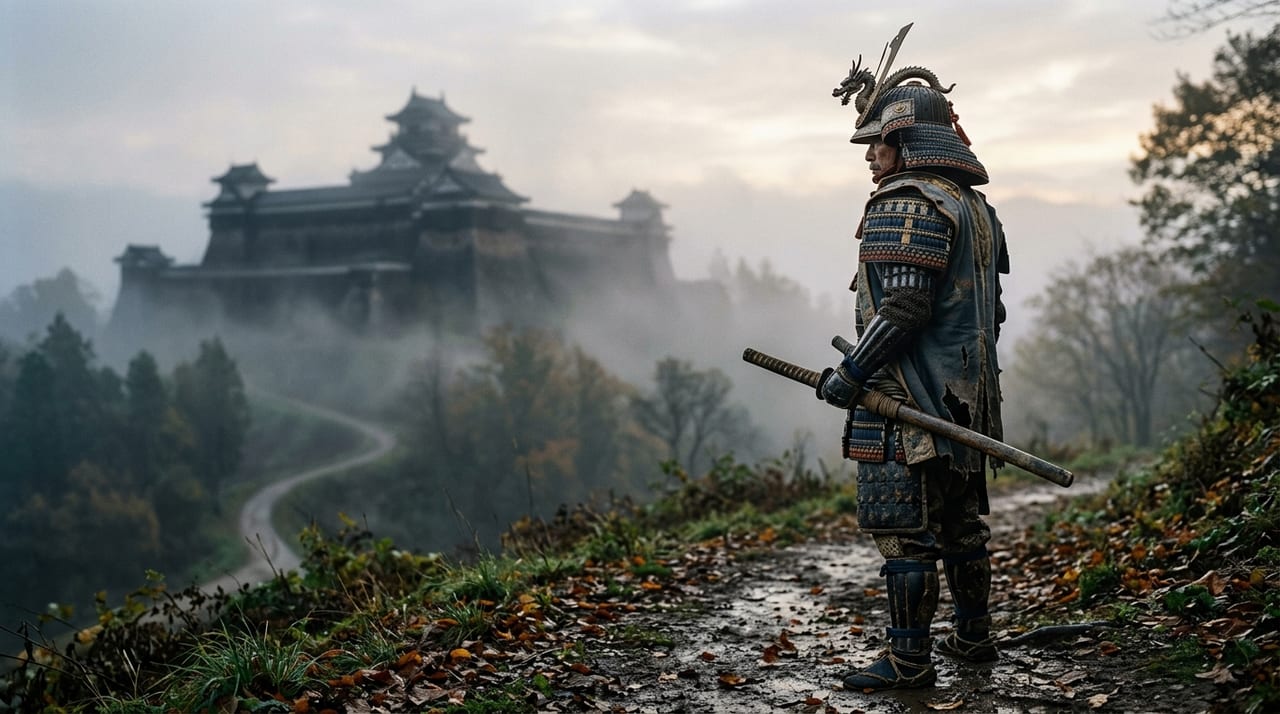
 * Image is for illustrative purposes only.
Shimazu Toshihisa
島津歳久
The Third of the Shimazu Four Brothers—A Fierce Satsuma General Who Resisted Toyotomi Hideyoshi to the End and Died for Righteousness
Description
A Wise Strategist and Fierce Warrior among the Four Shimazu Brothers
Born in Satsuma Province in Tenbun 6 (1537), Shimazu Toshihisa was the third of the four Shimazu brothers, who also included Yoshihisa, Yoshihiro and Iehisa. In the surging advance of the Shimazu house toward the unification of Kyushu, Toshihisa took on the role of a military strategist and supported his brothers with both cunning and martial prowess. Known for his calm, composed judgment combined with an intense fighting spirit, he is recognized as one of the most distinctive warriors of the Shimazu house.
Contribution to the Conquest of Kyushu
In the Tenshō era (1573–1592), the Shimazu house, united under the four brothers including Toshihisa, overwhelmed the daimyō of Kyushu one after another. At the Battle of Mimikawa in Tenshō 6 (1578), they destroyed the Bungo army of the Ōtomo clan, and at the Battle of Okitanawate in Tenshō 12 (1584), they killed Ryūzōji Takanobu, thereby establishing their hegemony over Kyushu. Toshihisa also played an important role in the unification of the three provinces of Satsuma, Ōsumi and Hyūga, and in the subjugation of Kyushu. His strategic vision and decisiveness, alongside the fierce courage of his elder brother Yoshihiro, were the pillars that sustained the Shimazu army.
Resistance to Toyotomi Hideyoshi: The Pride of Never Yielding
In Tenshō 15 (1587), the Shimazu house was forced to surrender during Toyotomi Hideyoshi's Kyushu Campaign. Whereas his elder brother Yoshihisa showed submission to Hideyoshi, Toshihisa never gave up his will to resist. It is said that during the Kyushu Campaign he had his retainers shoot arrows at Hideyoshi's palanquin, and that he did not take part in the military expedition to Korea (the Bunroku Campaign) due to illness (paralysis from a stroke, chūbu). Furthermore, he was regarded as the mastermind behind the Umekita Uprising, which incurred Hideyoshi's wrath. In Tenshō 20 (1592), pursued by the punitive army dispatched by his elder brother Yoshihisa, he met his end at Ryūgamizu (present-day Yoshino-chō, Kagoshima City). He died at the age of fifty-six. His final stand, in which he persisted in unyielding resistance to Hideyoshi, has been passed down to later generations as an embodiment of the righteousness and pride of the warrior.
Sword Culture of Satsuma
Satsuma Province, the home base of the Shimazu house, was a land that nurtured its own distinctive sword culture. The Naminohira school of swordsmiths is a group of smiths representing Satsuma, with a long history that continued vigorously from the Heian period through the Meiji era.