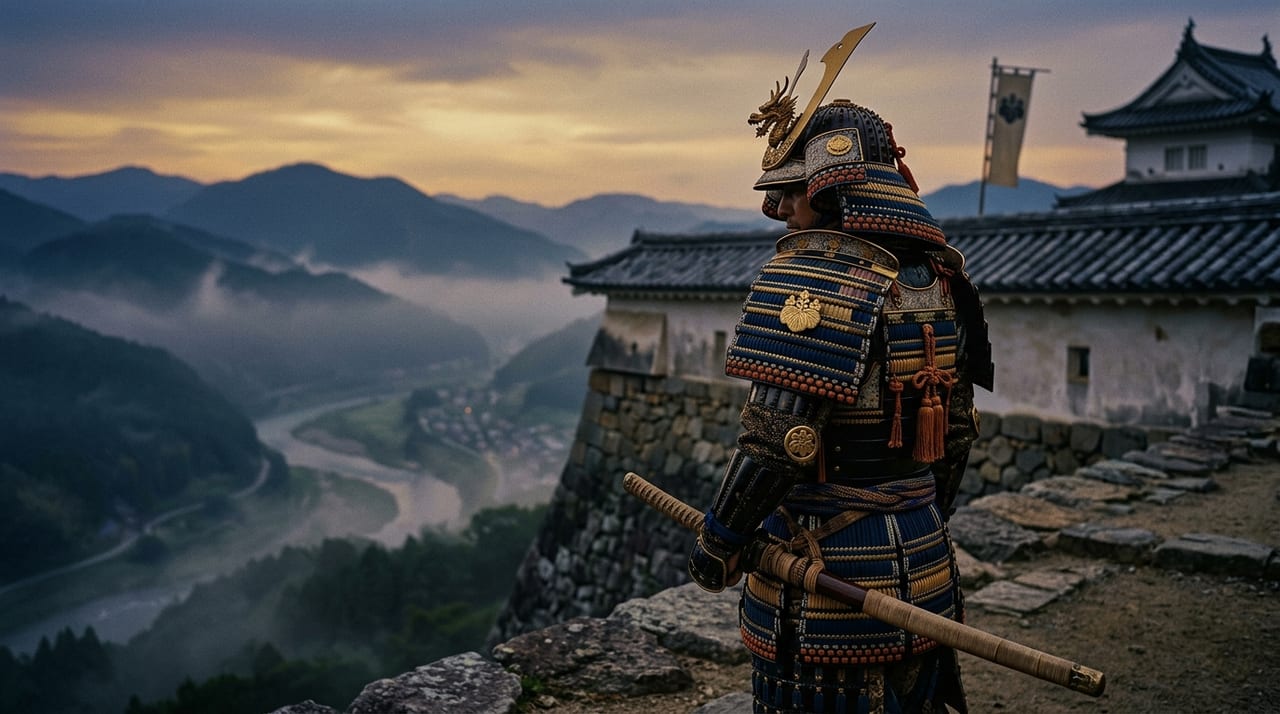
 * Image is for illustrative purposes only.
Ōuchi Yoshitaka
大内義隆
Lord of the Western Provinces and Patron of the Chinese Trade
Description
The Greatest Daimyo of Western Japan
Born in Eishō 4 (1507) in Suō Province (present-day Yamaguchi Prefecture), Ōuchi Yoshitaka, the thirty-first head of the Ōuchi clan who ruled over western Japan, was a daimyo who established Yamaguchi as a magnificent center of both military governance and sumptuous culture. The Ōuchi clan, controlling multiple provinces including Suō, Nagato, Iwami, Buzen, Chikuzen, and Hizen, was the greatest daimyo power in western Japan, its wealth sustained by tally trade with Ming China and Korea. Yamaguchi prospered so greatly it was called "the Kyoto of the West," and after the devastation of Kyoto during the Ōnin War, numerous court nobles, cultural figures, and artisans relocated to Yamaguchi, transforming it into a brilliant cultural metropolis.
Tally Trade with Ming and Sword Exports
The source of the Ōuchi clan's wealth and culture lay in its tally trade with Ming China. During Yoshitaka's era, Japanese swords were among the primary export goods, with tens of thousands of blades sometimes shipped to China on a single voyage. While most exported swords were utilitarian objects, particularly exceptional examples were highly valued as gifts for the Ming emperor and high officials. The trading ports of Hakata and Yamaguchi, controlled by the Ōuchi clan, became major distribution centers for swords, with renowned blades by master smiths from Bizen, Yamashiro, Yamato, and Chikuzen flowing through in large quantities. Yoshitaka was also an accomplished collector; backed by the immense wealth from trade, he acquired one after another the finest swords of his age.
The Golden Age of Yamaguchi Culture
Under Yoshitaka's patronage, the concentration of cultural figures and artists gathered in Yamaguchi was unparalleled in Japan of that era. Linked-verse poets, Noh actors, painters, physicians, Confucian scholars, and Zen monks—leading figures from every field—made Yamaguchi their base of operations. Francis Xavier himself visited Yamaguchi in Tenbun 19 (1550), met with Yoshitaka, and obtained permission for Christian missionary work. Yamaguchi in this era was not merely a provincial city but an international cultural metropolis where the cutting edge of Japanese culture was concentrated. Yoshitaka's sword collecting too was situated within this cultural context—not mere accumulation of weapons but grounded in a profound appreciation of swords as works of art.
The Shift from Martial to Cultural Pursuits
Though Yoshitaka showed military talent in his youth, as the Ōuchi clan established hegemony over western Japan, he increasingly devoted himself to the realm of cultural refinement. Before Mōri Motonari's rise, Yoshitaka repeatedly led expeditions into Aki and Iwami in conflicts with Amago Haruhisa, but after his failure to capture Yoshida Gōriyama Castle in Tenbun 9 (1540), he rapidly lost interest in military strategy. This shift created rifts within his samurai retainers, particularly with militaristic commanders like Sue Harukata. Though one may understand Yoshitaka's desire to abandon the martial way for cultural pursuits, the assessment that he abandoned his duty as head of a samurai clan in the age of Sengoku is unavoidable.
Sue Harukata's Rebellion and Yoshitaka's Tragic End
In Tenbun 20 (1551), when his chief retainer Sue Harukata rose in rebellion, Yoshitaka, with no means of escape, was cornered at Tairyōji Temple. There Yoshitaka took his own life, bringing his days to an end. He was forty-five years old. With Yoshitaka's death, the golden age of "Kyoto of the West" Yamaguchi came to an end, and the Ōuchi clan thereafter rapidly descended toward destruction. Though much of the cultural legacy Yoshitaka built was scattered and lost, treasures connected to Yoshitaka remain preserved in Yamaguchi's temples and shrines, transmitting the memory of his glory to the present day.
Contribution to Sword Culture
Yoshitaka's contribution through the Ōuchi clan's tally trade to the international circulation of Japanese swords holds significant historical meaning. Through exports to Ming, Japanese sword quality came to be recognized by international standards, contributing to the establishment of the assessment that "Japanese swords are the world's finest blades." Domestically as well, Yoshitaka's abundant wealth and cultural refinement provided patronage to sword smiths and created an environment for the production of exceptional blades. The period of the Ōuchi clan's prosperity was when the sword culture of western Japan flourished most abundantly, and Yoshitaka was a great patron at its center.
Notable Swords
- Fine sword from the tally trade collection — a masterwork by the Bizen or Yamashiro smiths, selected from the wealth of blades flowing through the Ōuchi trade networks; representative of the international prestige of Japanese swords in this era
- Diplomatic gift sword for the Ming court — a Japanese blade of the highest quality presented to the Ming emperor or his officials through the tally trade, helping to establish the global reputation of Japanese swordsmanship