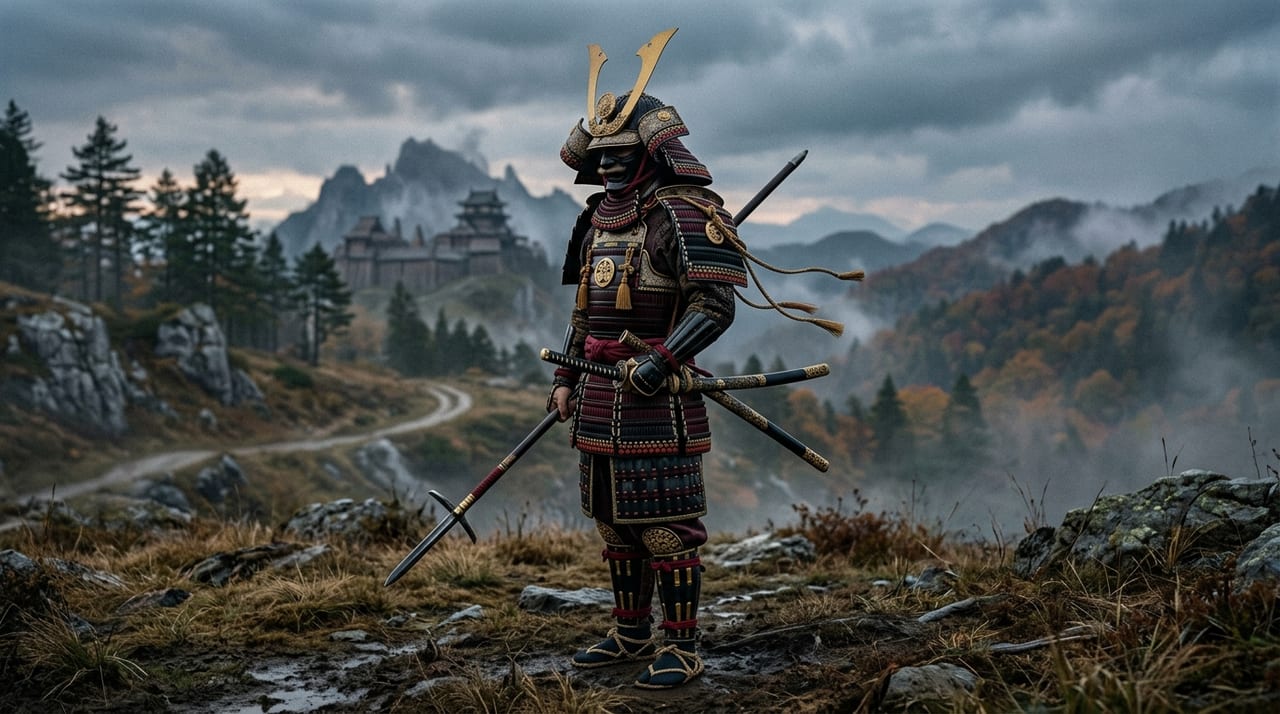
 * Image is for illustrative purposes only.
Imagawa Ryōshun
今川了俊
Kyushu Tandai, Master of Waka Poetry and Military Arts
Description
Imagawa Ryōshun (1326-1420) was a military commander and poet who was active from the Nanboku-chō period into the early Muromachi period. As the shogunate's Kyūshū Tandai, he subdued the Southern Court forces in Kyushu, and he also became a leading cultural figure in poetry and renga, earning a place in the history of Japanese literature. His secular name was Sadayo, and after taking Buddhist vows he called himself Ryōshun. Although there are various theories about his year of death, his longevity, said to be around ninety years, also reflects his eventful life.
Ryōshun came from the Imagawa clan of Suruga and studied martial arts, poetry, and learning from childhood. During the Nanboku-chō turmoil he fought on the Ashikaga (Northern Court) side in many regions, showing both his military and diplomatic talents. In 1370, on the recommendation of the kanrei Hosokawa Yoriyuki, Ryōshun was appointed Kyūshū Tandai to pacify the Southern Court forces in Kyushu. The task was extremely difficult, but Ryōshun used not only military force but also skillful diplomacy to undermine the Southern Court alliance. In 1372 he captured Dazaifu, forcing Prince Kaneyoshi and Kikuchi Takemitsu to retreat to Mount Kōra in Chikugo, and he later drove them into Higo.
Ryōshun's rule over Kyushu lasted more than twenty years (1371-1395). During this time he devoted effort to domestic administration in Kyushu. He also negotiated independently with Goryeo and worked to suppress wakō pirates. He sought to command the samurai of Kyushu not only through strength but also through cultural authority, including poetry and warrior traditions and practices.
Ryōshun's achievements in poetry and renga rival his reputation as a warrior. He wrote treatises on poetics such as Rakusho Roken and Gonjinshū, as well as the travel account Michiyukiburi, and he earned high regard as a cultural figure who spread the poetic path of the Reizei school. He studied under Reizei Tamehide to master the essentials of waka, and in his later years he instructed the poet-monk Shōtetsu.
In 1395, Ryōshun was removed from his post as Kyūshū Tandai by Ashikaga Yoshimitsu. Afterward he stayed away from the center of politics and spent his final years devoted to waka and renga. He also left works such as Nan Taiheiki. Living a long life, he witnessed the period from the Nanboku-chō turmoil to the height of the Muromachi shogunate. Combining literary and martial accomplishments and achieving top-level distinction as both a warrior and a man of letters, Imagawa Ryōshun's life is regarded as one of the most intellectually rich and capable figures produced by medieval Japan.