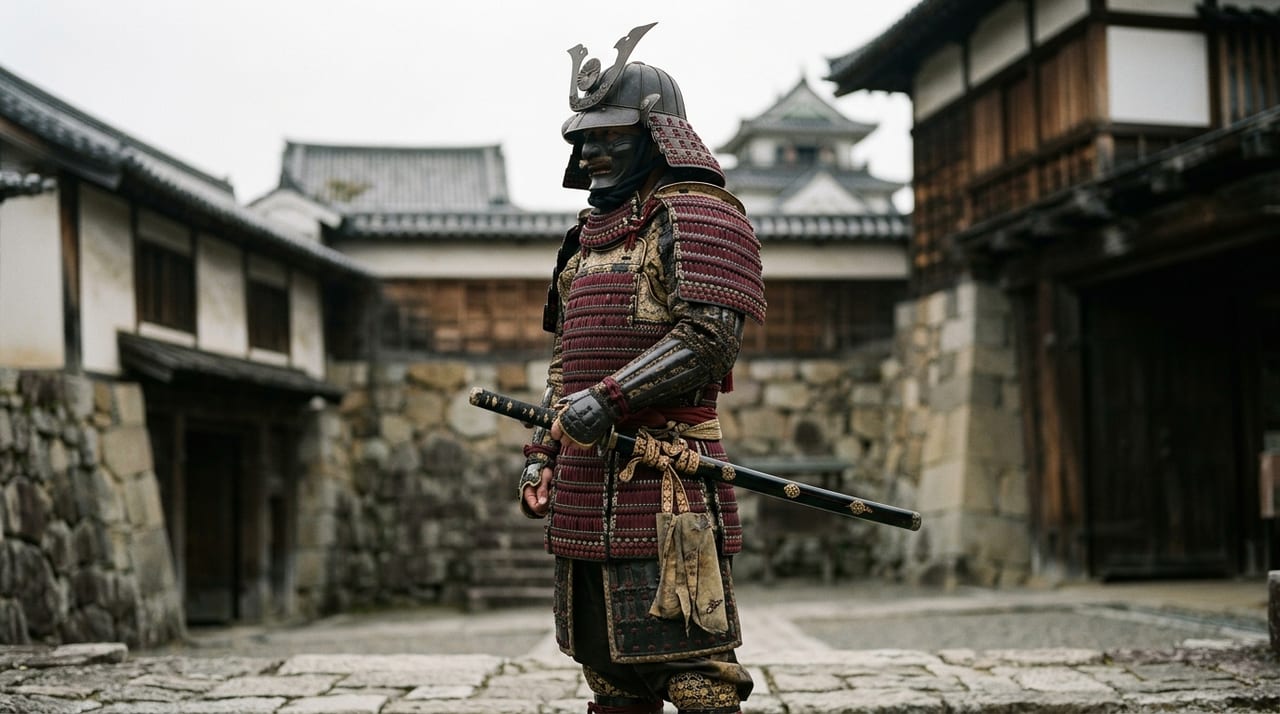
 * Image is for illustrative purposes only.
Honda Masanobu
本多正信
Tokugawa Ieyasu's Trusted Strategist and Shogunate Elder
Description
Life and Origins
Honda Masanobu was born in Tenbun 7 (1538) in Mikawa Province, the son of Honda Toshimasa. His common name was Yahachirō. Although he served Tokugawa Ieyasu from a young age, he sided with the rebels in the Mikawa Ikkō-ikki uprising that broke out in Eiroku 6 (1563). As a result, he came into conflict with Ieyasu and was expelled from Mikawa. He then wandered through various provinces, and it is said that he spent some time in Kaga Province.
Return to Service and Restoration of Ieyasu's Trust
Through the good offices of Ōkubo Tadayo, Masanobu returned to Ieyasu's service and restarted his career as a falconer. Rather than displaying martial prowess, he demonstrated the qualities of an administrative official skilled in governance, strategy, and negotiation, and he gradually regained Ieyasu's trust. In Tenshō 14 (1586), when Ieyasu submitted to Toyotomi Hideyoshi, Masanobu was appointed to Junior Fifth Rank, Lower Grade, and Sado-no-kami on Hideyoshi's recommendation. From then on, he came to be called “Sado-dono.”
Governance after Entering the Kantō
Following the Odawara campaign in Tenshō 18 (1590), Ieyasu was transferred to the Kantō. Masanobu was granted 10,000 koku at Tamanawa in Sagami Province and joined the ranks of the daimyō. As Kantō sō-bugyō (chief commissioner of the Kantō), he took part in establishing the governing system of the new domain, and he showed his skill in domestic affairs such as land surveys and road improvement.
Founding of the Edo Shogunate and Service as Rōjū
At the Battle of Sekigahara in Keichō 5 (1600), he accompanied the army of Tokugawa Hidetada. After the Edo shogunate was established in Keichō 8 (1603), he took part in the central affairs of the shogunate. Standing apart from martial-merit retainers such as Ii Naomasa and Sakakibara Yasumasa, he served as an administrative official and devoted himself to establishing the legal system and fiscal foundations of the shogunate. From Keichō 12 (1607) onward, he served as rōjū (senior councillor) attached to Hidetada, and he continued to support the founding period of the shogunate across the reigns of both Ieyasu and Hidetada.
Relationship with Ieyasu and Anecdotes
It is said that Ieyasu called Masanobu his “friend” and treated him as more than an ordinary retainer. Many martial-merit retainers regarded him with wariness and hostility as a scheming counselor, but Ieyasu's own trust in him never wavered for the rest of his life. Masanobu is said to have admonished his heir Masazumi with the words, “Accept up to 30,000 koku, and decline any increase beyond that.” This reflects a sound philosophy of conduct that warned against complacency in positions of power.
Later Assessment
He died on 20 July 1616 (Genna 2/6/7), at the age of 79, only two months after Ieyasu's death. It is a coincidence that he died in the same year as his lord, and this is passed down as an anecdote that symbolizes the deep bond between the two. Even today, he is highly regarded as an exceptionally wise strategist who laid the foundations of the Tokugawa regime through a talent for governance and statecraft that cannot be measured by martial achievement.