 * Image is for illustrative purposes only.
Date City Museum of History and Culture
だて歴史文化ミュージアム
Overview
A Museum of the Watari-Date Samurai Who Migrated to Hokkaido
The Date City Museum of History and Culture is a municipal museum opened on April 3, 2019 by the city of Date, Hokkaido. It was built as the successor to the aging Date City Pioneer Memorial Hall (opened 1958) and the Miyao Tomiko Literary Memorial Hall, consolidating both into a single facility of roughly 1,500 square meters. Its three areas of specialization are Jomon and Epi-Jomon culture, Ainu culture, and the Watari-Date family. The Watari-Date, from whom the city takes its name, were a samurai house that migrated as a group from Watari in Miyagi Prefecture to Usu District in Hokkaido, carrying their samurai culture with them—a lineage unusual in Japan.
Arms, Armor, and Swords Brought by the Watari-Date
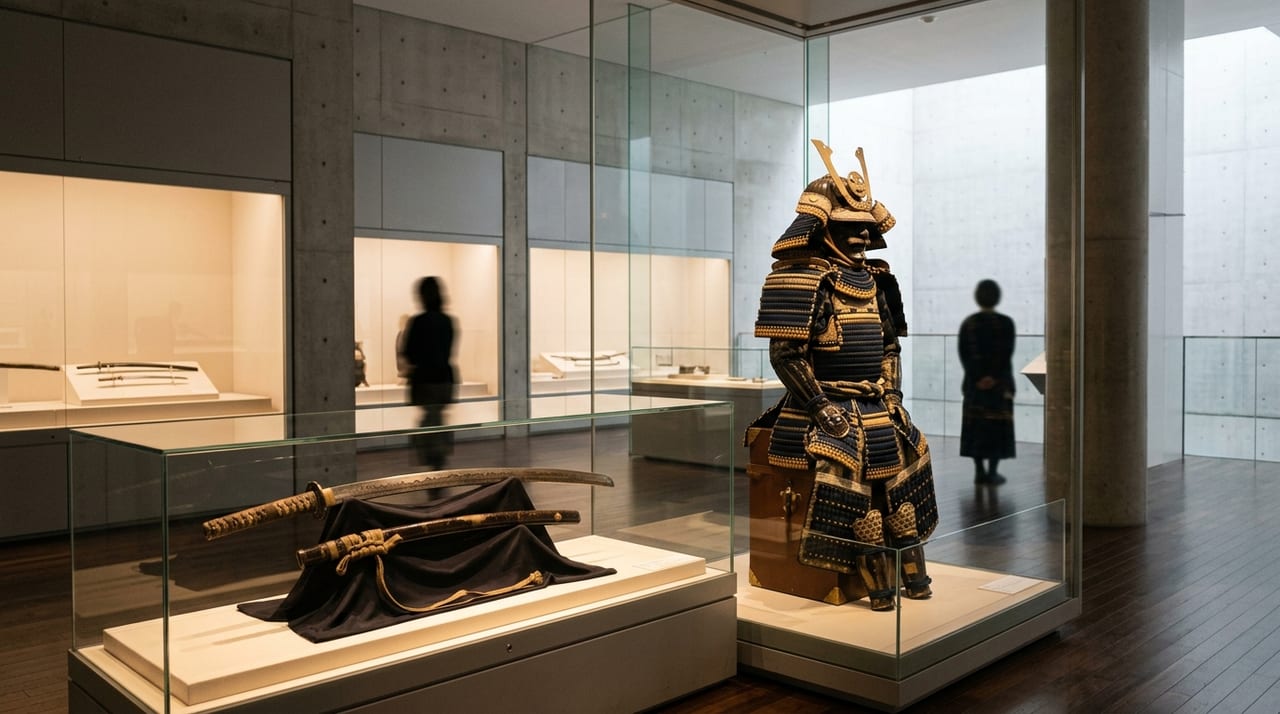
The core of the museum's samurai holdings consists of the arms, armor, and swords the Watari-Date family brought with them at the time of migration, together with records relating to their retainer corps. That the arms of the Watari-Date, a branch house of the Sendai domain, were transported to a Meiji-era frontier settlement and preserved rather than dispersed gives the collection particular documentary value. The armor and swords are shown through special exhibitions, including thematic displays introducing the samurai custom of displaying armor at the Boys' Day festival. Framing samurai culture as a living tradition maintained in a place of resettlement offers sword enthusiasts a perspective distinct from that of castle keeps and daimyo treasure houses.
The Swordsmith Workshop and Hands-On Learning Hall
The adjoining hands-on learning hall houses an indigo dyeing workshop and a swordsmith workshop. In the swordsmith workshop, visitors can observe the processes, tools, and materials of sword making, gaining an understanding of how a Japanese sword is forged rather than viewing finished blades through glass alone. Few museums in Japan maintain a sword-forging facility on site, and it is among this museum’s distinguishing features.
Jomon and Ainu Culture, and an Important Cultural Property
Alongside the samurai material, a second pillar of the collection is the assemblage excavated from the Usu-Moshiri site, designated an Important Cultural Property of Japan and held by the museum. Materials on Jomon and Epi-Jomon culture and on Ainu culture are also systematically displayed, allowing visitors to trace the accumulated layers of human activity along the shores of Uchiura Bay within a single institution. The juxtaposition of samurai, Indigenous, and prehistoric culture under one roof is characteristic of museums in Hokkaido.
Layout and Visiting
The first floor holds the Learning Studio, used for workshops, lectures, and displays, and the Library Commons, which serves as both a reading room and a space for community collections; the first floor is free of charge. The second floor contains the permanent exhibition room and a special exhibition room for temporary and featured shows. Since fiscal 2022 the museum has operated under the designated manager system, administered by the Date Tourism and Products Corporation.
Highlights
- Arms, armor, and swords handed down in the Watari-Date family — brought from Watari in Miyagi to Hokkaido by a migrating samurai house, together with retainer-corps records
- Swordsmith workshop — attached to the hands-on learning hall, where the processes, tools, and materials of sword making can be observed on site
- Artifacts from the Usu-Moshiri site — a nationally designated Important Cultural Property representing prehistoric culture on Uchiura Bay
- Boys' Day armor displays — seasonal exhibitions linking the museum's armor and swords to samurai annual customs
- Permanent displays on Jomon, Epi-Jomon, and Ainu culture — samurai, Indigenous, and prehistoric culture juxtaposed in a single institution
* Opening hours and exhibitions are subject to change. Please check the official website before visiting.