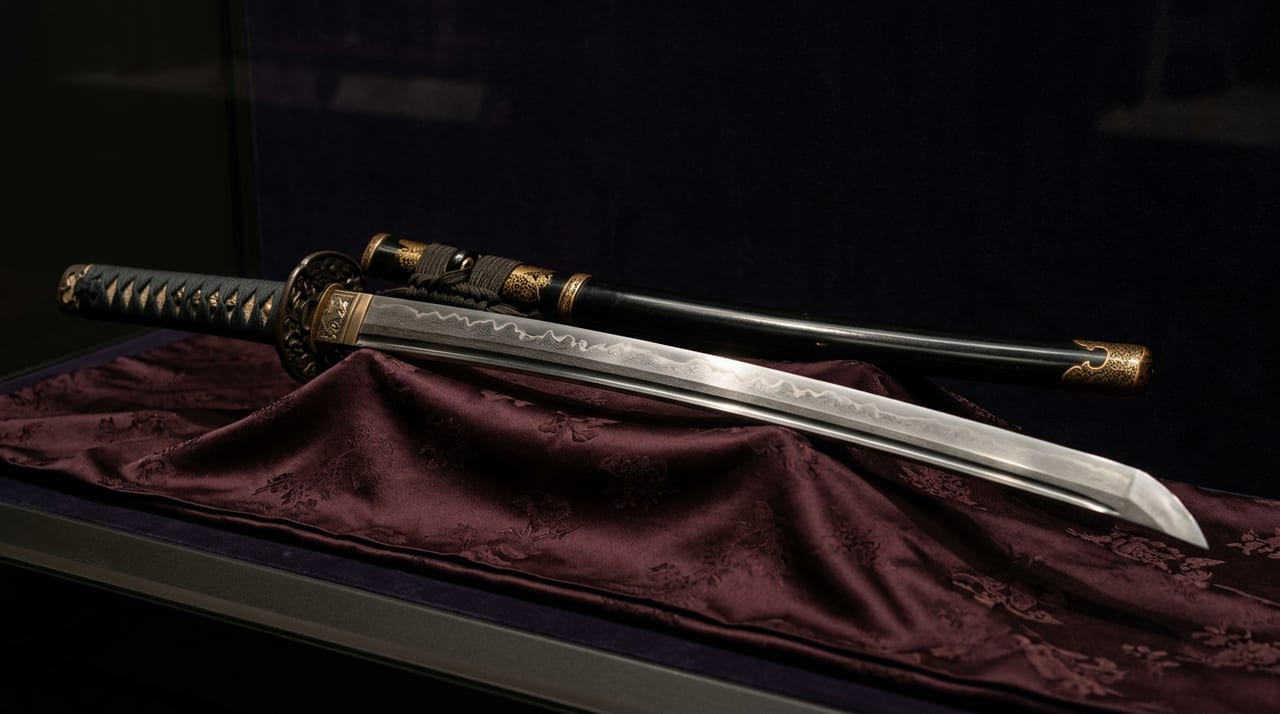
 * Image is for illustrative purposes only.
Yamashiro Nobukuni
山城信国
Also known as: Nobukuni; the first-generation Nobukuni; Kyo Nobukuni
Description
The Smith Nobukuni
Nobukuni was a swordsmith of Yamashiro Province (present-day Kyoto) in the Nanbokucho period, active in the capital around the Enbun and Joji eras (1356-1368). Accounts of his training and lineage vary: some genealogies describe him as the son or grandson of Nobuhisa of the Rai school, while another tradition holds that he trained for decades as a disciple under Ryokai. In any case, while inheriting the Rai and Ryokai traditions, he is said to have studied under the Soshu master Sadamune and actively absorbed the Soshu tradition then being introduced into Yamashiro.
A Fusion of Rai and Soshu
Nobukuni's work combines two characters: the straight temper line inherited from the Rai and Ryokai lines, and the undulating notare derived from the Soshu tradition. His notare shows nie-suji and kinsuji activity, giving great variety within the temper. Many of his blades display utsuri in the ground and a bright, clear habuchi. Together with Hasebe Kunishige, he is placed in sword history as one of the smiths who established the Soshu tradition on Yamashiro soil.
A Master of Carving
Nobukuni was also known for his skill in horimono, and works survive bearing religious carvings associated with the name Daishinbo. Carvings of Fudo Myoo, Sanskrit characters and kurikara reflect the devotional climate of the Nanbokucho period and are considered a high point of blade carving. The chestnut-shaped end of the tang is another feature by which his work is identified.
Development of the Nobukuni School
After the first generation, the Nobukuni name passed down through successive smiths, and in the Muromachi period a group known as Oei Nobukuni was active. The school also spread to Kyushu, continuing into the early modern era as Chikuzen Nobukuni. Several first-generation works dated to the Enbun and Joji eras are designated Important Cultural Properties, conveying the standard of Nanbokucho Yamashiro blades to the present day.
Legends & Stories
Nobukuni was celebrated as a master of blade carving, and his horimono are handed down under the name Daishinbo. Blades carved with Fudo Myoo or Sanskrit characters embody the Nanbokucho-period notion of a sword as an object of devotion rather than merely a weapon, and later smiths took them as models.
Related Famous Swords
藤島友重の太刀
Important Cultural Property and Important Sword (Multiple Designations)Fujishima Tomoshige's Tachi
Fujishima Tomoshige
短刀 銘備州長船住長重
National TreasureTanto Signed Bishū Osafune-jū Nagashige
Nagashige (Bizen Osafune, Chōgi school)
太刀 銘 元重
Important Cultural PropertyTachi Signed Motoshige
Motoshige
瀬登太刀
Important Cultural PropertySenobori Tachi
Unknown (unsigned)