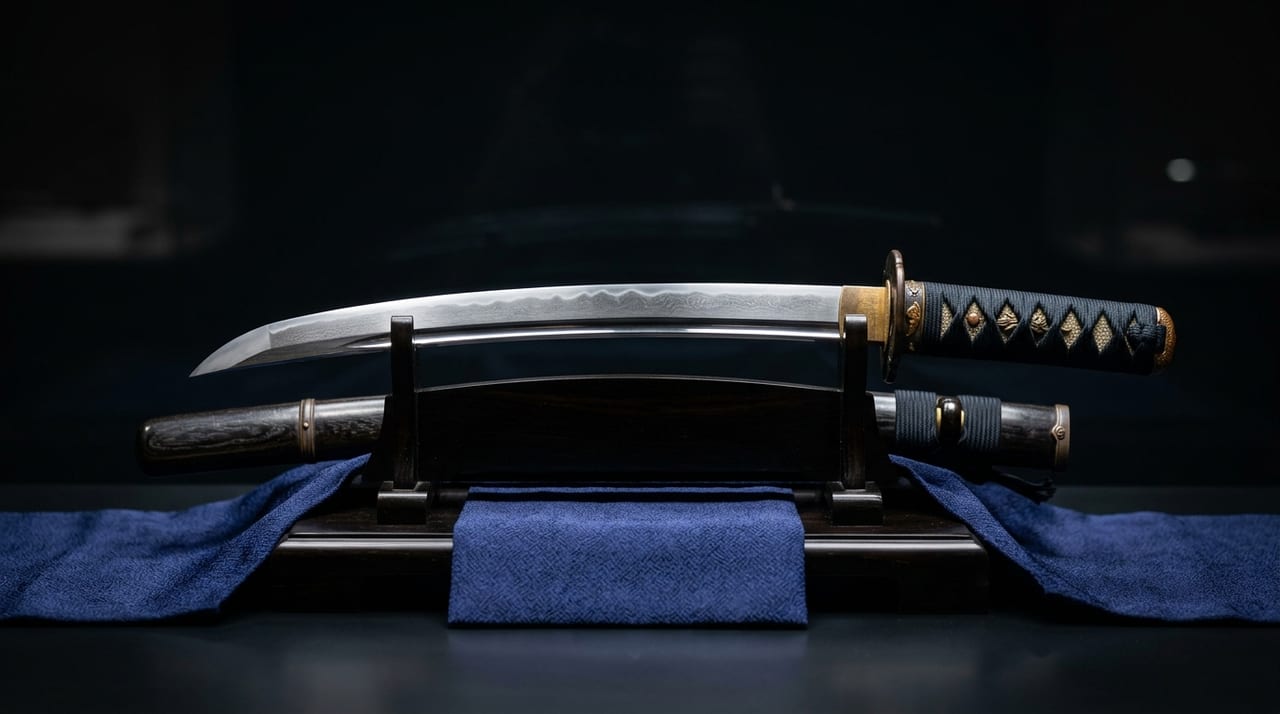
 * Image is for illustrative purposes only.
Uesugi Tachi
上杉太刀
Also known as: Uesugi Tachi — Guncho-mon Hyogo-gusari Tachi, Fukuoka Ichimonji, Mishima Taisha votive National Treasure
Description
About the Uesugi Tachi
The Uesugi Tachi is a tachi forged in the Kamakura period (13th century) in Bizen Province (present-day Okayama Prefecture) by the Fukuoka Ichimonji school. Its formal name is "Gunchō-mon Hyōgo-gusari Tachi, tōshin-mei Ichi (Uesugi Tachi)," and the blade and the hyōgo-gusari tachi koshirae are together designated as a National Treasure. It is currently owned by the Tokyo National Museum. The tang of the blade is inscribed with the character "Ichi," the Fukuoka Ichimonji school's mark, showing that it was made by that school.
Origin of the Name and Mishima Taisha
The name of the sword derives from the Uesugi clan, who dedicated it. This tachi was a dedicated sword that was long transmitted at Mishima Taisha in Izu Province (present-day Shizuoka Prefecture). Because the Uesugi clan donated it to Mishima Taisha, it came to be called the "Uesugi Tachi." Mishima Taisha is an ancient shrine also known for having been revered by Minamoto no Yoritomo, and it carries down to the present day the tradition of samurai offering tachi. In 1887 (Meiji 20), it was presented to Emperor Meiji, and it later became part of the collection of the Tokyo National Museum.
The Value of the Hyōgo-gusari Tachi Koshirae
The greatest distinguishing feature of this tachi is that, along with the blade, a Kamakura period tachi koshirae has been transmitted in nearly complete form. The hyōgo-gusari tachi koshirae is a prestigious tachi koshirae that uses chain for the obitori for wearing the sword. On the scabbard, a pair of birds is depicted in slightly raised relief on a ground of maki-e lacquer in which fine gold powder has been sprinkled, and the silver fittings depict a flock of birds, each bird shown differently. The name "gunchō-mon" derives from this bird pattern. Because tachi koshirae that were put to practical use were usually subject to damage and alteration, examples of 13th-century koshirae surviving in their original form are extremely rare, and they hold unique value in the history of craft arts.
Style and Evaluation
Although the quality of the blade itself is excellent, the Uesugi Tachi is highly valued as a National Treasure, because it has been transmitted with its contemporary tachi koshirae complete and embodies the comprehensive beauty of swordmaking, metalwork, and lacquer art.
Legends & Stories
Mishima Taisha is famed as the shrine where Minamoto no Yoritomo prayed for the Minamoto revival, preserving the warrior custom of dedicating swords. Offered by the Uesugi, this tachi miraculously retains its original 13th-century hyogo-gusari mounting, transmitting the faith of the samurai and the finest craft of its age.