 * Image is for illustrative purposes only.
Kuwayama Mitsukane
桑山光包
Also known as: Rai Mitsukane / Chūdō-rai / Maeda family heirloom
Description
A tantō by the smith who secluded himself in the Konpon Chūdō
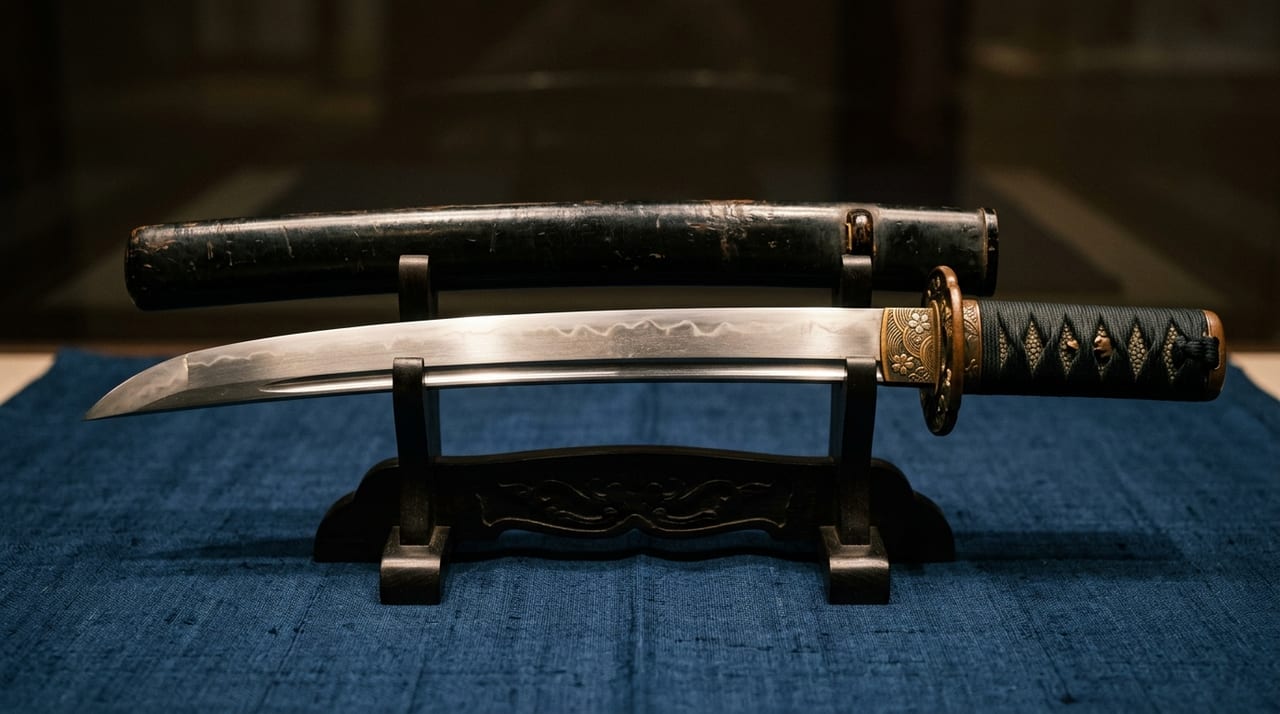
The Kuwayama Mitsukane is a tantō by Mitsukane, a swordsmith active in the late Kamakura period. He is said to have been an illegitimate son of the Osafune smith Nagamitsu, and trained under Rai Kunitoshi, the master who brought the Kyoto Rai school to its peak, before moving to Ōtsu in Ōmi province. Because he forged blades while secluded in the Konpon Chūdō, the main hall of Enryaku-ji, he was also known as "Chūdō Rai" or "Rai Mitsukane." The steel shows a tightly forged itame grain, and the temper line follows Kunitoshi's fine suguha style mixed with small chōji, with carvings of a Fudō Myōō sword and Sanskrit characters on both faces. The signed, hira-zukuri blade measures 8 sun 9.5 bu (about 27.3 cm).
From the Kuwayama house to the Maeda
The name comes from Kuwayama Motoharu, son of Kuwayama Shigeharu, a retainer of Toyotomi Hideyoshi, who first owned the blade. In 1630, when Kuwayama Sadaharu died without an heir, his brother Kuwayama Eisei is said to have presented this tantō to the second shogun Tokugawa Hidetada, securing the house's survival as a 1,000-koku hatamoto family. In 1636 the third shogun Tokugawa Iemitsu granted the blade to Maeda Toshitsune, second lord of Kaga domain, in recognition of his service, and it has descended in the Maeda family since.
Designation and present whereabouts
The blade is designated an Important Cultural Property and is now held in a private collection.
Legends & Stories
A single blade that saved a family's name
The Kuwayama house descended from Kuwayama Shigeharu, a trusted retainer of Hideyoshi, but when its second head, Sadaharu, died without an heir the family faced extinction as a daimyo house. His brother Eisei is said to have carried this Mitsukane tantō to Edo Castle and presented it to the second shogun Tokugawa Hidetada, whereupon the family's continuation was approved; the Kuwayama survived as hatamoto retainers of 1,000 koku. The episode is remembered as a case in which a celebrated blade rescued a house from the brink of dissolution.