Yamashiro Province Uprising (1485, Bunmei 17)
Bunmei 17 (1485)
Southern Yamashiro Province (Kami-san-gun: Kuze, Tsuzuki, Sōraku)
- Date
- Bunmei 17 (1485)
- Location
- Southern Yamashiro Province (Kami-san-gun: Kuze, Tsuzuki, Sōraku)
- Result
- Both Hatakeyama armies withdrew, and southern Yamashiro governed itself for about eight years. The sōkoku broke up in 1493, and the uprising ended in the 11th month of 1494.
Forces
Local lords and peasants of Yamashiro
Both Hatakeyama armies (Masanaga and Yoshinari)
About 3 min read
Background
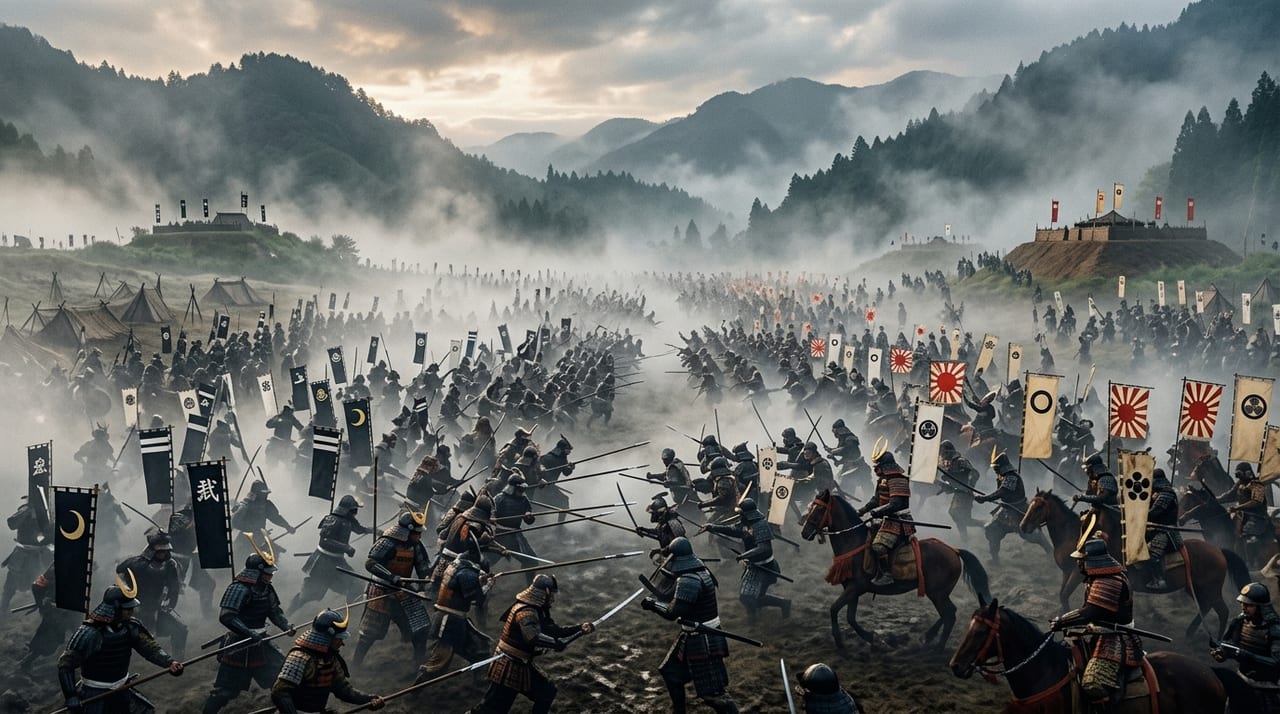
The long dispute between Hatakeyama Masanaga and Yoshinari over the succession had worn down the local lords and peasants of Yamashiro Province. Since the 10th month of 1485 (Bunmei 17), the two Hatakeyama armies had faced each other across the Uji River for about sixty days.
The Uprising and Self-Rule
On the 11th day of the 12th month, the local lords held an assembly, demanded that both armies withdraw, and made them pull back. At the assembly they drew up a code of rules for the province. From then on a group of leading local lords known as the "Thirty-six" ran political affairs, and this system is called the "sōkoku." In southern Yamashiro (Kami-san-gun: Kuze, Tsuzuki and Sōraku), self-government lasted about eight years.
The Shogunate's Response
Hosokawa Masamoto and others looked on without intervening. In 1486 the shogunate appointed Ise Sadamichi as shugo and recognized the uprising side's rights of police and judicial authority (kendan) and of hanzei, among others. The uprising is regarded as not having been opposed to the shogunate or to the shugo-domain system itself.
The End and Its Study
In 1493 (Meiō 2), the local lords favoring the Ise clan decided to give up self-rule, and the sōkoku broke up. The opposing faction held out in a castle but was defeated in the 11th month of the following year, 1494, and the uprising came to an end. The uprising became widely known after Miura Hiroyuki took it up in a paper in 1912.