New Arrivals — Browse our catalog for the latest authentic Japanese sword arrivals. Browse →
8th month, Shōchō 1 (1428) – Shōchō 2 (1429)
Ōmi, Kyoto, Yamato, Kawachi, and Harima (regions near the Kinai heartland)
Forces
Peasants, Horse-carriers, and Townspeople (uprising forces)
Muromachi Shogunate / Samurai-dokoro
About 16 min read
The Shōchō Uprising (Shōchō no tsuchi ikki) was a large-scale popular uprising by peasants, bashaku (packhorse carriers), and commoners during the Muromachi period. It began with the uprising of the bashaku of Ōmi Sakamoto in the 8th month of Shōchō 1 (1428) and spread rapidly across Kyoto and the Kinai provinces. The insurgents demanded tokusei (debt cancellation), meaning the cancellation of debts and the voiding of loan documents, from the shogunate. One after another, they attacked the dosō (pawnbrokers) and sakaya, who were the financiers of the day. This incident is singled out in historical scholarship as the first large-scale tsuchi ikki that gave the ruling class a real sense of crisis. It is an important pivot in the study of the Muromachi period, as the event in which organized armed action by the common people first appeared on the stage of history.
In the year Shōchō 1 (1428), several crises overlapped. Crop failures continuing from the late Ōei era, and an epidemic called "mikka-yamai" ("three-day sickness"), struck the villages directly, and food shortages and a decline in labor became severe. In the same year, Ashikaga Yoshimochi, the fourth shogun, died suddenly, and a political upheaval followed in which Ashikaga Yoshinori was chosen as successor by an unusual method: lottery. There was a folk belief that tokusei was customarily carried out at a change of generation in the shogunate, and the shogunal succession raised the expectations of the common people. Furthermore, Emperor Shōkō died, and there was also a change of generation at the imperial court. The strong expectation that "this year debts will finally be cancelled," together with the sense of threat to survival from famine and epidemic, formed the psychological ground for the people's uprising.
In the 8th month of Shōchō 1, the bashaku (transport operators) of Ōmi Sakamoto and Ōtsu rose up and demanded tokusei. The bashaku were transport operators who carried agricultural products, timber, charcoal, and other goods by oxen and horses, and they were an important occupational group responsible for the logistics of the shōen economy. The uprising of the bashaku, driven into a corner by the heavy burden of levies and economic depression, immediately spread to the peasants and commoners around Kyoto. The insurgents burst into the city of Kyoto and attacked the dosō (pawnshops and usurers) and sakaya (businesses that brewed and sold sake while running moneylending on the side), the financiers of the day. By seizing and destroying the loan documents (shichitori shōmon) held by the dosō and sakaya, they sought to realize, in effect, a "private tokusei" (shi tokusei). The Muromachi shogunate met this situation with a hard-line response. It prohibited buke hikanin (retainers of warrior households) from cooperating with the uprising, and through Akamatsu Mitsusuke, chief of the Samurai-dokoro (Board of Retainers), it issued an edict prohibiting entry into the dosō and sakaya.
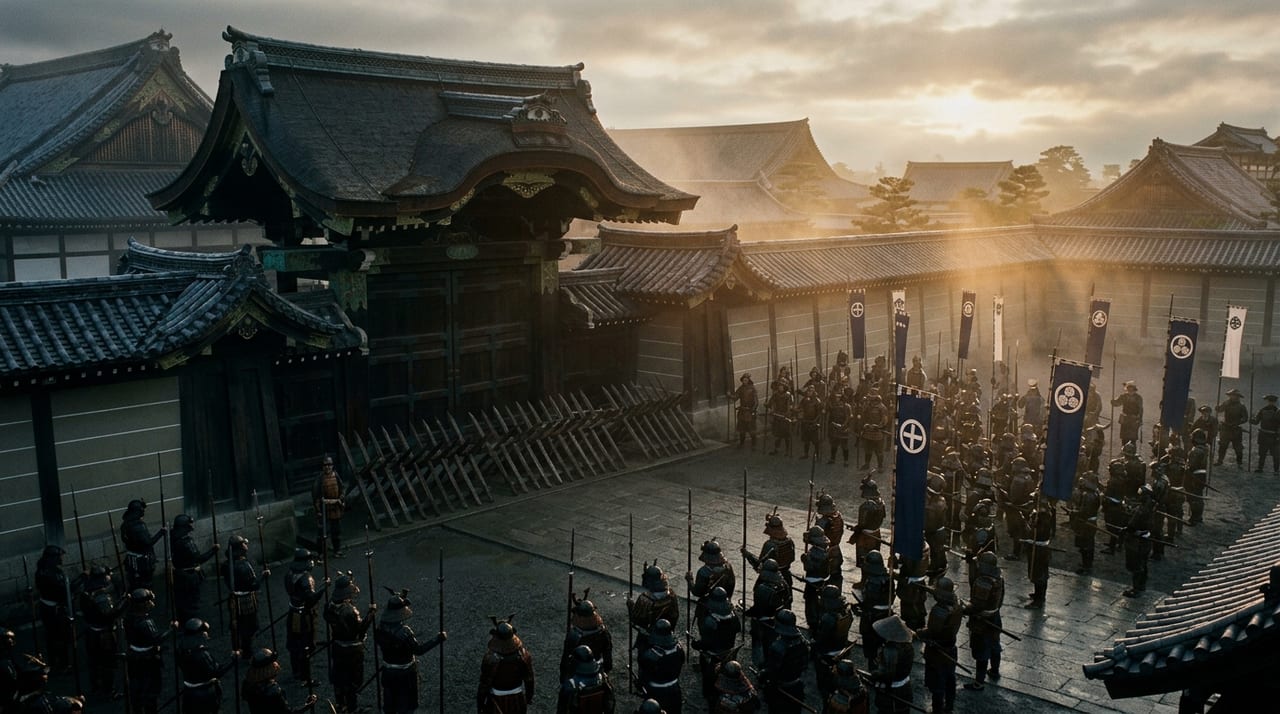
The participants in the tsuchi ikki were centered on bashaku and peasants, but it is thought that shōkan (estate officials) and warriors also joined the uprising and directed the peasants and others. The shogunate's move to suppress the uprising through Akamatsu Mitsusuke shows that this incident had the structure of the execution of public authority by warriors' swords, that is, the armed suppression of the insurgents. The scene of Samurai-dokoro warriors, wearing swords, confronting the peasant uprising clearly shows the Muromachi-period power structure, in which warriors' swords functioned as symbols of public authority.
The uprising did not remain confined to Ōmi and Kyoto. In the 11th month, it spread to Nara (Yamato), as well as to Kawachi and Harima. In Nara, Kōfuku-ji approved the enforcement of a tokusei edict, and an unusual situation arose in which an official tokusei was implemented within Yamato Province. The uprising in Harima (the Harima kuni ikki) raised the slogan "Samurai must not be allowed to remain within the province," and took on a radical character that rejected the rule of the warriors themselves. This Harima uprising was suppressed by Akamatsu Mitsusuke, but its fierceness gave a serious shock to the shogunate and the shugo daimyō. On the rock of the Hōsō Jizō in Yagyū-chō, Nara City, an inscription was carved declaring a tokusei: debts incurred before the first year of Shōchō must not exist at all in the four villages of Kanbe (the Kanbe Shikagō). This inscription survives today as a primary source showing the actual conditions of the Shōchō Uprising.
The historical significance of the Shōchō Uprising is multifaceted. First, because this organized armed uprising of the common people gave the ruling class a genuine sense of crisis for the first time, it forms a watershed in medieval Japanese history. The historian Imatani Akira described this incident as "the first beacon fire in Japanese history in which the common people, as a 'force,' step out onto the stage of history." After this uprising, a continuous series of organized rebellions by the common people, peasants, and religious followers occurred, including the Kakitsu Tokusei Uprising (1441), the Yamashiro Province Uprising (1485), and the Ikkō uprising of Kaga (1488 onward). From the perspective of sword culture, a structure emerges of commoners rising up armed and the warrior authority seeking to quell them. The later Sword Hunt Edict (Katanagari-rei) issued by Toyotomi Hideyoshi (1588) lies precisely on the historical extension of this concern for disarming the peasants. The Shōchō Uprising was a monumental incident in which the two historical themes of "the awakening of the people's power" and "the maintenance of order by warriors' swords" collided head-on for the first time.
In Yagyū-chō, Nara City (the Hōsō Jizō along the Yagyū Kaidō), a stone monument testifying to the Shōchō Uprising still survives. This inscription, carved with the words quoted above, is thought to have been carved by the villagers of the time to record that debts incurred before Shōchō 1 were annulled in the four villages of Kanbe (tokusei). It is a primary source that can be called the oldest surviving "monument of victory" in the history of Japanese popular movements. It is highly valued in historical scholarship as a living testimony that, going beyond a mere record of uprising, the common people won real rights by their own strength. The warriors' swords suppressed the uprising as instruments of public authority, but the will and organizing power of the people were carved in stone and transmitted to later generations. In this sense, the Shōchō Uprising is remembered as a monumental incident in which swords and the power of the people faced each other in earnest on the stage of history for the first time.
The Shōchō Uprising set off a chain of popular uprisings in Japanese society afterward. In the Kakitsu Tokusei Uprising of Kakitsu 1 (1441), peasants and bashaku, taking advantage of the assassination of Shogun Ashikaga Yoshinori (the Kakitsu Rebellion), rose up on a large scale, and the shogunate was compelled for the first time to issue an official tokusei edict. Further, in the Yamashiro Province Uprising of Bunmei 17 (1485), an unprecedented situation occurred in which kokujin and peasants cooperated to drive out the forces of the shugo daimyō Hatakeyama clan and realized eight years of self-government. The Ikkō uprising of Kaga (1488–1580) continued for about 100 years to expel shugo daimyō. This series of popular uprisings can be recognized as a historical chain, with the Shōchō Uprising as its first beacon fire. The Sword Hunt Edict promulgated by Toyotomi Hideyoshi in Tenshō 16 (1588) was a policy that confiscated swords, wakizashi, bows, teppō (firearms), and other weapons from peasants, temples, and shrines, and thoroughly separated the warrior and peasant classes (heinō bunri). The disarmament of the peasants that the Sword Hunt Edict aimed at was a policy response seeking to place an institutional end to the history of armed popular uprisings, which had continued for 160 years since the Shōchō Uprising. Monopolizing the possession of swords for the warrior class meant the dismantling of medieval-style armed popular forces, and it was directly linked to the establishment of the status system of early modern Japan. As the starting point of such long-term transformation of power structures in Japanese history, the Shōchō Uprising occupies an indispensable position in the history of swords as well.