New Arrivals — Browse our catalog for the latest authentic Japanese sword arrivals. Browse →
September 15, 1868 (Keiō 4, 7th month, 29th day)
Nihonmatsu Castle, Adachi District, Mutsu Province (present-day Nihonmatsu City, Fukushima Prefecture)
Forces
Nihonmatsu Domain and Ōu-Etsu Coalition of Daimyo reinforcement forces
New government army
About 10 min read
In Keiō 4 (1868), the Boshin War, which began with the Battle of Toba-Fushimi, spread its flames to the Tōhoku region. The Tōhoku domains, led by the Aizu Domain, opposed the new government's move to subjugate the Aizu Domain, and in the 5th month of that year they formed the Ōu-Etsu Coalition of Daimyo to show their stance of resistance. The Nihonmatsu Domain, which governed Nihonmatsu in Adachi District of Mutsu Province (present-day Nihonmatsu City, Fukushima Prefecture) with a stipend of 100,700 koku, joined this alliance under its daimyo Niwa Nagakuni and chose the path of confrontation with the new government army alongside the Aizu Domain. The Nihonmatsu Domain was originally a prestigious domain descended from Niwa Nagahide, treated with the status of a junkokushu-kaku. However, amid the movements of the surrounding domains and the pressure of the alliance, it was forced to choose between submission to the new government and resistance, and it ultimately resolved to resist. However, most of its main military forces had been deployed toward the Shirakawa entrance and the Kōriyama area, so the defense of Nihonmatsu Castle itself was thin.
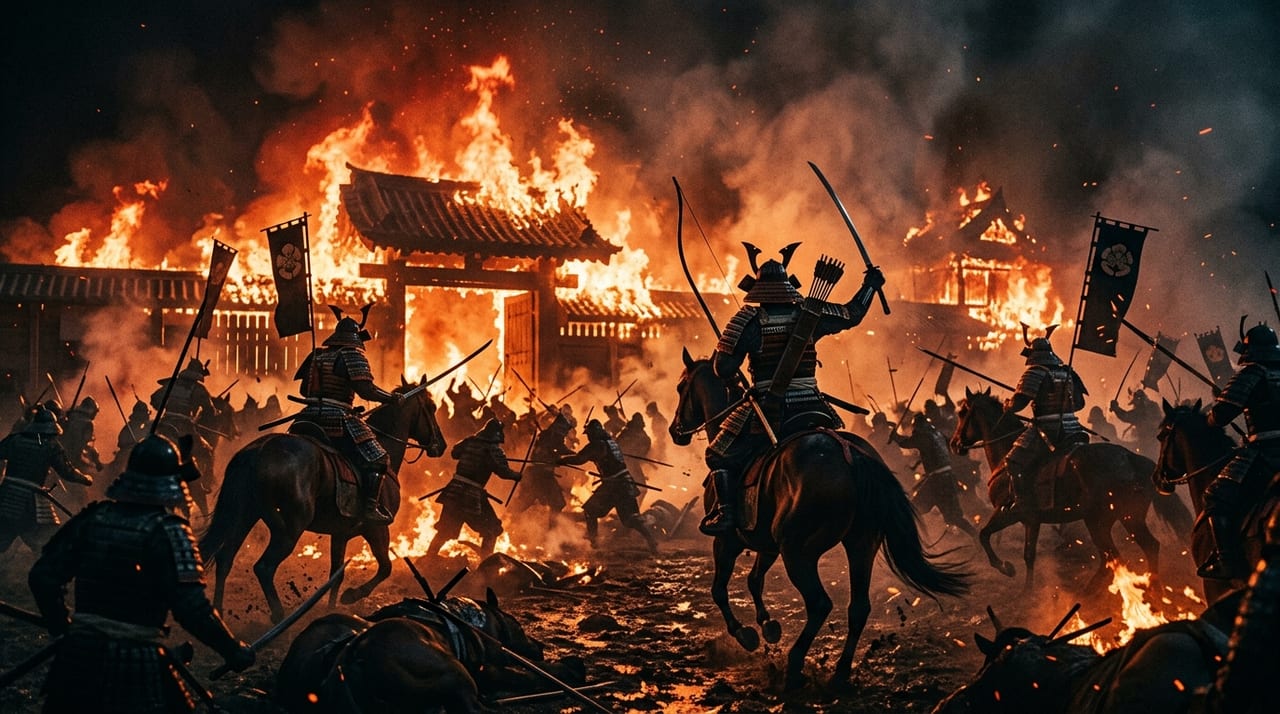
In the 7th month of Keiō 4, the new government army began its advance from the Shirakawa entrance into Nihonmatsu Domain territory. The forces of Satsuma, Chōshū, Tosa and other contingents, totaling approximately 7,000 and led by Itagaki Taisuke and others, took advantage of the thin defenses of the Nihonmatsu Domain and invaded from the Motomiya direction. In response, the forces the Nihonmatsu Domain gathered inside and outside the castle numbered only about a thousand even including reinforcements from allied domains such as Sendai, and the disparity in strength was clear. On the 29th day of the 7th month (September 15 in the solar calendar), the new government army launched an all-out assault on the castle town of Nihonmatsu. Fierce street fighting unfolded in the castle town, and samurai, their families, and even boys who had not originally been expected to join the battle lines were mobilized to defend it. Despite their desperate resistance, Nihonmatsu Castle was gradually driven into a corner, major buildings burned down that same day, and the castle surrendered. Daimyo Niwa Nagakuni fled to Yonezawa, and the Nihonmatsu Domain effectively collapsed here.
The greatest reason the Battle of Nihonmatsu is so vividly remembered by posterity lies in the fierce resistance and tragedy of the young samurai known as the Nihonmatsu Youth Corps. In the Nihonmatsu Domain, those under 14 years of age by traditional counting were not permitted to go to war. However, there was a system of iriyoshi, which added two years to a person's age, and due to a severe shortage of troops, boys ranging from 12 to around 17 years of age were actually organized into units and deployed in real combat. It is said that they wore armor like adults, carried practical swords at their waist, and took part in combat alongside firearms and spears. Among the boys who died in battle were some who were 14 by traditional counting, and testimonies that they actually drew their swords and engaged in close combat with enemy soldiers have been recorded in later accounts. This anecdote about the youth corps is handed down as a symbolic example showing that the sword, as the "soul of the samurai," was still wielded in real combat in the late Edo period. Today, within Nihonmatsu City, there remain commemorative monuments honoring the youth corps at Kasumigajō Park, as well as materials preserving some of their belongings and swords.
With the fall of Nihonmatsu Castle, the number of war dead on the Nihonmatsu Domain side was considerable, and it is said that there were also not a few casualties from other domains, such as the Sendai Domain, that had rushed to provide support. Among them were more than a dozen members of the Nihonmatsu Youth Corps. Shortly after this, the Nihonmatsu Domain surrendered to the new government army. With the collapse of this powerful element of the Ōu-Etsu Coalition of Daimyo, the inferiority of the alliance as a whole became decisive. Although the Battle of Nihonmatsu was one phase in the intensifying Tōhoku front that led into the Aizu War, it is remembered as one of the battles that most symbolically represents the tragedy of a resistance fought for the very survival of the domain.
The Battle of Nihonmatsu, and particularly the tragedy of the Nihonmatsu Youth Corps, has been handed down to the present day as an example showing how desperate the circumstances were under which the Tōhoku domains carried out their resistance in the Boshin War. It is often mentioned alongside the White Tiger Corps of the Aizu Domain, and since the Meiji period, memorial services honoring the youth corps members and the upkeep of commemorative monuments have continued in Nihonmatsu. Historically, the Battle of Nihonmatsu is not merely a regional engagement. It is positioned as an example demonstrating the desperate circumstances to which the Ōu-Etsu Coalition of Daimyo was driven, to the point of collapsing even the traditional order of status and age. It is also regarded as an important event for considering how the sword culture of the samurai in the late Edo period was manifested in the final phase of actual combat.