New Arrivals — Browse our catalog for the latest authentic Japanese sword arrivals. Browse →
Tengyō 2–4 (939–941)
Seto Inland Sea coasts, Iyo Province, Dazaifu (present-day Shikoku and Kyushu)
Forces
Fujiwara no Sumitomo's Forces (Rebels)
Imperial Punitive Forces
About 16 min read
The Fujiwara no Sumitomo Rebellion (Fujiwara no Sumitomo no ran) was an armed uprising that Fujiwara no Sumitomo, a former kokushi (provincial official) of Iyo Province (present-day Ehime Prefecture), launched from Tengyō 2 (939) to Tengyō 4 (941) by gathering pirate groups across the Seto Inland Sea. Together with the Taira no Masakado Rebellion, which broke out in the Kantō region at the same time, the two are collectively called the Jōhei-Tengyō Disturbances. These two rebellions are positioned as the first large-scale cases, in tenth-century Japan, when the ritsuryō state's effective capacity to govern was collapsing, of provincial warriors and armed groups challenging central authority, and as historical harbingers announcing the arrival of the later warrior government (the age of the warriors).
Fujiwara no Sumitomo was born as the son of Fujiwara no Yoshinori, of a collateral line of the Northern Fujiwara (Hokke), and around the 930s he took up his post in Iyo Province as jō (provincial secretary, the third-ranking provincial official). During his tenure, he was in charge of pacifying and suppressing the pirate groups that ran rampant in the Seto Inland Sea. While in practice fulfilling the function of the tsuibushi, which the ritsuryō state had established, he is thought to have built deep ties with the maritime forces of the Seto Inland Sea. After once returning to the capital, he received an imperial edict to pursue pirates and went back down to Iyo Province again in Jōhei 6 (936), but before long he switched sides to lead the pirate groups. There are various theories about why Sumitomo chose the path of rebellion, but factors such as the frustration of a collateral Fujiwara line with no prospect of advancement in central politics, the building of his power base in the provinces, and his deep involvement with the pirate groups are thought to have overlapped.
In the tenth century, the Seto Inland Sea took on the appearance of a "lawless sea," where fallen peasants and fallen warriors flowed in, together with the collapse of the handen-shuju system and tax system under the ritsuryō order. Sumitomo organized these wandering armed groups and formed a maritime force possessing many ships.
In the 12th month of Tengyō 2 (939), Sumitomo had his subordinate Fujiwara no Fumimoto attack the vice governors of Bizen and Harima at Suki post station in Settsu Province, and capture them. The court dispatched suppression envoys, but could not easily subdue Sumitomo's forces, which were skilled in the terrain of the Seto Inland Sea and in naval combat. In the following year, Tengyō 3 (940), he attacked Awaji Province in the 2nd month, and in the 8th month he attacked the provincial offices of Iyo Province and Sanuki Province. Sumitomo's power extended even into the Kinai region, plunging the court into direct terror.
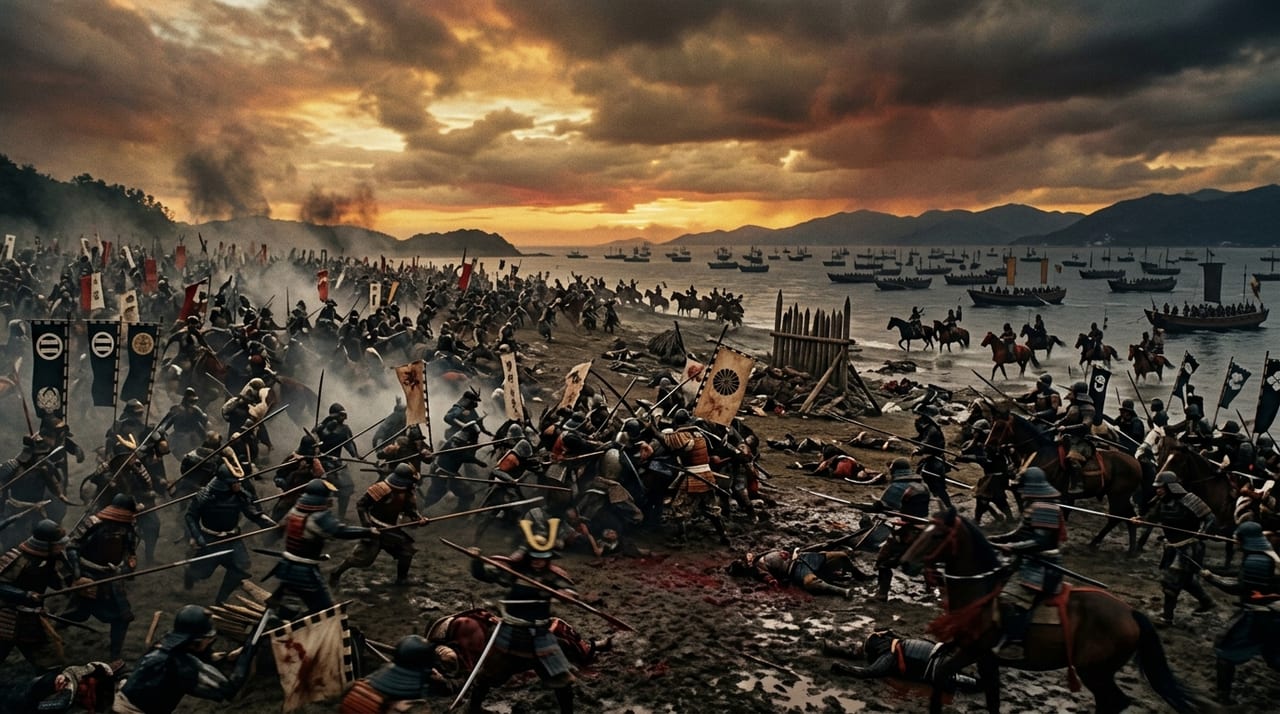
In the 5th month of Tengyō 4 (941), Sumitomo's forces crossed over to Kyūshū and captured and set fire to Dazaifu (present-day Dazaifu City, Fukuoka Prefecture). Dazaifu was the center of administration, military affairs, and diplomacy in western Japan, and its fall dealt a serious shock to the court. The court was thrown into turmoil and hastily formed a powerful suppression army. Forces led by the suppression envoys Ono no Yoshifuru and Minamoto no Tsunemoto were dispatched and annihilated Sumitomo's fleet at the Battle of Hakata Bay. Sumitomo was afterward said to have been killed in Iyo, or to have died in prison after being jailed.
One reason the Sumitomo Rebellion holds important meaning in the history of swords is that this period falls during the transition from the ritsuryō system's gundan (ritsuryō provincial militia), a public, conscription-based army, to the warrior bands (bushidan), which were private armed groups. In the ritsuryō gundan, soldiers carried prescribed weapons (tachi, bows and arrows, and so on) at their own expense. However, as the ritsuryō military system collapsed, local chieftains and warriors came to wear swords and armor they procured themselves and formed private armed groups.
This period around the tenth century overlaps with the era in which, in the history of Japanese swords, the form advanced from warabitetō to kenukigata tachi, and then in the mid-Heian period to shinogi-zukuri tachi (the completed form of the Japanese sword). The swords worn by the warrior bands that took part in the Sumitomo and Masakado rebellions became an opportunity to test the sword techniques of this transitional period in actual combat. In particular, the curved tachi used on horseback is thought to have demonstrated its practical utility in pirate combat in the Seto Inland Sea and in field battles in the Kantō. Naval combat in the Sumitomo Rebellion demanded weapon selection and methods of use suited to the special environment of close fighting on pitching ships, and it is presumed that light, easily handled tachi were prized.
Minamoto no Tsunemoto, who suppressed Sumitomo's forces, is regarded as the ancestor of the Minamoto lineage that led to the later main line of the Seiwa Genji and to the heads of the warrior houses. Tsunemoto's descendants established their standing as warrior houses across the 10th to 12th centuries, ultimately leading to Yoritomo, who founded the Kamakura shogunate (1185 onward). In this lineage, the swords used by the Seiwa Genji held symbolic meaning as the "blades of the Minamoto," and contributed greatly to the formation, in later sword culture, of the concept of the "warrior's sword." The military rise of the Seiwa Genji, continuing through Minamoto no Tsunemoto, Mitsunaka, Yorinobu, Yoriyoshi, and Yoshiie, was inseparable from the polishing of swords in each generation.
As for the weapons used by the pirates who took part in the Sumitomo Rebellion, bows and arrows, chokutō, tachi, and others are thought to have been mixed together. The pirate culture of the Seto Inland Sea held a practical view of swords that differed from the ritsuryō weapons culture on land, and it valued functional sharpness and durability over formal ceremony or rank.
The Sumitomo Rebellion and the Masakado Rebellion, two large-scale armed uprisings that broke out nearly simultaneously in the east and west, symbolize a turning point in Japanese history. With the suppression of these two rebellions, the court established a policy of officially recognizing and making use of local chieftains and warriors as military power. The warriors who distinguished themselves as suppression envoys used their achievements to gain positions in central politics and real power over provincial rule. This process became the seedling of the later "warrior government," and the Sumitomo Rebellion stands at the starting point of a long historical current leading to the Taira regime and the establishment of the Kamakura shogunate at the end of the 12th century.
From the perspective of swords, the Sumitomo Rebellion is none other than a turning point, marking the end of the era of "public swords" managed by the ritsuryō state and the budding of a "private sword culture" in which warriors individually refined and possessed their blades. Along with the collapse of the ritsuryō system, the historical transformation by which swords changed meaning from "weapons of the state" to "the soul and pride of the individual warrior" began in this tenth century. The Jōhei-Tengyō Disturbances, as an event that opened the door to a history in which swords made the great shift from public property to personal arms, are deeply engraved at the root of the history of Japanese swords.
In the mid-to-late Heian period (10th–12th centuries) after the Fujiwara no Sumitomo Rebellion was suppressed, Japan's sword culture developed rapidly. With the rise of the warrior bands, swordsmiths across the country competed, and in Yamashiro, Yamato, Bizen, and elsewhere, the foundations of styles leading to the later Gokaden were formed. Especially in the Heian period, the tachi produced by the swordsmith groups of Kyoto (Sanjō Munechika, Gojō Kuninaga, and others) created many masterpieces, valued in later ages as the highest peak of art symbolizing the warriors' culture of wearing swords (haitō). Mikazuki Munechika, said to have been forged by Sanjō Munechika, is counted among the Tenka Goken (Five Great Swords under Heaven) and marks the summit of Japanese swords of the Heian period. Also, the works of the Ko-Bizen swordsmiths Tomonari, Masatsune, and others, active in the late Heian period, became the foundation for Bizen to become a major sword-producing center, and established the technical base that made possible the mass production of Japanese swords in the Kamakura–Muromachi periods. There is no doubt that the historical upheaval of the collapse of the ritsuryō system and the rise of the warriors, which the Sumitomo Rebellion had caused, was one of the fundamental driving forces that raised Japanese swords to the heights of art and spiritual culture.