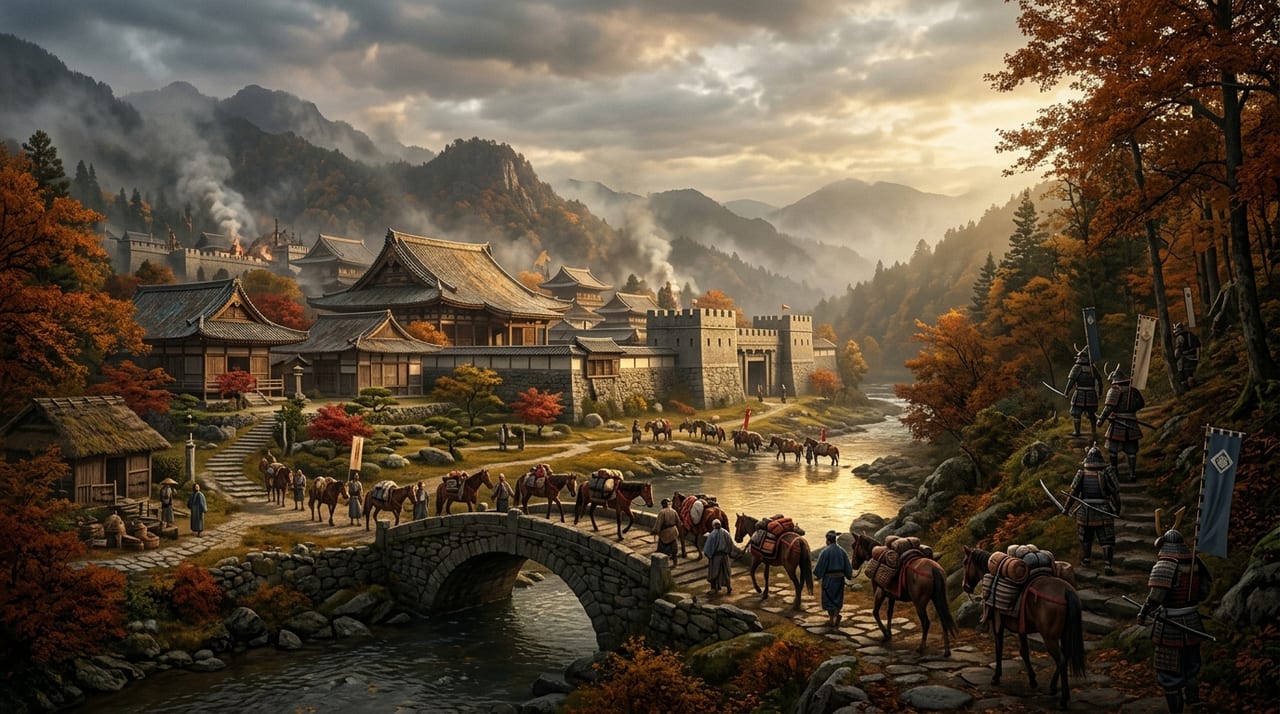
 * Image is for illustrative purposes only.
Tenbun Hokke Uprising Period
天文法華の乱期
The Tenbun Hokke Uprising saw conflict between the Hokke and Ikkō sects turn Kyoto into a battlefield. The burning of Yamashina Hongan-ji and destruction throughout Kyoto forced many sword smiths to evacuate, leading to regional dissemination of their techniques and transformation of Kyoto's sword culture.
Description
The Tenbun Hokke Uprising and Kyoto's Turmoil
In Tenbun 1 (1532), amid political turmoil between Hosokawa Harumoto and Miyoshi Motonaga, adherents of the Hokke sect (Nichiren sect) rose in arms against the Ikkō sect's ikki forces, igniting a religious armed conflict. In this series of religious clashes, Hokke sect temples and Ikkō sect members clashed fiercely throughout Kyoto, and Yamashina Hongan-ji was set ablaze. In Tenbun 5 (1536), forces led by Enryaku-ji and the Rokkaku clan of Ōmi expelled the Hokke sect from Kyoto (the Tenbun Hokke Uprising), and Hokke sect temples were entirely destroyed. In this turmoil, merchants, artisans, and craftspeople throughout Kyoto suffered greatly, and sword smiths and other weapon craftsmen were forced to evacuate to safer locations.
Evacuation of Kyoto Sword Smiths and Regional Dissemination of Techniques
The greatest significance of this era in sword history lies in the occurrence of a second wave of Kyoto sword smith dispersal following the Ōnin Uprising (1467–1477). Many Kyoto sword smiths had already evacuated to the provinces during the Ōnin Uprising, but craftsmen who remained and some sword smiths who had returned after the Ōnin moved to the provinces again amid the chaos of the Tenbun Hokke Uprising. Sword smiths who inherited the sophisticated Yamashiro tradition techniques established themselves in various Kinki provinces including Settsu, Izumi, Kii, Iga, and Ōmi, forming distinct regional schools. Through these two major dispersals, the cutting-edge sword techniques that Kyoto had monopolized spread throughout Japan, creating conditions for region-specific sword cultures to flourish.
Sakai, Nanban Trade, and Influx of New Technology
The Tenbun period (1532–1555) was also an era when Nanban trade with the Southern Barbarians began in earnest. Through trade with Portuguese merchants based in Sakai, iron and steel technology and metallurgical knowledge flowed into Japan along with matchlock firearms (introduced to Tanegashima in 1543). For sword smiths, Nanban iron of this period (steel brought by Portuguese ships) attracted attention as a new material, but because its properties differed from tamahagane, trial and error was necessary in working with it. Furthermore, Sakai's sword smiths leveraged the advantages of the commercial city to develop their own network for procuring raw materials and distributing products, coming to dominate the sword trade throughout Kinki.
Sword Culture Under the Miyoshi Regime
After the Tenbun Hokke Uprising, Miyoshi Nagayoshi surpassed the Hosokawa clan and became the effective ruler of Kinki. The Miyoshi regime (ca. 1549–1564), backed by close ties with the commercial city of Sakai, enjoyed economic prosperity and culturally patronized the arts including renga poetry, tea ceremony, and Noh theater. In swords as well, the Miyoshi clan possessed excellent connoisseurship and sought masterpieces by leading sword smiths of the day. Swords made during this period are classified as works of the Tenbun, Kōji, and Eiroku periods, with bold, practical styles reflecting the aesthetic sensibilities of Sengoku-period emerging powers becoming predominant. Sword smiths protected by the Miyoshi clan continued their creative work despite the turmoil in Kinki, serving as a bridge to the later prosperity of sword smithing in the Momoyama period.
Transformation of Sword Forms from the Post-Ōnin Era to the Eve of the Oda Period
Around the time of the Tenbun Hokke Uprising was a major transitional period in the forms of Japanese swords. The transition from tachi to katana neared completion, with katana and wakizashi of the "Sengoku period form"—featuring shallow curves and wide blade widths—becoming established as standard warrior equipment. The forging of jigane also changed under the influence of the Sōshū and Mino traditions, diversifying from vigorous nie activity to relatively subtle ko-nie patterns. The blade patterns—gunome, midare, sanbonsugi, and others—showed the early germs of the diverse expressions that would bloom in the later Momoyama period. Sword fittings also became predominantly practical and simple in mounting, representing a preliminary stage before the flourishing of sword-fitting arts under the later Momoyama tea culture.
Characteristics of This Era
- Second major dispersal of Kyoto sword smiths due to the Tenbun Hokke Uprising. Following the Ōnin Uprising, this second dispersal spread Yamashiro tradition techniques throughout Kinki and the entire country.
- Transition from tachi to katana reached completion. The Sengoku-period katana form—with shallow curves and wide blade widths—became established as the daily carry weapon of samurai.
- Influx of new steel materials and metallurgical techniques through Nanban trade (Portuguese merchants via Sakai) influenced sword smiths' choice of materials and forging methods.
- Mass production of katana (kazuuchi) progressed further. As the Sengoku era approached, demand for affordable, durable practical swords increased, making utility-focused sword-smithing the mainstream—emphasizing practicality over artistic merit.
- Diversification of blade patterns. Early germs of vibrant expressions—gunome, midare, sanbonsugi, and others—that would bloom in the later Momoyama period are visible in works from the Tenbun to Eiroku periods.