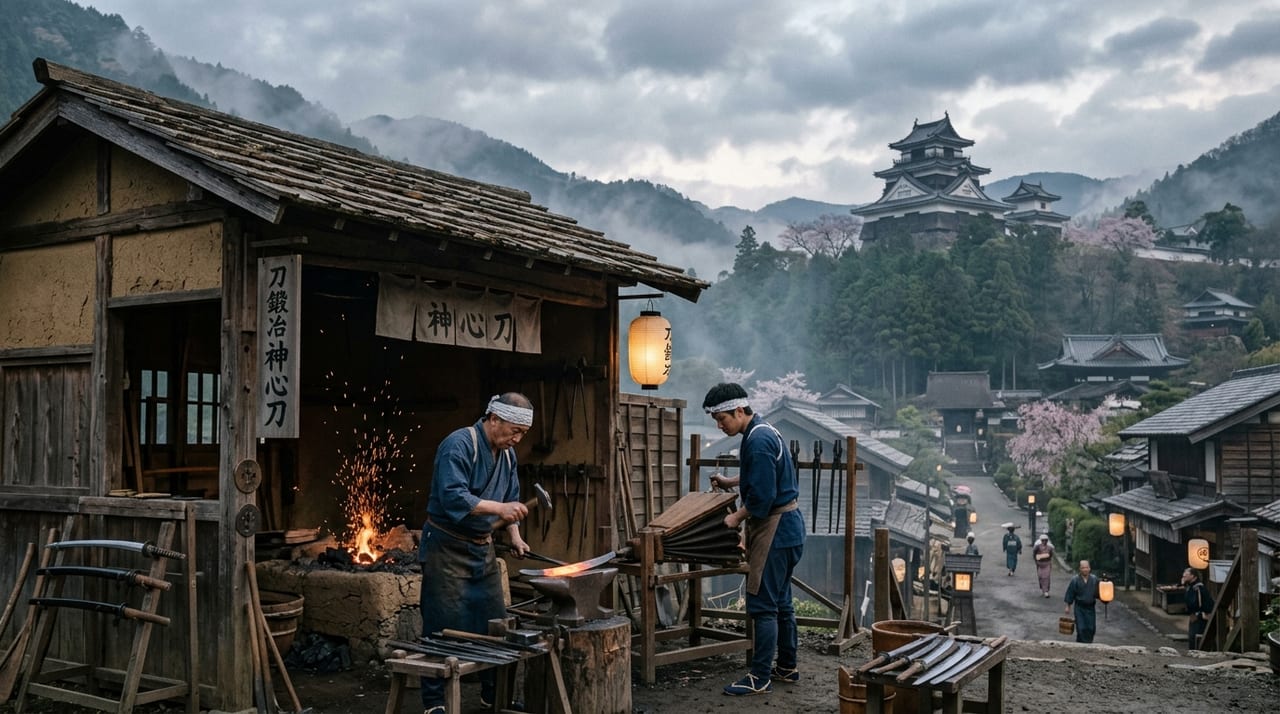
 * Image is for illustrative purposes only.
Shotoku Era
正徳(しょうとく)
The Shotoku era (1711–1716) was a pivotal period when innovations in swordsmanship techniques emerged during the Edo period's peaceful era. Naganuma Shirozaemon Kunisato (長沼四郎左衛門国郷) pioneered the uchikomi keiko-ho method of practice, establishing systematized sword training using leather-wrapped practice swords (fukuro-shinai) and protective equipment. This represents a crucial transformation: martial techniques evolved from practical combat into theoretical cultivation systems, laying the philosophical and pedagogical groundwork for modern kendo.
Description
Transformation of Martial Arts in an Era of Peace
As the Edo period progressed, opportunities for samurai combat decreased, and martial techniques employing swords transformed from practical combat skills into systematic regimens of intellectual and spiritual cultivation. The Shotoku era (1711–1716) exemplifies this transformation most vividly.
Prior to this period, sword training emphasized acquisition of techniques for anticipated real combat. However, as samurai long accustomed to Edo's peaceful society sought evolution, demand arose for safer and more systematized training methods.
The Establishment of Uchikomi Keiko-ho and Bamboo Sword Practice
During this era, practitioners of the Jikishin Kage-ryu (直心影流) school of swordsmanship, led by Naganuma Shirozaemon Kunisato, developed and popularized the uchikomi keiko-ho method, employing bamboo swords (shinai) and protective armor. This method reduced the risks inherent in training with actual blades while enabling practical skill acquisition through controlled application of force and physical adaptation to opponent size and strength.
The uchikomi keiko-ho method permitted multiple swordsmen to train safely in one place, opening the path for swordsmanship to evolve into a systematized educational discipline.
The Philosophical Foundations of Modern Kendo
The sword arts innovations of the Shotoku era signal more than mere improvement in training methodology; they represent a fundamental transformation in martial philosophy. In peacetime practice divorced from actual combat, the integration of spiritual cultivation with physical technique gained new emphasis, becoming the philosophical foundation of modern kendo (剣道).
During this period emerged the foundational recognition that "kendo is not merely the acquisition of technique but a path to personal transformation."
Expansion from Samurai Society to Commoners
The safety and systematic nature of uchikomi keiko-ho training allowed sword techniques to spread beyond samurai to the common population. From mid- to late Edo, the number of civilian sword training halls (dōjō) increased, and the Shotoku era established the groundwork for swordsmanship to become a widespread form of civilian education.
Characteristics of This Era
- Shotoku (1711–1716) marked an era of philosophical innovation and systematization of sword arts during Edo's stable period
- Naganuma Shirozaemon Kunisato's Jikishin Kage-ryu developed and disseminated uchikomi keiko-ho, establishing a safe training system using bamboo swords and protective gear
- Peacetime practice distant from real combat increasingly emphasized the integration of spiritual cultivation with physical technique
- The establishment of systematic, safe training methods enabled multiple practitioners to study together, laying groundwork for spread from samurai to commoner ranks
- Philosophical understanding emerged that kendo represents not mere technical mastery but a path to personal transformation
- The philosophical and pedagogical foundations of modern kendo were established during this era