 * Image is for illustrative purposes only.
Sankin-kotai and the Regional Diffusion of Sword Culture
参勤交代と刀剣文化の地域拡散
The sankin-kotai (alternate attendance) system, formally mandated by the Buke Shohatto in 1635, required all domain lords to travel periodically between Edo and their home provinces. This large-scale human movement created a powerful bidirectional circuit: Edo-centered sword culture flowed outward to the provinces, while the skills of outstanding provincial smiths, tsuba craftsmen, and koshirae artisans converged on the capital. Sword production centers along the procession routes flourished as samurai commissioned and maintained blades on the road, and the daimyo procession network simultaneously functioned as a wide-area information exchange for sword culture.
Description
Establishment of the Sankin-kōtai System and Its Impact on Swords
In Kan'ei 12 (1635), the third shogun, Tokugawa Iemitsu, revised the Buke Shohatto and required the daimyō of the entire country to travel back and forth between Edo and their home domains, in principle alternating residence every year. This sankin-kōtai system was introduced to strengthen the political control of the bakufu, but it also had large and unexpected effects in economic and cultural spheres.
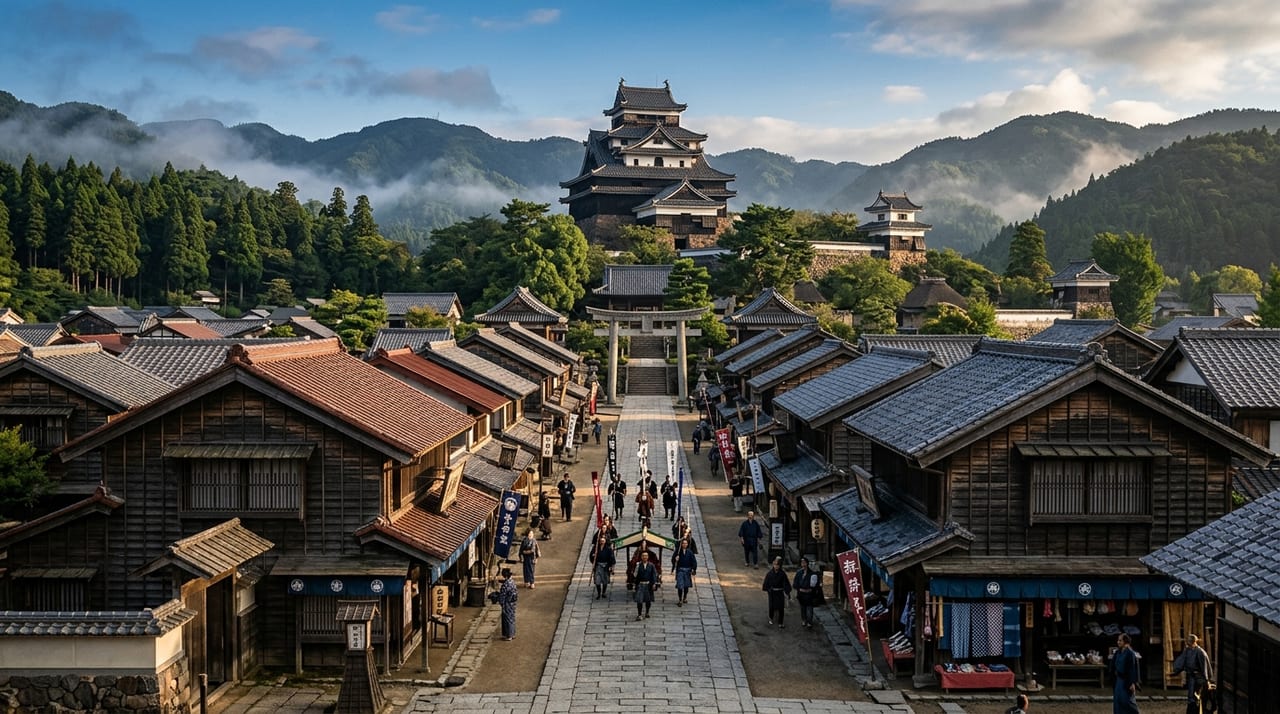
The size of daimyō processions varied according to a domain's rank. Even small domains had processions of several dozen to several hundred people, and large domains had processions reaching several thousand. These processions regularly traveled the highways across the country. This was the largest-scale movement of people and goods in the Edo period, and it became an important source of demand that supported the economies of the post-towns and castle towns along each highway.
The role that sankin-kōtai played in relation to sword-producing regions was especially pronounced. Retainers and vassals who took part in the processions sometimes sought polishing, repair, and ornamentation of their swords along the way, and sword smiths, togishi (polishers), and koshirae makers along the highways grew by capturing this demand.
Two-Way Cultural Exchange Between Edo and the Provinces
Sankin-kōtai did not stop at the movement of people. It promoted two-way exchange of information, technology, and aesthetic sensibilities.
From Edo to the provinces, the latest styles and techniques of Edo shintō spread. In particular, from the latter half of the 17th century onward, the slender, sharp silhouettes of Kanbun shintō, which became mainstream in the Edo sword world, and the refined expression of hamon influenced sword smiths in the provinces. As retainers who returned to their home domains brought back the latest sword knowledge they had seen and heard in Edo, the sword culture of the provinces was constantly renewed in step with trends in Edo.
From the provinces to Edo, sword smiths and craftsmen who held the traditional techniques unique to each region moved to the capital in search of work. Through things such as Satsuma sword smiths demonstrating their techniques in Edo, the sword culture of Edo absorbed the diversity of the provinces and was enriched.
Ripple Effects on the Koshirae and Fittings Industries
Not only the forging of the swords themselves, but also the koshirae and tōsōgu (sword fittings) industries grew greatly through sankin-kōtai.
Samurai who took part in daimyō processions had to equip themselves with koshirae appropriate to their rank, and there was always demand for repairs to address damage and wear sustained on the road. Edo koshirae makers and tsuba makers received orders from daimyō and hatamoto, refined their advanced skills, and during this period the level of metalworking technique rose dramatically.
In particular, the lineage of metalworkers represented by the Gotō family established its reputation on the foundation of daimyō orders generated through sankin-kōtai. The long-term trading relationship between the Gotō sōke and daimyō households became an institutional foundation for maintaining the highest standard of sword-fittings craftsmanship throughout the Edo period.
Provincial Spread of Sword Knowledge and Connoisseurship
The samurai class that traveled back and forth between Edo and the provinces through sankin-kōtai also contributed to the spread of knowledge about sword appraisal and evaluation to the provinces. The knowledge of appraisers, beginning with the Hon'ami family, was transmitted to the provinces through daimyō and retainers while they were residing in Edo, and it led to the cultivation of sword-collecting and connoisseurship culture in each domain.
In some domains, sword collecting was positioned as part of the domain's cultural identity, and they actively worked to acquire and maintain masterpieces. The sonnō (reverence-for-the-emperor) sword culture of the Mito Tokugawa family, the collection of the Kishū Tokugawa family, and the groups of masterpieces held by the Owari Tokugawa family are also products of information circulation and collecting activities carried out through sankin-kōtai.
The End of the System and Its Aftermath
Sankin-kōtai was greatly relaxed by the Bunkyū Reforms of Bunkyū 2 (1862), to once every three years with a hundred days' residence in Edo. This change symbolized the decline of bakufu authority and dealt a major blow to Edo's consumer economy and cultural industries. The sword industry was not spared from this impact. As the regular purchasing demand of the daimyō, its largest customer group, fell sharply, demand for high-grade swords and sword fittings in particular plummeted.
However, the accumulation over more than two centuries of sankin-kōtai formed layers of sword culture, connoisseurship, and craft skill unique to each region. These have been passed down as regional diversity in the sword preservation movement after the Meiji period and in today's sword culture as well.
Characteristics of This Era
- Made obligatory for all daimyō by the revision of the Buke Shohatto in Kan'ei 12 (1635). Even small domains sent processions of several hundred people along the highways of the country on a regular basis, bringing stable demand to sword-producing regions
- Edo's latest sword styles (such as Kanbun shintō) spread to the provinces through sankin-kōtai. Conversely, traditional techniques from the provinces converged on Edo, and this two-way cultural exchange continued for more than two centuries
- Sword smiths, polishers, and koshirae makers along the highways grew through the repair and order demand generated by sankin-kōtai
- The daimyō's regular stays in Edo brought them into contact with appraisers such as the Hon'ami family, contributing to the cultivation of sword collecting and appraisal culture in each domain. The collections of the three houses of Mito, Kishū, and Owari are a typical example
- Metalworkers such as those of the Gotō family refined their skills on the basis of the daimyō's constant commissions, and the fact that Edo-period sword-fittings craft reached the highest level in the world was due to the economic foundation of this system
- The major relaxation of the system through the Bunkyū Reforms of Bunkyū 2 (1862) meant a decline in the sword trade's largest customer base and was one factor in the shrinking of the sword market in the bakumatsu period