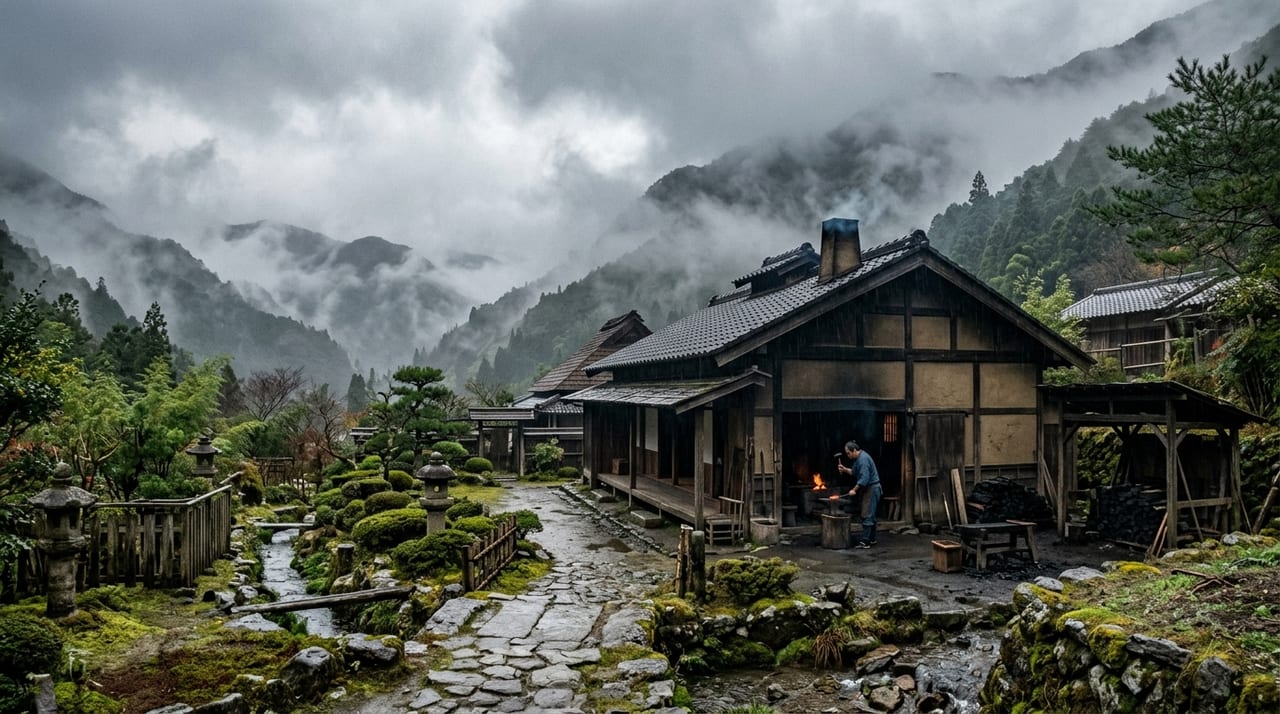
 * Image is for illustrative purposes only.
Rokuhara Tandai and Sword Administration in Late Kamakura
六波羅探題と鎌倉後期の刀剣行政
How the Rokuhara Tandai, established after the Jōkyū Disturbance, stimulated sword demand among Kyoto-based warriors and supported Yamashiro and Yamato smiths
Description
The Rokuhara Tandai was an outpost established by the Kamakura shogunate in the Rokuhara district of Kyoto following the defeat of Retired Emperor Go-Toba's forces in the Jōkyū Disturbance of 1221, for the purpose of court surveillance and command of the western gokenin. It was managed under a joint system of Southern and Northern deputies and functioned for approximately 110 years until the end of the Kamakura period.
In sword history, the critical contribution of the Rokuhara Tandai was its provision of stable warrior demand to smiths in the Yamashiro and Yamato regions. Prominent members of the Hōjō clan appointed as deputies, along with their accompanying warrior retinues, maintained long-term residence in Kyoto and repeatedly commissioned swords from smiths of the Awataguchi, Rai, and Sanjō schools. This formed an important economic foundation underpinning the golden age of Kyoto sword culture in the mid-Kamakura period.
The warriors of the Rokuhara Tandai tended to favor tachi with the elegant curvature characteristic of Yamashiro style, distinct from the Sōshū tradition of Kamakura. The refined aesthetic of Kyoto swordsmanship exemplified by Awataguchi Yoshimitsu—slender form, graceful shinogi-zukuri, and classical dignity reminiscent of the Ko-garasu-maru tradition—was intimately bound to the aesthetic sensibility of Rokuhara Tandai warriors. Yamato smiths of the Tegai, Senjuin, and Shikkake schools also flourished by capturing demand channeled through the Rokuhara organization.
When Emperor Go-Daigo raised the banner of anti-shogunate revolt in the Genkō Incident of 1331, and the Rokuhara Tandai fell in 1333 to an attack by Ashikaga Takauji, the structure of warrior sword demand was transformed overnight. Yet the 110 years of accumulated technical achievement by Yamashiro and Yamato smiths fostered under the Rokuhara Tandai formed the foundation for the artistic flowering of the subsequent Nanbokuchō period, making it an indispensable historical context for understanding the classical beauty of the Japanese sword.
Characteristics of This Era
- Continuous commissions from Rokuhara garrison warriors to Awataguchi, Rai, and Sanjō schools
- Economic foundation sustaining mid-Kamakura golden age Yamashiro sword culture
- Preference for elegant Kyoto-style form distinct from the Sōshū tradition of Kamakura
- 110-year technical accumulation that formed the foundation for Nanbokuchō artistic flowering