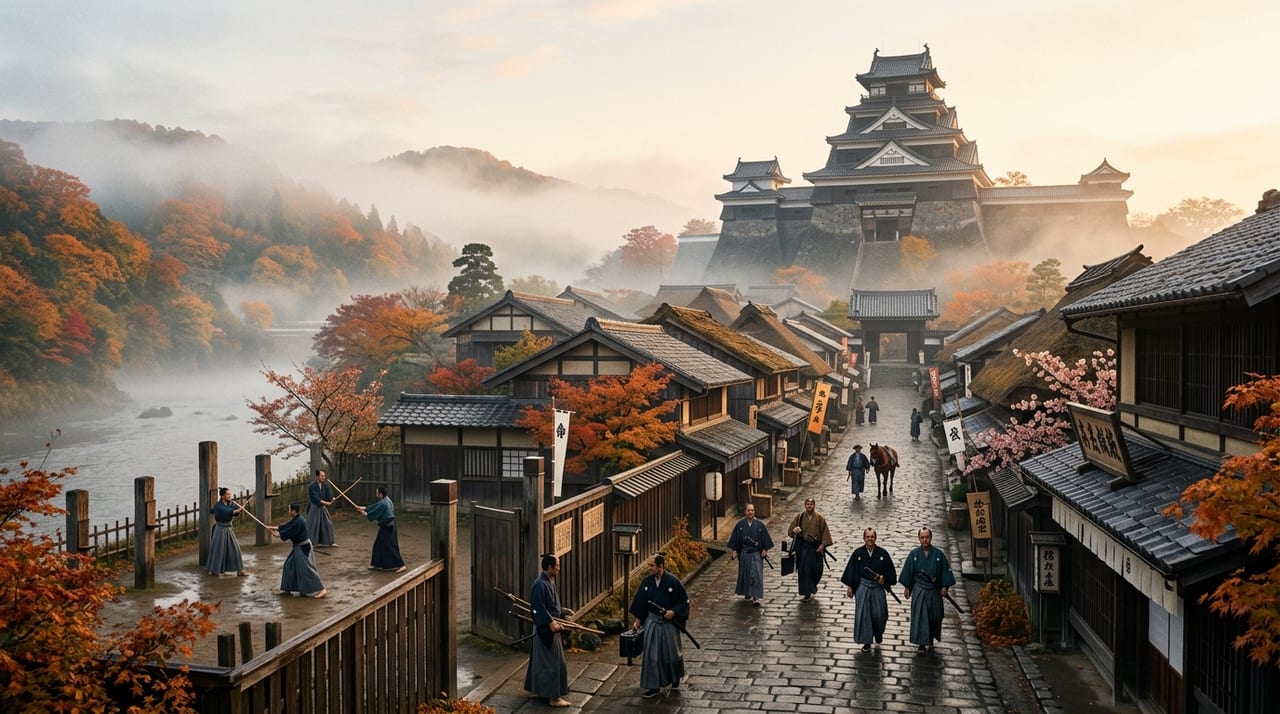
 * Image is for illustrative purposes only.
Koji Era
弘治(こうじ)
Koji is the era name that came after Tenbun and before Eiroku, corresponding to 1555–1558. During this period the throne passed from Emperor Go-Nara to Emperor Ōgimachi, and the shogun was Ashikaga Yoshiteru. In Koji 1 (1555), Takeda Shingen and Nagao Kagetora (later Uesugi Kenshin) faced off for roughly 200 days across the Sai River in Shinano (the Second Battle of Kawanakajima), and reconciled through the mediation of Imagawa Yoshimoto. In the grading in Fujishiro Yoshio's Nihon Tōkō Jiten (1938), Muramasa of Ise-Kuwana from the Koji era is classed as sue-koto chū-jō saku.
Description
Koji as an Era Name
Koji is the era name that came after Tenbun and before Eiroku, lasting from the 23rd day of the 10th month of Tenbun 24 (Julian calendar: November 7, 1555) to the 28th day of the 2nd month of Koji 4 (Julian calendar: March 18, 1558). During this period the throne passed from Emperor Go-Nara to Emperor Ōgimachi, and the Muromachi shogunate's shogun was Ashikaga Yoshiteru. It was an era in which the Sengoku wars deepened ever further.
The Sai River Standoff at Kawanakajima
In Koji 1 (1555), Takeda Shingen of Kai and Nagao Kagetora of Echigo (later Uesugi Kenshin) faced each other across the Sai River in Shinano over the Kawanakajima plain. The two armies glared at each other for roughly 200 days, but reconciliation was reached through the mediation of Imagawa Yoshimoto of Suruga. This engagement is the second of the five standoffs later collectively called the "Battles of Kawanakajima" and is one of the military events symbolizing the Koji era. The long standoff is also circumstantial evidence that the warlords of the time needed swords and arms for actual combat in large quantities and continuously.
The Sue-Koto Chū-Jō Saku Ranking of Muramasa
In Fujishiro Yoshio's Nihon Tōkō Jiten (1938), which divides smiths into five grades from saijō saku down to chū saku, the Muramasa smith lineage (a family of smiths of Kuwana in Ise Province) of the Koji era is placed in the sue-koto chū-jō saku grade. Muramasa later became widely known through the anecdote linking the family to the Tokugawa (the so-called "cursed blade Muramasa" legend). However, this ranking is a modern evaluation based on the quality of the work, and assessments vary by generation: for example, Daiei-era Muramasa is placed at sue-koto saijō saku, and Eishō-era Muramasa at jō-jō saku, and so on.
Position in Sword History
The Koji era is discussed from two perspectives: the conflict over Shinano symbolized by the Kawanakajima standoff, and the later evaluation of the works of the Muramasa lineage from this period. It conveys one aspect of the demand for arms in the mid-Sengoku period and of the evaluation of smiths' works in the same period.
The Course of the Standoff and Wartime Demand for Arms
In the 3rd month of Tenbun 24 (1555; the era was changed to Koji in the 10th month of that year), Takeda Shingen marched from Kai into Shinano, supporting the Kurita clan, who held Asahiyama Castle, and aiming to take control of the Zenkoji plain. In response, Nagao Kagetora entered Shinano in the 4th month of the same year, took position at Yokoyama Castle near Zenkoji, built Kuzuyama Castle, and sealed in the Takeda-side Asahiyama Castle. The two armies faced each other across the Sai River for roughly 200 days without a decisive battle, until reconciliation was brokered through the mediation of Imagawa Yoshimoto. Such a long standoff shows the background that the warriors on both sides were pressed to continuously procure and maintain swords and armor that could withstand actual combat, and it is positioned as a concrete military situation that unfolded under the Koji era name.
The Muramasa Lineage and the Evaluation System of the Sue-Koto Period
Muramasa was a smith lineage based in Kuwana, Ise Province, counted among the representative smiths of the sue-koto period. That Koji-era Muramasa is ranked sue-koto chū-jō saku in Fujishiro Yoshio's grading is one reference for evaluation based on the quality of the work, and it should be understood separately from the legend linking the family to the Tokugawa that spread later.
Characteristics of This Era
- Koji (1555–1558) is a mid-Sengoku era name positioned between Tenbun and Eiroku, spanning the reigns of Emperor Go-Nara to Emperor Ōgimachi and of shogun Ashikaga Yoshiteru
- In Koji 1 (1555), Takeda Shingen and Nagao Kagetora faced each other across the Sai River in Shinano for roughly 200 days (the Second Battle of Kawanakajima), and reconciled through the mediation of Imagawa Yoshimoto
- The long-term standoff is also circumstantial evidence that the warlords of the time continuously needed swords and arms for actual combat
- In Fujishiro Yoshio's Nihon Tōkō Jiten (1938), the Muramasa of Ise-Kuwana from the Koji era is classed as sue-koto chū-jō saku
- The era is discussed from two perspectives: the military fact of the Kawanakajima standoff, and the later evaluation of the Muramasa works of this period