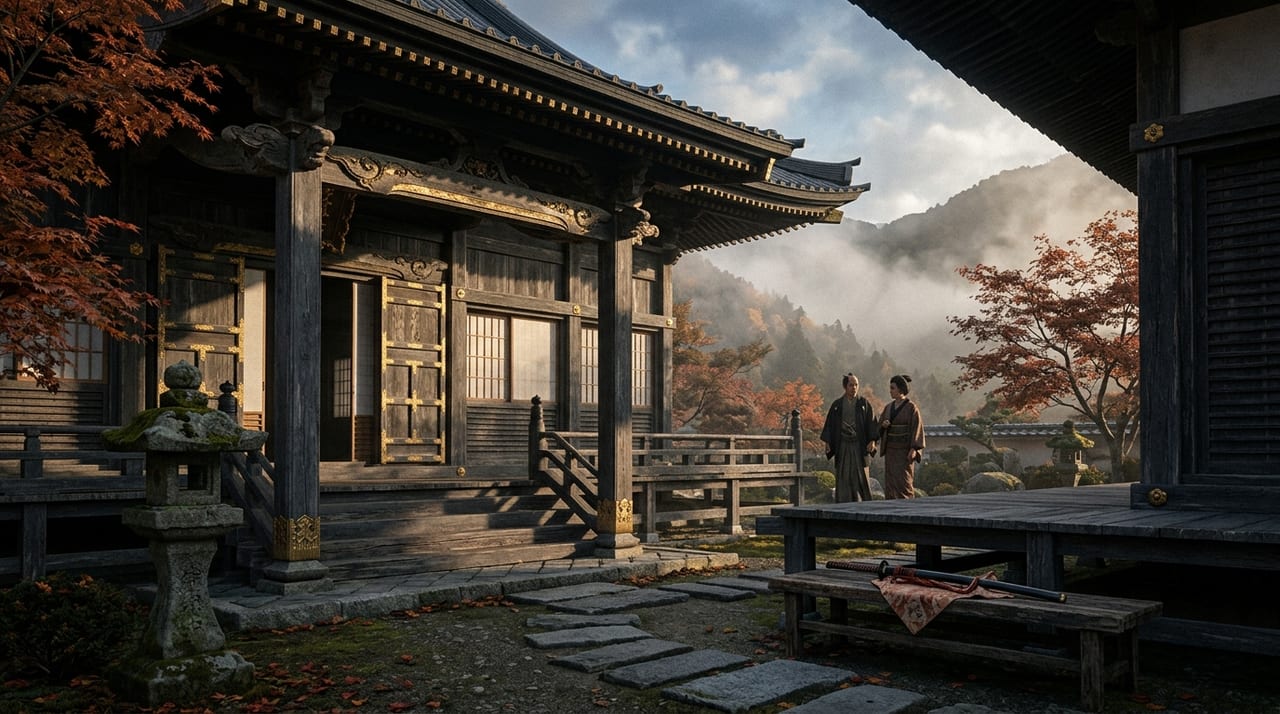
 * Image is for illustrative purposes only.
Bunsei Cultural Flourishing and Sword Connoisseurship
文政文化と刀剣趣味
The cultural apex of late Edo Japan, spanning the Bunsei and Tenpō eras. As popular arts peaked in ukiyo-e and kabuki, sword connoisseurship reached new sophistication among warriors and merchants alike. Appraisal literature and sword almanacs from this period remain foundational to modern scholarship.
Description
Cultural Maturity of the Bunsei and Tenpō Eras
The Bunsei era (1818–1830) was the peak of cultural maturity in the late Edo period, overlapping with the heyday of popular culture known as Kasei culture. This was the age when Katsushika Hokusai published Thirty-six Views of Mount Fuji, Utagawa Hiroshige painted the Fifty-three Stations of the Tōkaidō, and Tsuruya Nanboku wrote ghost-story kabuki that enlivened the streets of Edo. It was also an unprecedented period of flourishing interest in swords and sword-fittings art. Even as the shogunate's finances tightened and the domains grew impoverished, cultural consumption remained active, and demand for swords, expensive luxury goods, held firm. Wealthy merchants took a strong interest in famous blades, the symbol of the samurai, and the sword trade thrived in the three cities of Edo, Ōsaka, and Kyoto. Sword collecting in this period was not merely a means of preserving wealth; it was a cultural act that displayed social standing as an expression of refinement and discernment. Sword appreciation, pursued alongside other hobbies such as the tea ceremony, makie lacquer, and ceramics as a “mature pastime,” took deep root among the cultural figures and wealthy classes of the late Edo period.
Spread of Sword Books and Appraisal Documents
One of the most important cultural achievements of the Bunsei and Tenpō periods was the enrichment of books and records on swords. Beginning with the “Kyōhō Meibutsuchō” (compiled in the Kyōhō era, 1716–1736) under the sponsorship of the shogunate, sword-related books increased sharply during the Bunsei and Tenpō periods. Many smith directories and sword commentaries were written, including Yamada Asaemon Yoshimutsu's “Kokon Kaji Bikō,” which contributed greatly to the systematization and dissemination of sword knowledge. These books are still referenced today as important primary sources in sword research and remain indispensable sources of information on the activities and works of late Edo-period smiths. In addition, the Hon'ami family continued to issue origami (appraisal certificates), and a market matured in which swords bearing origami sold at high prices.
The Peak of Sword-Fittings Art
The Bunsei and Tenpō periods also reached a peak in sword-fittings art. Against the dignified metalwork of the Gotō family, metalworkers of the machibori tradition, who pursued original and realistic expression, were active in Edo and Ōsaka, and their works are still prized today as supreme masterpieces of sword-fittings art. Particularly noteworthy are the fittings makers of the Shōami line, who produced tsuba, menuki, kozuka, and kōgai of diverse designs in response to orders from samurai and wealthy merchants across the country. The fittings of this period drew on subjects such as flowers and birds, warrior pictures, historical episodes, and scenes from Nō, and employed metals such as gold, silver, shakudō, and shibuichi along with techniques such as chōkin, zōgan, kinkise, and keibori. They embody the summit of comprehensive metal-craft art. Foreign collectors also prized them highly, and after the Meiji Restoration many masterpieces of the Bunsei and Tenpō periods were exported to the West. Today they are held in museums in Europe and America.
Integration of Shin-shinto and Cultural Demand
The Bunsei and Tenpō periods also coincided with the heyday of the shin-shinto movement, the period when the generation of Suishinshi Masahide's disciples and the activity of Taikei Naotane flourished. Culturally refined samurai and wealthy townspeople of Edo showed a keen interest in shin-shinto works, which aimed to revive the swords of the old tradition, and this demand for high-quality shin-shinto encouraged smiths to improve their skills. In particular, as the number of culturally conscious clients ordering revivals of old traditions such as the Bizen-den, Sōshū-den, and Yamato-den increased, intellectual exchange between smiths and clients became lively and contributed to the qualitative advancement of sword culture.
The Tenpō Reforms and Their Effect on Sword Culture
The Tenpō Reforms (1841–1843) were shogunal reforms led by senior councilor Mizuno Tadakuni, and they implemented in quick succession strict policies such as the prohibition on extravagance (shashi kinshi-rei), the dissolution of the kabunakama guilds, and the Hitogaeshi-rei. These reforms dealt a heavy blow to the lively cultural and economic activity of Edo and also affected the sword market. However, the reforms ended in failure after just over two years. Rather, the failure of the reforms and the decline of shogunal authority led to a sharp rise in sword demand during the turmoil of the bakumatsu period that followed.
Legacy for the Present
The greatest legacy that the sword culture of the Bunsei and Tenpō periods left to the present is the systematization and documentation of sword knowledge. The books published, the oshigata compiled, and the origami issued in this era are still used today as foundational materials for sword research and appraisal. The sword-fittings collections of the Bunsei and Tenpō periods are also dispersed among museums around the world, playing the important role of cultural envoys who convey Japan's traditional metal-craft art to the world. Collecting swords and sword fittings from this era means directly experiencing the aesthetic sense and technical achievement of the Japanese people during the richest period of Edo culture, and it gives sword collections an important depth of cultural history.
Characteristics of This Era
- Running in parallel with Kasei culture——A flourishing of sword appreciation during the cultural maturity of the period when ukiyo-e, kabuki, and haikai reached their peak. The most abundant era of Japanese cultural history, in which popular culture and samurai art blossomed at the same time
- Sharp increase in sword books and records——Smith directories, sword commentaries, and collections of oshigata were published one after another, advancing the systematization and dissemination of sword knowledge. The bibliographic foundation of modern sword research was established in this era
- Peak of sword-fittings art——The free and realistic metalwork of the machibori tradition flourished in contrast to the iebori of the Gotō family, embodying the summit of comprehensive metal-craft art with flowers and birds, warriors, and historical episodes as its themes
- Culturally refined clients for shin-shinto——Culturally refined samurai and wealthy merchants ordered shin-shinto works in the style of old traditions, and intellectual exchange between smiths and clients advanced the qualitative development of sword culture