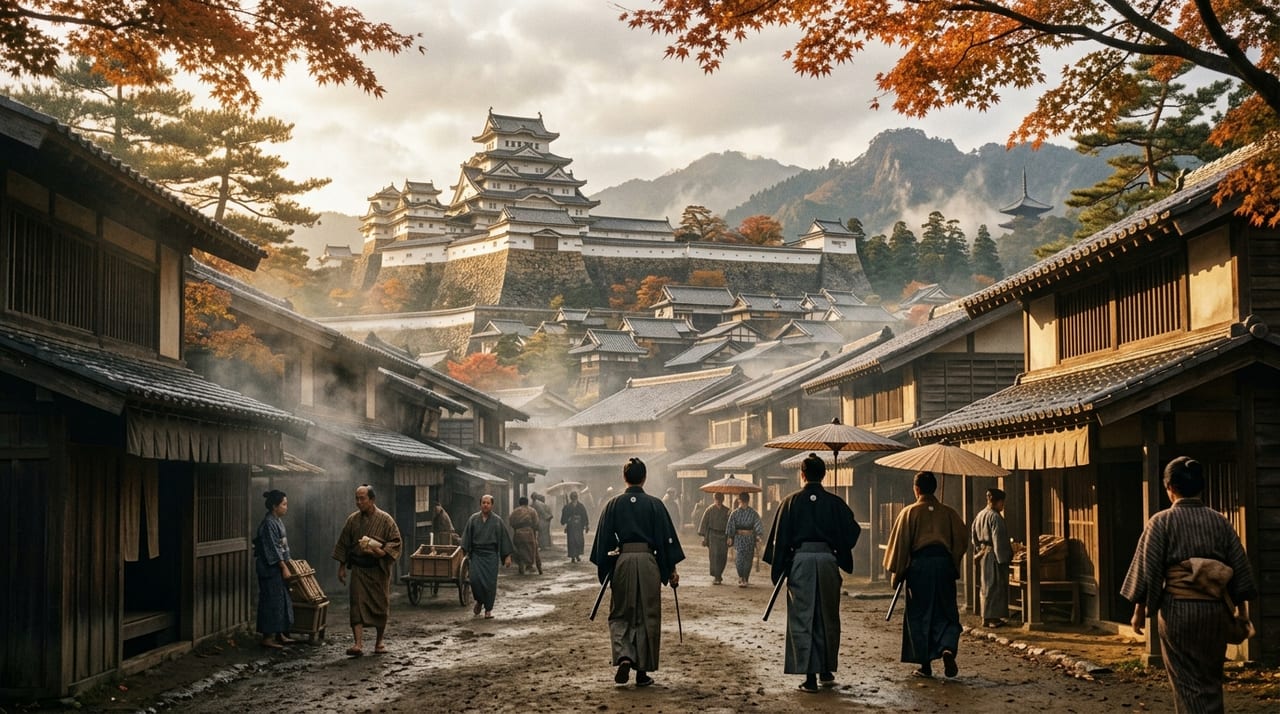
 * Image is for illustrative purposes only.
Keiō Era — The Final Swords of the Tokugawa Order
慶応(けいおう)
Sword culture during the turbulent Keiō era (1865–1868): Taisei Hōkan (the Return of Political Authority, November 1867; Keiō 3/10), the Imperial Restoration (January 1868; Keiō 3/12), and the Battle of Toba-Fushimi (January 1868; Keiō 4/1). The historical role of swords carried by the Shinsengumi, Satchō Alliance, and anti-shogunate shishi — and the final phase of the Japanese sword as it stood at the intersection with modern firearms. The last brilliant moment of bushi sword culture before the Sword Abolition Edict of 1876.
Description
The Keiō era (1865–1868) was a period of violent acceleration in which the Tokugawa system, established over 260 years, collapsed in rapid succession — and the final phase in which the Japanese sword's social role underwent fundamental transformation. Having passed through the turbulence of the Ansei, Bunkyū, and Genji eras, the conflict between the shogunate and anti-shogunate forces entered its decisive stage in the Keiō years, and swords once again stood at the very front of historical action as direct instruments of political change.
The emblematic figures of Keiō-era sword culture are the Shinsengumi, the special police force entrusted by the shogunate with maintaining order in Kyoto. From the Ikedaya Incident (1864) through the Aburanokōji Incident (1867), the Shinsengumi relied primarily on close-quarters sword combat as their principal fighting method. The names of their swords have achieved remarkable renown in Japanese sword history: Kondō Isami's Kotetsu and Hijikata Toshizō's Izuminokami Kanesada. Kondō's Kotetsu is generally regarded as a forgery, and the Kikuichimonji Norimune long attributed to Okita Sōji is a fiction of later novels; he is said in fact to have used Kashū Kiyomitsu or Yamato no kami Yasusada. What is significant from a sword-historical perspective is that these men sought blades fit for actual combat, demonstrating a return to the sword's combat value.
Through the chain of political events — the Satsuma-Chōshū Alliance (1866), Taisei Hōkan (November 1867; Keiō 3/10), the Imperial Restoration (January 1868; Keiō 3/12), and the Battle of Toba-Fushimi (January 1868; Keiō 4/1) — swords remained the most direct visible expression of the warrior's identity and political will. At Toba-Fushimi, the former shogunal army also fielded Western-style infantry units, but forces such as the Kyōto Mimawarigumi, which relied mainly on swords and spears, were broken under the Satsuma-Chōshū gunfire. This battle is one of history's clearest demonstrations of firearms' decisive superiority over blade warfare, marking the announcement of the sword's end as the primary military instrument.
The sword industry of the Keiō era found itself in difficult circumstances — caught between surging demand and shortages of materials and skilled craftsmen. The prolonged Bakumatsu crisis forced smiths across Japan into complex political positions, receiving commissions from han, the shogunate, and anti-shogunate factions alike. The great shinshintō masters who embodied Suishinshi Masahide's classical-revival vision were also increasingly losing patrons and production environments amid the political chaos.
The outbreak of the Boshin War in Keiō 4 (1868) and the establishment of the Meiji government marked an essential turning point in the history of the Japanese sword. The Abolition of Domains in Meiji 4 (1871), the Conscription Ordinance (1873), and the Sword Abolition Edict (1876) collectively transformed the sword from "the soul of the warrior" into "a fine art and craft object," redefining the swordsmith from "weapons manufacturer" to "traditional artisan." The Keiō era is inscribed in Japanese sword history as this transformation's immediate precursor — the last era in which the sword genuinely functioned in the context of social power and actual combat.
Characteristics of This Era
- The 'final era of the sword' — the last phase in which the warrior-sword social relationship remained living reality before the 1876 edict
- Shinsengumi and sword culture — the swords of Kondō Isami, Hijikata Toshizō, and Okita Sōji as a special cultural legacy in sword history
- Toba-Fushimi and the superiority of firearms — the battle that announced the end of the sword's era as the primary military instrument
- Taisei Hōkan, Imperial Restoration, and sword symbolism — blades continuing to function as the most direct expression of identity amid political upheaval
- Smith and industry difficulties — the complex political positioning and economic hardship of smiths caught between shogunate, han, and anti-shogunate factions