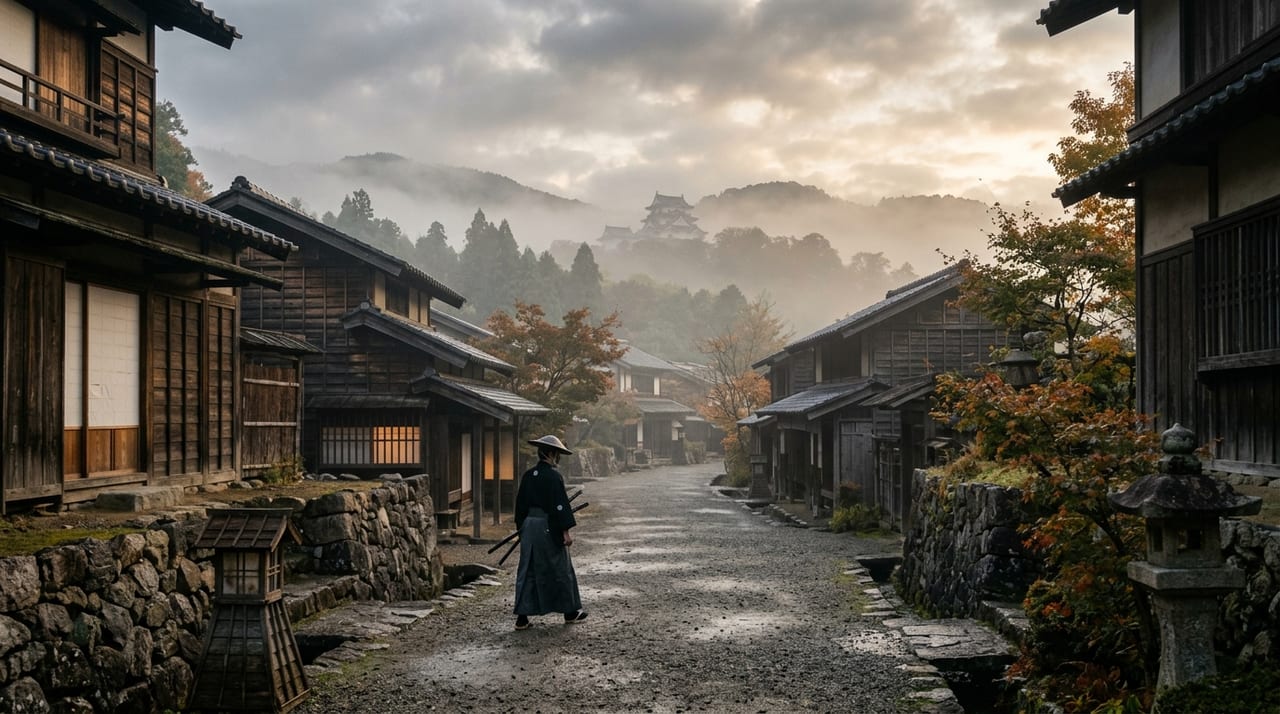
 * Image is for illustrative purposes only.
Kansei Reform Period
寛政改革期
Senior councillor (rōjū) Matsudaira Sadanobu's Kansei Reforms issued sweeping frugality edicts and strictly cracked down on luxury goods. Meanwhile, this was the era in which Suishinshi Masahide, founder of shinshintō, advocated the revival of kotō.
Description
Background and Overview of the Kansei Reforms
In Tenmei 7 (1787), Matsudaira Sadanobu, lord of Shirakawa Domain, took office as rōjū and carried out a large-scale shogunal reform, the Kansei Reforms. The background was the corruption and extravagance of Tanuma Okitsugu's era and the social unrest caused by the Great Tenmei Famine. Sadanobu's reforms made 'frugality and thrift' their fundamental principle and ordered economy across every class, from samurai to merchants and commoners. Sumptuary edicts, edicts regulating public morals, the Kien-rei (cancellation of debts owed by hatamoto and gokenin), and the kakoimai order were issued in quick succession, and the society of Edo was enveloped in an atmosphere of tightening. The reforms brought a constraint in stark contrast to the bustle of the Tanuma era, and they also provoked resistance, symbolized by the famous kyōka: 'The waters of Shirakawa are so clear that no fish can live in them; I long for the old murkiness of the Tanuma days.'
Frugality Edicts and Sword Fittings
The frugality edicts of the Kansei Reforms strictly regulated luxury goods and banned the use of gaudy items such as gold and silver metal fittings. Sword fittings such as tsuba, menuki, kozuka and kōgai were also placed within this climate of frugality.
Suishinshi Masahide and the Theory of Reviving kotō
The most important event in the history of Japanese swords during the Kansei period was that Suishinshi Masahide (1750–1825) began to systematize the theory of reviving kotō. Masahide was born in Dewa Province, went to Edo to train, and eventually made a name for himself as one of the leading smiths of his day. He deepened his criticism of the shintō style that pervaded the smiths' world of the time, and grew firmly convinced that the technical and artistic standards of kotō from the Heian and Kamakura periods were the ideal for Japanese swords. In Tōken Bengi, written in the Kansei period, he sharply pointed out the problems of shintō and called for the revival of ancient methods (the forging methods of kotō). This intellectual framework became the starting point of the concept and movement of shinshintō, and the spiritual foundation that produced later talents such as Minamoto Kiyomaro and Taikei Naotane.
The Rise of Coastal Defence Thinking and the Changing Role of Swords
The Kansei period also marked the beginning of external pressure, symbolized by the approach of Russian ships to Ezo, with Adam Laxman's arrival in Kansei 4 (1792). Matsudaira Sadanobu recognized the need for coastal defence and called for the strengthening of military preparedness. This sense of external crisis gave rise to debate that once again positioned swords as instruments of actual combat. Resonating with Suishinshi Masahide's theory of reviving kotō, it raised the proposition of reviving Japanese swords fit for practical use. This current became the starting point of a long chain of intellectual development. It connected with the sonnō jōi thought of the Bunka-Bunsei to Tenpō-Kōka periods and led to the strongly practical-sword orientation of shinshintō in the late Edo period.
Characteristics of This Era
- Enforcement of frugality edicts restricting luxury goods. Sword fittings were also placed within the frugal climate.
- Systematization of Suishinshi Masahide's theory of reviving kotō. Critique of shintō and a return to Heian and Kamakura ancient methods were established in this period as the intellectual starting point of shinshintō.
- The onset of external pressure, symbolized by Laxman's arrival, stimulated coastal-defence thinking. The proposition of reviving swords fit for practical use emerged, laying a long groundwork for late Edo sword culture.