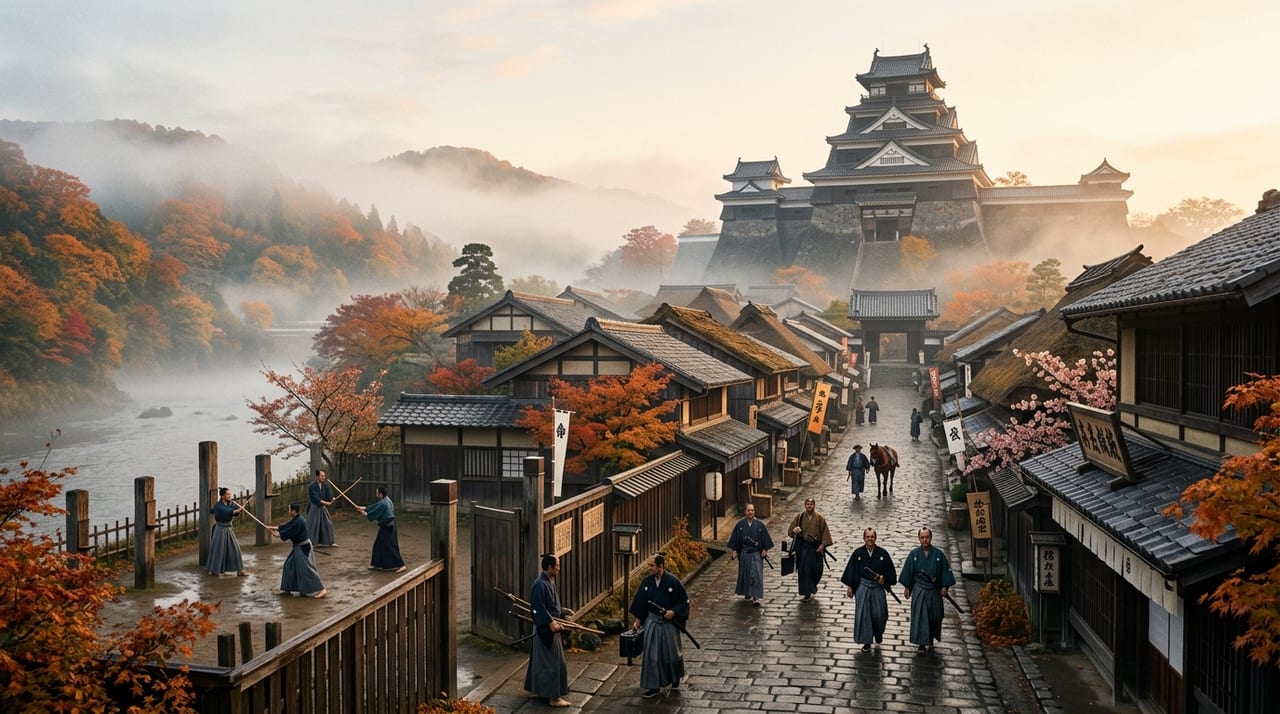
 * Image is for illustrative purposes only.
Ashigaru and Retainers — Sword Culture of the Lower Warrior Class
足軽・奉公人と刀剣文化——武士下層の帯刀
In the warrior society of the Edo period, the right of ashigaru and retainers to carry swords was strictly regulated by the rigid status system. Ashigaru, occupying the lowest rank of the samurai class, were permitted to wear two swords (daisho), while chūgen and komono were limited to a single blade. The presence and form of sword-bearing served not merely as weapon-carrying but as a symbol of social standing and honor.
Description
Historical Background
Under the feudal order established by the Edo shogunate, warrior society was governed by a detailed status system. The samurai hierarchy descended from shogun to daimyo, hatamoto, gokenin, and ashigaru, with the warrior-household servants, chūgen and komono, below the ashigaru. Within this status order, the form of sword-bearing was an important institutional mechanism that made each rank's social position visible.
During the prolonged peace of the Edo period, the sword lost its significance as a battlefield weapon and transformed into a symbol representing samurai status and honor. For low-ranking ashigaru and retainers in particular, permission to bear swords was proof of belonging to the warrior class, marking a clear distinction from farmers and townspeople.
The Reality of Sword-Bearing Regulations
Ashigaru, as the lowest rank of samurai, were permitted to wear two swords (daisho), though these were not necessarily high-quality blades — practical mass-produced swords were common.
Chūgen and komono were permitted only a single sword (one wakizashi). These ranks occupied an intermediate position between samurai and farmer, and their ambiguous status was institutionalized through the form of sword-bearing. The privilege of surname and sword-bearing could also be specially granted by a lord as a reward for exceptional loyalty or military achievement.
Social Significance
Sword-bearing carried meaning beyond mere armament in warrior society. Wearing a sword was proof of samurai status, signifying the right and duty to draw and fight. A samurai's counterattack in a sword incident was recognized as legitimate self-defense, while those of non-sword-bearing ranks who used swords faced severe punishment.
In the Bakumatsu period, the status system began to destabilize, with increasing cases of farmers and townspeople being granted the privilege of surname and sword-bearing. This reflected the decline of shogunal authority and social upheaval, forming part of the historical process leading to the post-Meiji Restoration sword prohibition edict (Haitorei, 1876).
Historical Significance
The sword culture of ashigaru and retainers illustrates the aspect of Japanese swords functioning simultaneously as weapons and as mechanisms of social order. In the stable feudal society of the Edo period, the possession and form of sword-carrying were important elements defining people's social identity. This system is a typical example demonstrating that the Japanese sword carried cultural and social meaning beyond mere material craftsmanship.
Characteristics of This Era
- Ashigaru permitted to wear two swords (lowest samurai privilege)
- Chūgen and komono restricted to a single sword
- Social significance of name and sword-bearing rights in class hierarchy