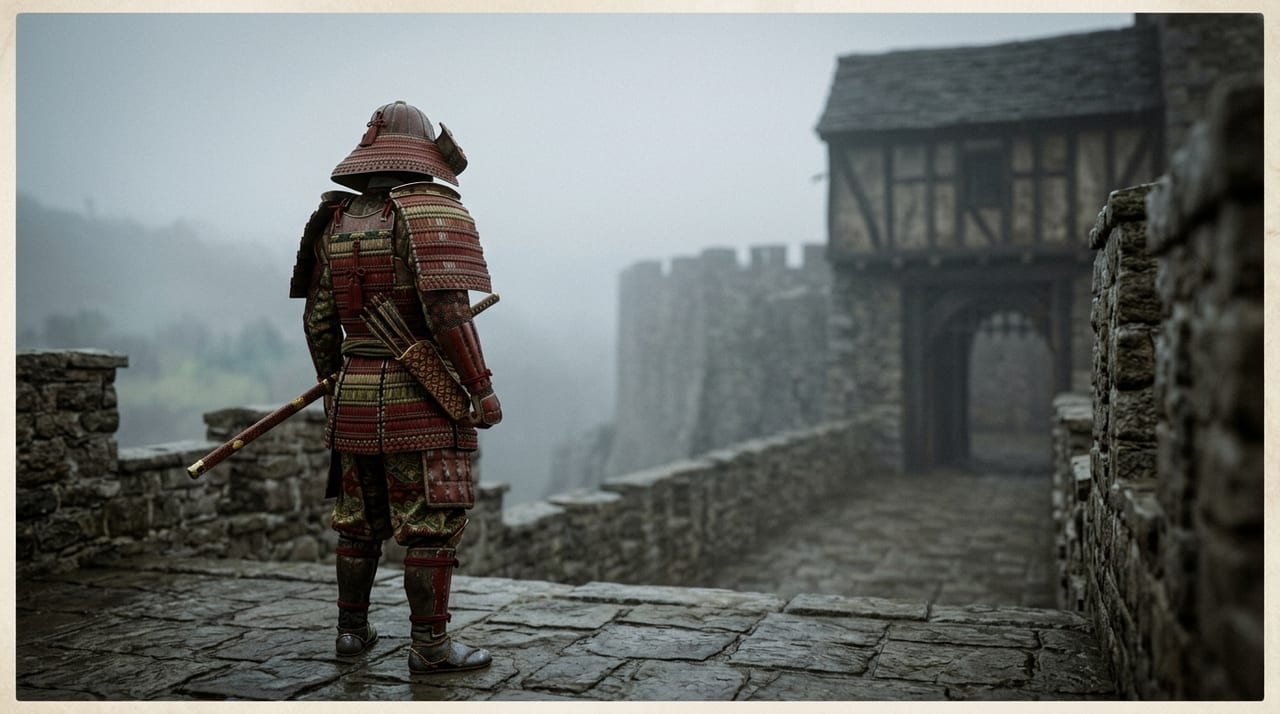
 * Image is for illustrative purposes only.
Yamato Takeru
日本武尊(ヤマトタケル)
Prince of Emperor Keikō — The Legendary Hero Who Bore the Kusanagi Sword
Description
Overview
Yamato Takeru is a legendary hero of ancient Japan recorded in the Kojiki and Nihon Shoki, described as a prince of the 12th Emperor Keikō and the father of the 14th Emperor Chūai.
The Western and Eastern Campaigns
According to the chronicles, Yamato Takeru was first sent by his father to subjugate the Kumaso of Kyushu, disguising himself as a woman to get close to and slay the enemy chieftain. Soon after returning from the west, he was ordered on a campaign to pacify the eastern provinces, advancing through the Kantō region toward Tōhoku. During this eastern campaign, after losing his wife Ototachibana-hime, his lament "Azuma haya" ("Oh, my wife!") is said to be the origin of the name Azuma for the eastern provinces.
The Kusanagi Sword
Before departing on his eastern campaign, he was given a sword by his aunt Yamatohime-no-mikoto at the Ise Shrine. The Nihon Shoki calls this sword Kusanagi-no-Tsurugi, while the Kojiki and other sources also refer to it as Ame-no-Murakumo-no-Tsurugi. When enemies set fire to the grass around him in Suruga Province, he is said to have used the sword to cut down the surrounding grass and escape the flames — the origin of the name "Kusanagi" ("grass-cutter"). The sword is counted among the Three Sacred Treasures of Japan and is enshrined today at Atsuta Shrine in Owari.
Death
On his return from the eastern campaign, Yamato Takeru fell ill after a confrontation with the deity of Mount Ibuki in Ōmi Province, and died at Nobono in Ise Province before reaching Yamato. A legend also holds that after death he transformed into a white bird and flew away.
Later Reputation
While modern scholarship generally regards the Yamato Takeru narrative as a composite legend assembled during the compilation of the Kojiki and Nihon Shoki from various regional hero tales rather than a strict historical record, the Kusanagi sword episode became foundational to the lore of the Three Sacred Treasures and shaped later ideals of the sword-bearing warrior prince in Japanese martial culture.
Notable Swords
- Kusanagi-no-Tsurugi (Ame-no-Murakumo-no-Tsurugi)