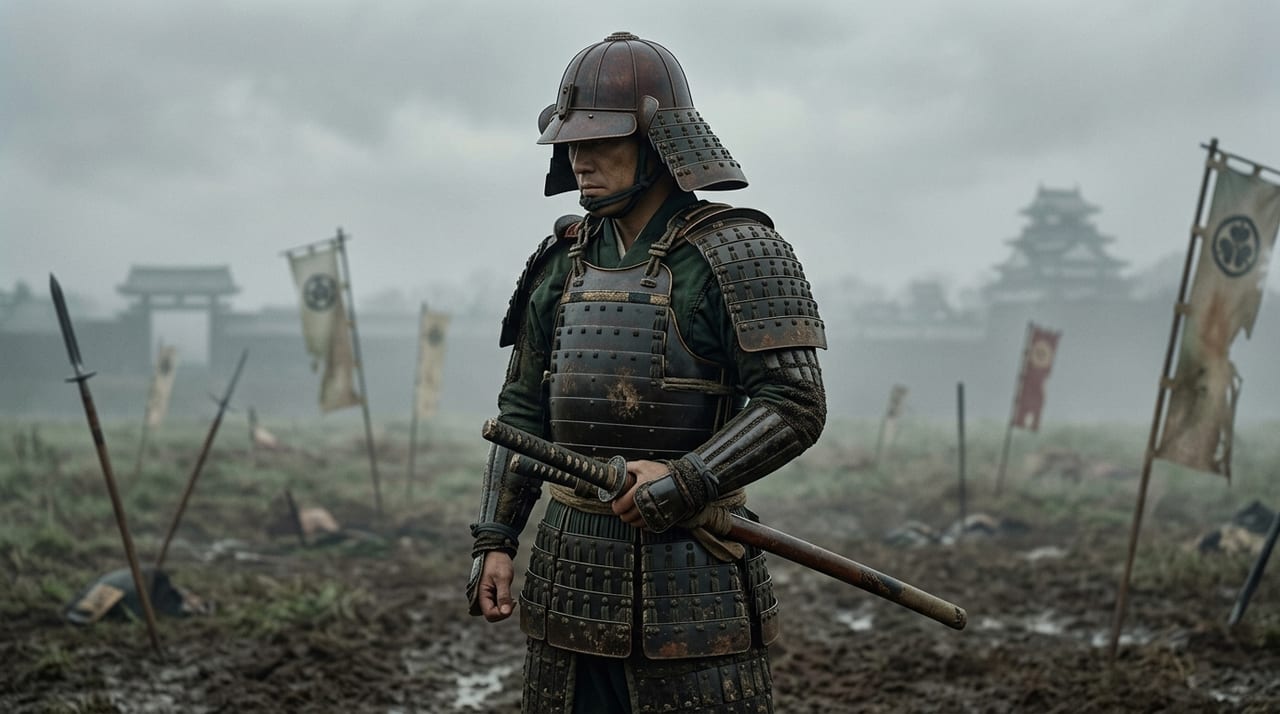
 * Image is for illustrative purposes only.
Shimada Toranosuke
島田虎之助
One of the three great swordsmen of the Bakumatsu era and teacher of Katsu Kaishū
Description
Origins and Training
Shimada Toranosuke (1814-1852) was a swordsman of the late Edo period. Born into a samurai family of the Nakatsu domain in Buzen Province, he studied Sotoya Ittō-ryū in his youth under Hori Jūrōzaemon. In 1837 he went up to Edo and entered the school of Onodani Nobutomo, a shogunal retainer widely regarded as the foremost swordsman of the day, and there mastered Jikishinkage-ryū. He also studied Kitō-ryū jūjutsu under Suzuki Seibei.
His Dōjō and the Shimada Branch of Jikishinkage-ryū
In 1843 he opened his own dōjō in Edo and gathered a large body of students. His style came to be known as the Shimada branch of Jikishinkage-ryū, and together with his teacher Nobutomo and Ōishi Susumu of Yanagawa in Kyushu he was named one of the "three great swordsmen of the Bakumatsu era." Known for the powerful strokes delivered from his tall frame, his teaching nonetheless placed the state of the mind above technical dexterity.
The Unity of Sword and Zen
Toranosuke associated with Confucian scholars and Zen monks, and regarded scholarship and Zen practice as part of martial training. He is remembered for the teaching that the sword is the mind itself, and that where the mind is not correct the sword too will not be correct, holding practice in the dōjō to be inseparable from the cultivation of character. What distinguishes him as a swordsman is that he interrogated the inner life of the one who holds the blade rather than merely transmitting technique.
Relationship with Katsu Kaishū
The young Katsu Kaishū (then Rintarō) first knew Toranosuke as a fellow student at the Suzuki dōjō, and later entered his school to learn Jikishinkage-ryū. Toranosuke is said to have told him that there is a sword of the noble man and a sword of the small man, and urged him not only to train in the dōjō but to pursue learning and to temper his spirit through Zen. Kaishū's lifelong practice of seated meditation, and the composure he displayed amid the upheavals of the Bakumatsu era, are traditionally traced to this teacher's instruction.
Early Death and Legacy
He died in 1852 at the age of thirty-nine by traditional reckoning, and was buried at Shōjō-ji in Asakusa. Though his life was short, his insistence that technique and spiritual cultivation form a single whole left a lasting mark on the martial thought of the closing years of the Tokugawa era.