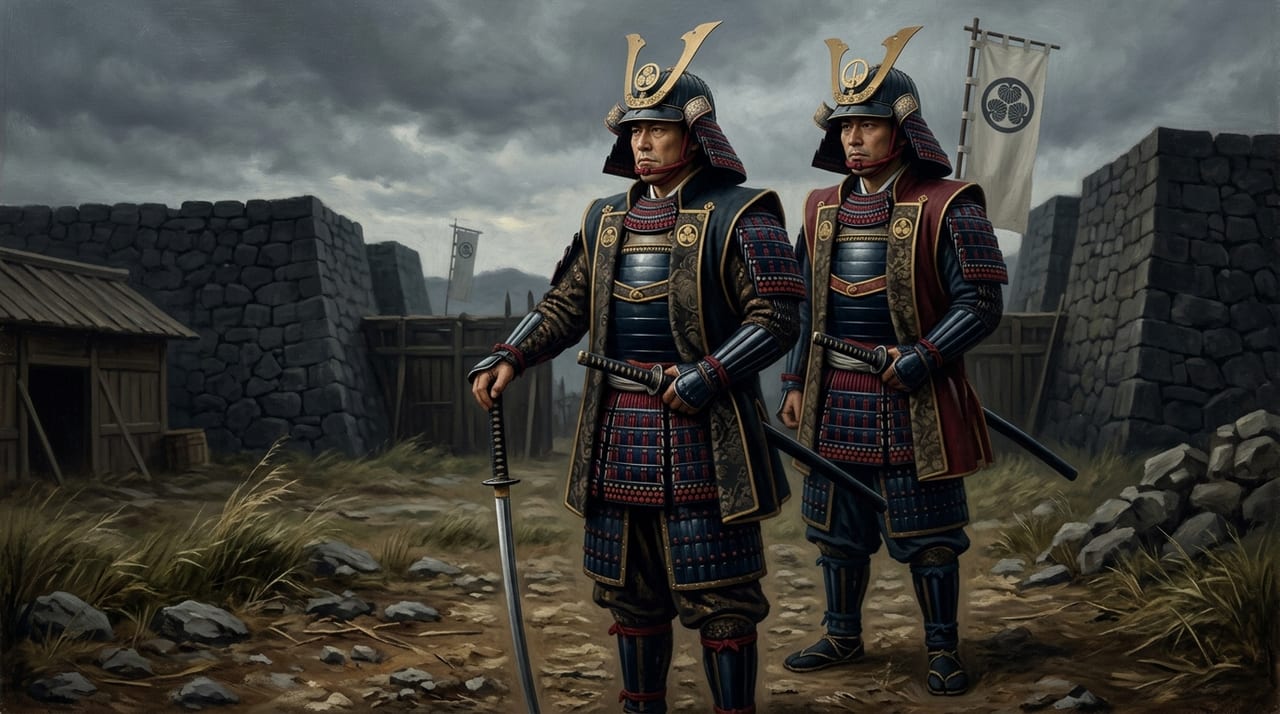
 * Image is for illustrative purposes only.
Ono Tadaaki
小野忠明
The swordsman who won the duel at Koganehara and inherited the orthodox line of Ittō-ryū — sword instructor to the Tokugawa shogunal house
Description
Ono Tadaaki was born in Eiroku 8 (1565) in Mikogami, Maru village, Asahina District, Awa Province (present-day Mikogami, Minamibōsō, Chiba Prefecture). His former name was Mikogami Tenzen. In his youth he set his sights on the way of the sword and, entering the school of Itō Ittōsai Kagehisa, founder of Ittō-ryū, became one of his senior disciples. Ittōsai is a legendary swordsman traditionally said to have been undefeated throughout his life, and Tadaaki, through rigorous training under him, is said to have gradually acquired outstanding swordsmanship.
In the duel at Koganehara, known as the contest that decided the legitimate successor of Ittō-ryū, Tadaaki is said to have defeated his senior disciple Zenki and received from Ittōsai a certificate of transmission (inka) confirming his position as the school's legitimate heir. In Bunroku 2 (1593), Tokugawa Ieyasu summoned Tadaaki, who entered his service and took the surname Ono, his maternal family name. He also took part in the attack on Ueda Castle during the Battle of Sekigahara and in the Siege of Osaka, demonstrating his ability not only in swordsmanship but also in actual warfare.
Tadaaki was eventually appointed sword instructor to the Tokugawa shogunate and gained the honor of teaching Ittō-ryū to the second shogun, Tokugawa Hidetada. From the generation of his son Tadatsune, his school was called Ono-ha Ittō-ryū. Throughout the Edo period it became one of the mainstream schools of shogunal swordsmanship and influenced Hokushin Ittō-ryū and many other schools. He died in Kan'ei 5 (1628) at the age of 64. The techniques and spirit with which he mastered the sword itself left a great mark on later sword culture, and he still holds an important place in the history of kendo as a master swordsman.