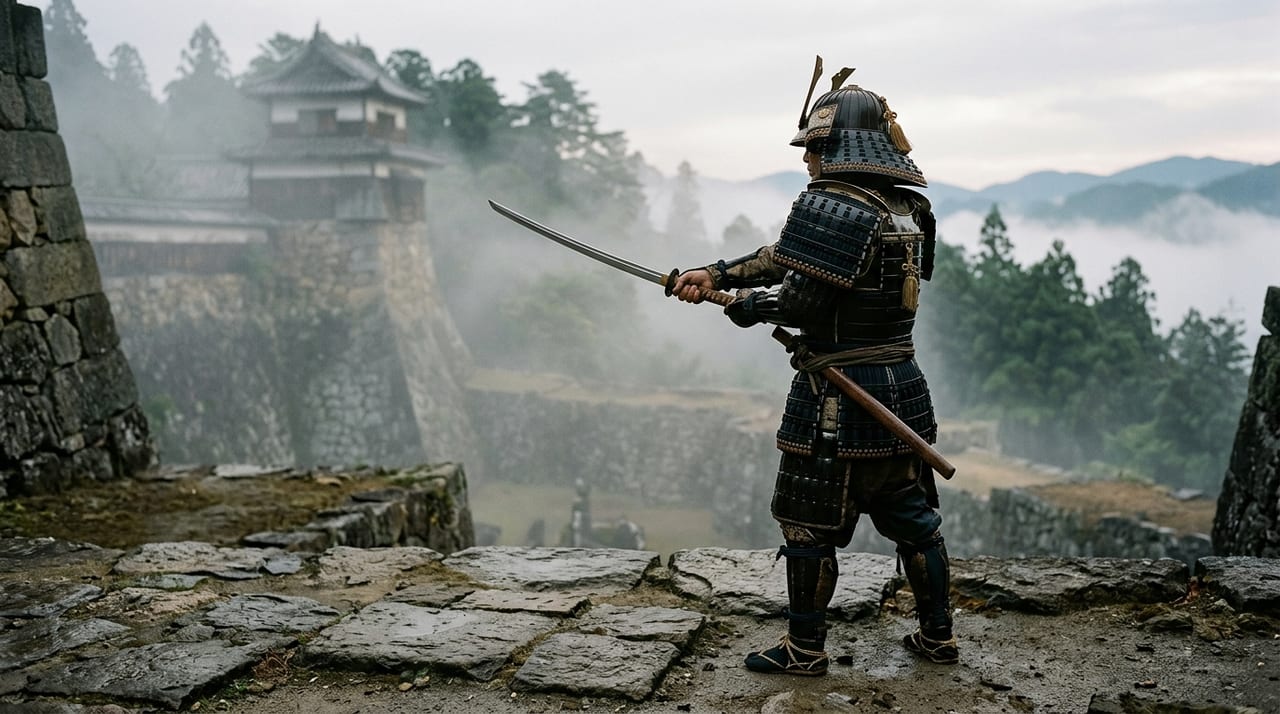
 * Image is for illustrative purposes only.
Ōkubo Tadayo
大久保忠世
One of the Sixteen Divine Generals of Tokugawa — a Mikawa warrior of both valor and administrative skill, entrusted with governing the former Later Hōjō domain
Description
Ōkubo Tadayo was born in Tenbun 1 (1532) in Kamiwada, Hekikai District, Mikawa Province (present-day Okazaki, Aichi Prefecture). As the eldest son of Ōkubo Tadakazu, a long-serving hereditary retainer of the Matsudaira clan (later the Tokugawa clan), he served from childhood under two lords, Matsudaira Hirotada and Tokugawa Ieyasu. He took part in many of Ieyasu's major campaigns, including the Mikawa Ikkō-ikki uprising, the Battle of Mikatagahara, and the Battle of Nagashino. For his exploits in the attack on Kanie Castle in Kōji 1 (1555), he is also counted among the Seven Spears of Kanie.
What particularly earned Tadayo high regard was his strategic acumen and practical ability in his dealings with the Takeda clan and the Later Hōjō clan. Takeda Shingen is also said to have praised his military merit. After Ieyasu was transferred to the Kantō, Tadayo was given Odawara Castle in Sagami Province with a holding of 45,000 koku, and he was entrusted with the difficult administrative task of governing the territories of the Later Hōjō clan, the former lords of the region.
He is remembered as the man who laid the foundations of the Ōkubo family, which was known as one of the most loyal houses among Ieyasu's retainers, and in later ages he received the honor of being counted among the Sixteen Divine Generals of Tokugawa. He died in Bunroku 3 (1594) at the age of 63. His son Ōkubo Tadachika was later promoted to rōjū but was afterward stripped of his domain. Tadayo himself remained loyal to Ieyasu throughout his life, and as a warrior who embodied the plain, frugal and robust spirit of the Mikawa samurai, his name still appears in the historical records.