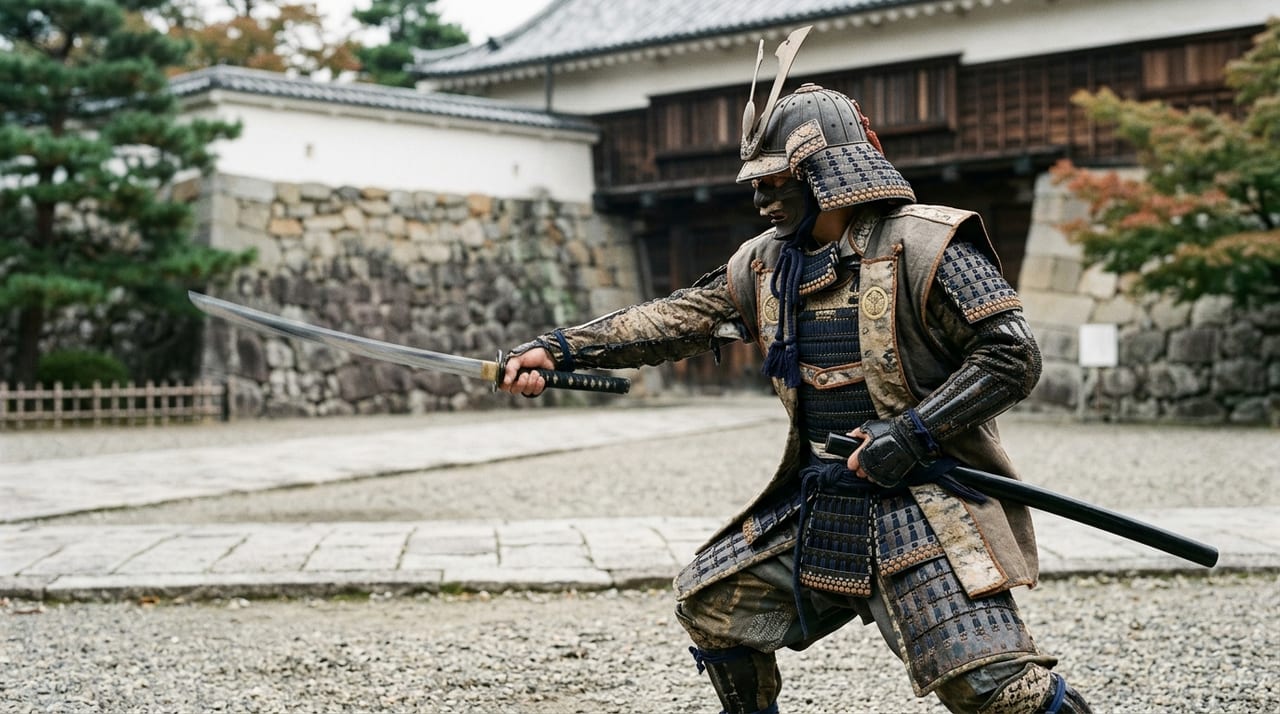
 * Image is for illustrative purposes only.
Minamoto no Noriyori
源範頼
Description
Minamoto no Noriyori (birth year unknown - 1193) was a military commander of the late Heian and early Kamakura periods, the sixth son of Minamoto no Yoshitomo. He was the half-brother of Minamoto no Yoritomo and the elder half-brother of Minamoto no Yoshitsune. Because he was raised in Kaba no Mikuriya in Totomi Province (near present-day Hamamatsu, Shizuoka), he was known as "Kaba no Kaja." In childhood he is said to have been adopted by Fujiwara no Norisue, from whom he received the character "Nori" in his name.
Role in the Genpei War
When his brother Yoritomo raised forces to overthrow the Taira, Noriyori served as one of his leading generals. In 1184, together with his younger brother Yoshitsune, he defeated Minamoto no Yoshinaka in Kyoto, and at the ensuing Battle of Ichinotani he commanded the main army in the assault on the Taira. He was then appointed governor of Mikawa and advanced westward along the Sanyo road, crossing to Kyushu to press the Taira to destruction. After the fall of the Taira in 1185, he oversaw post-war administration in Kyushu and established Kamakura's control there. While Yoshitsune is celebrated for brilliant surprise attacks, Noriyori sustained the Genpei War as a supreme commander of large armies through orthodox tactics.
Yoritomo's Suspicion and Death
In 1193, when the vendetta of the Soga brothers occurred, Noriyori, who had remained in Kamakura, is said to have reassured Yoritomo's wife, Hōjō Masako, who feared for Yoritomo's safety, that the Genji line was secure. This reportedly aroused Yoritomo's suspicion of treason, and Noriyori was exiled to Izu Province. He was subsequently confined at Shuzen-ji and is believed to have ultimately been put to death. Along with Yoshitsune, he was one of the brothers purged by Yoritomo.
Later Legends
Noriyori is often portrayed as an earnest and unassuming figure, yet he played a vital role as supreme commander in the Genpei War. Legends of his survival, as well as the lore of the "Kaba cherry tree" associated with him, remain in various places, and he is remembered by later generations as a tragic warrior.