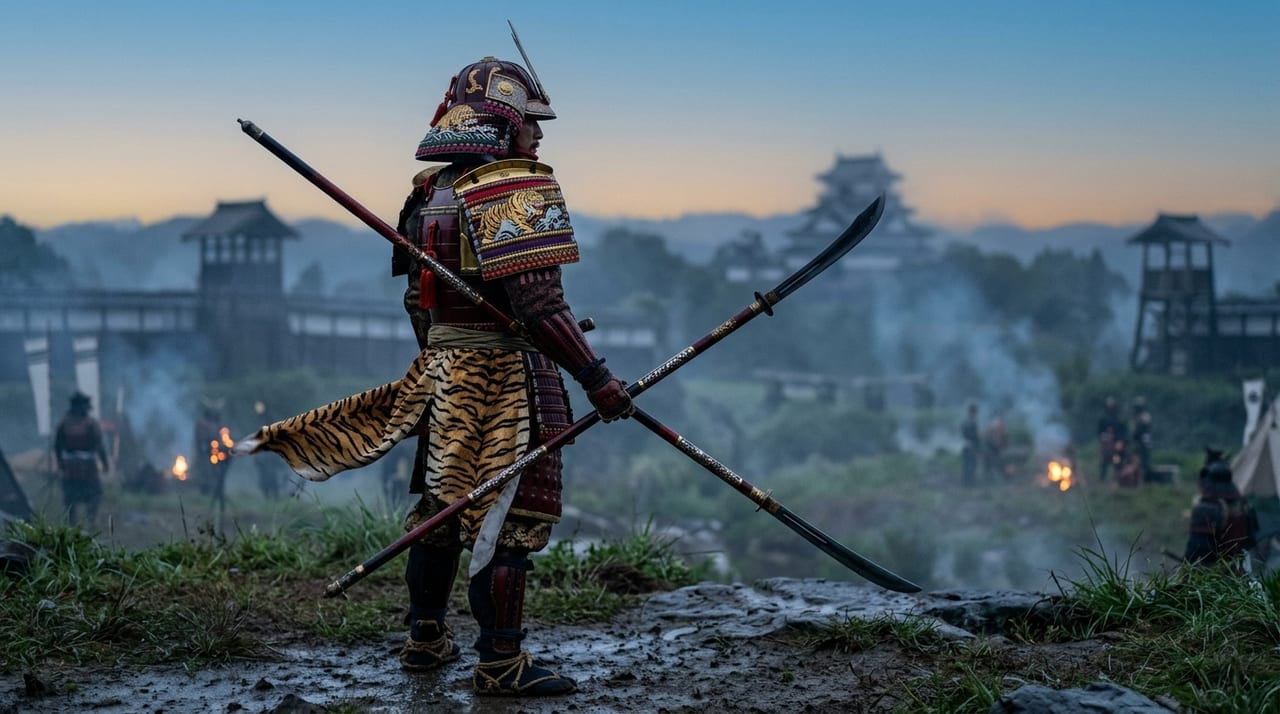
 * Image is for illustrative purposes only.
Maeda Keiji
前田慶次
Eccentric Warrior of the Sengoku Era, Master of the Spear
Description
Maeda Keiji (c. 1533–c. 1612) was a samurai general active from the Sengoku period into the Azuchi-Momoyama period, and he is remembered by later generations as a highly individual figure and the representative of the kabukimono. His real name is also said to have been Maeda Toshimasu, and he is said to have come from the Takigawa clan (a branch of Takigawa Kazumasu's family). Because of his unconventional anecdotes, he is known today, also through the influence of novels and manga, as the 'tenka gomen no kabukimono'.
Keiji was the adopted son of Maeda Toshihisa, elder brother of Maeda Toshiie, and so from Toshiie's point of view he was a nephew. He served as a general of the Maeda family. He later left the Maeda household, but the reason is unclear. A well-known anecdote says he tricked Toshiie into taking a cold water bath and then fled, but its earliest appearance is in the late Edo-period essay collection 'Okinagusa', and its credibility is low. Afterward he lived as a rōnin in Kyoto, associating with men of letters through renga and other pursuits. He later served Uesugi Kagekatsu and formed a close friendship with Naoe Kanetsugu as well.
As a military commander, Keiji was a fierce general skilled with the spear. During the Battle of Sekigahara (1600), he is said to have served as head of the kumihazushū (newly hired retainers) of the Uesugi household and to have distinguished himself by taking part in the Battle of Hasedō Castle in Dewa.
In connection with Japanese swords, a tachi said to have been dedicated to Atsuta Shrine in Tenshō 9 (1581) by Maeda Keijirō, a resident of Arako, survives. In manga and similar works he is often drawn as a giant, but no historical record gives his height, and the surviving armor attributed to him is no different in size from that of other generals.
In his later years he is said to have retired to Dōmori, near Yonezawa (Yamagata Prefecture), but there are also records stating that he died in Yamato Province. He was also well versed in cultural pursuits outside the martial arts, such as waka and renga, and he left an autograph copy of the 'Maeda Keiji Dōchū Nikki' (travel diary). His free-spirited way of life became widely known from the Edo period onward as a synonym for kabukimono. In particular, through the manga 'Hana no Keiji' (original story by Ryū Keiichirō, art by Hara Tetsuo), he has become a Sengoku-period general with overwhelming name recognition and popularity even today.
Notable Swords
- Tachi dedicated to Atsuta Shrine (signature partly illegible, beginning "Sue"; said to have been dedicated in Tenshō 9 (1581) by Maeda Keijirō, a resident of Arako)