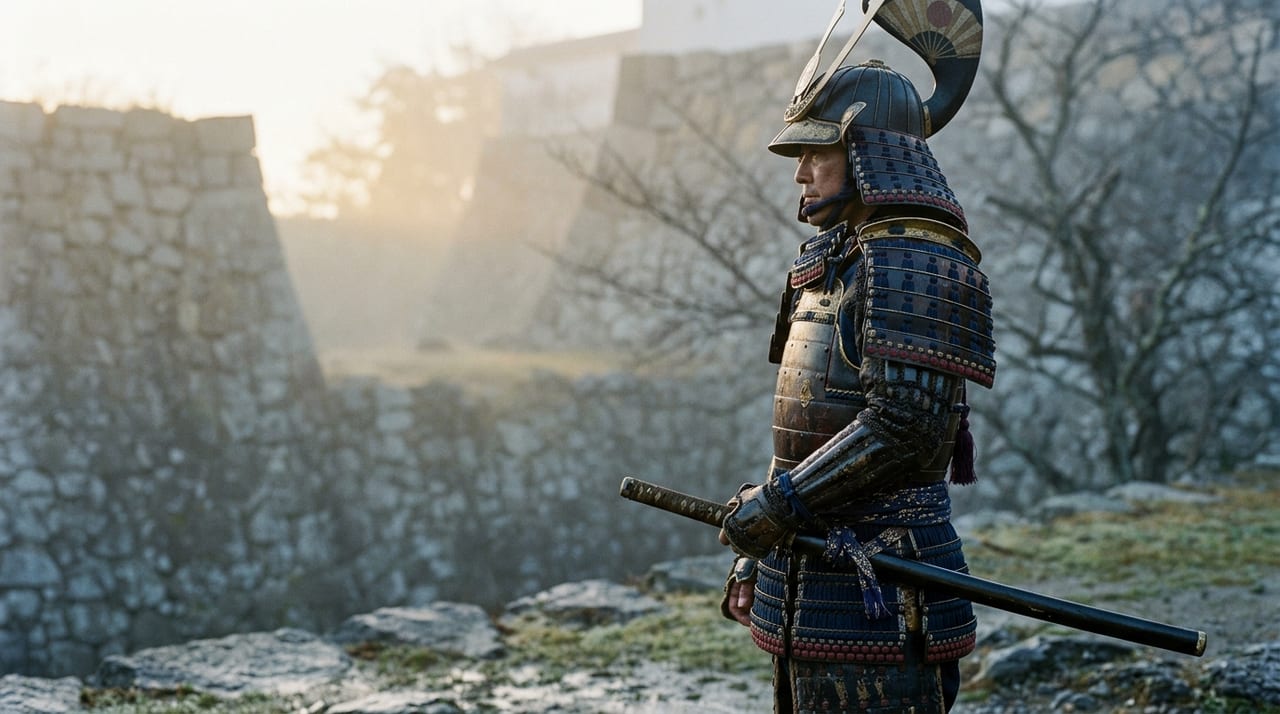
 * Image is for illustrative purposes only.
Hosokawa Yoriyuki
細川頼之
Kanrei Who Saved the Ashikaga Shogunate — The Great Pillar of the Muromachi Order
Description
A Wise General Who Supported the Ashikaga Shogunate
Hosokawa Yoriyuki, born in Gentoku 1 (1329), served as kanrei under two generations, Ashikaga Yoshiakira and Yoshimitsu. He was the greatest statesman of the early Muromachi period, and he set the Ashikaga shogunate, which had been endangered by the Nanboku-chō wars, on a stable course. He took office as kanrei in Jōji 6 (1367) when Ashikaga Yoshiakira was critically ill, and as an assistant to the young Yoshimitsu he led the shogunal government.
Wars Against the Southern Court and the Pacification of Kyūshū
After becoming kanrei, Yoriyuki kept fighting the forces of the Southern Court and the warlords opposed to the shogunate, which were expanding their power in various regions. In Kyūshū in particular, the Kikuchi clan and others who supported Prince Kanenaga of the Southern Court were very strong. Yoriyuki sought to stabilize Kyūshū through skillful appointments, such as assigning Imagawa Ryōshun as Kyūshū tandai to oppose them. In the Chūgoku region, he checked the expansion of the Yamana clan while extending shogunal control throughout the regions.
The Kōryaku Upheaval and His Downfall
However, in the 'Kōryaku upheaval' of Kōryaku 1 (1379), powerful shugo daimyō including the Yamana and Shiba clans united and demanded Yoriyuki's expulsion. Yoriyuki lost the post of kanrei and went down to Shikoku. This was a backlash from the shugo daimyō against Yoriyuki's forceful political methods. Afterward, Yoriyuki was pardoned in Kōō 1 (1389). In Meitoku 2 (1391), Yoshimitsu called him back to Kyōto, and he returned to the shogunal government. However, he died in the 3rd month of Meitoku 3 (1392), without seeing the unification of the Northern and Southern Courts.
Yoriyuki as a Man of Culture
Yoriyuki was also devoted to courtly culture, including waka poetry, Chinese-style poetry, and renga. His waka were selected for an imperial anthology. His Chinese-style poem 'Kainan-kō', which he composed as he fell into exile in Shikoku after his downfall, is also well known.