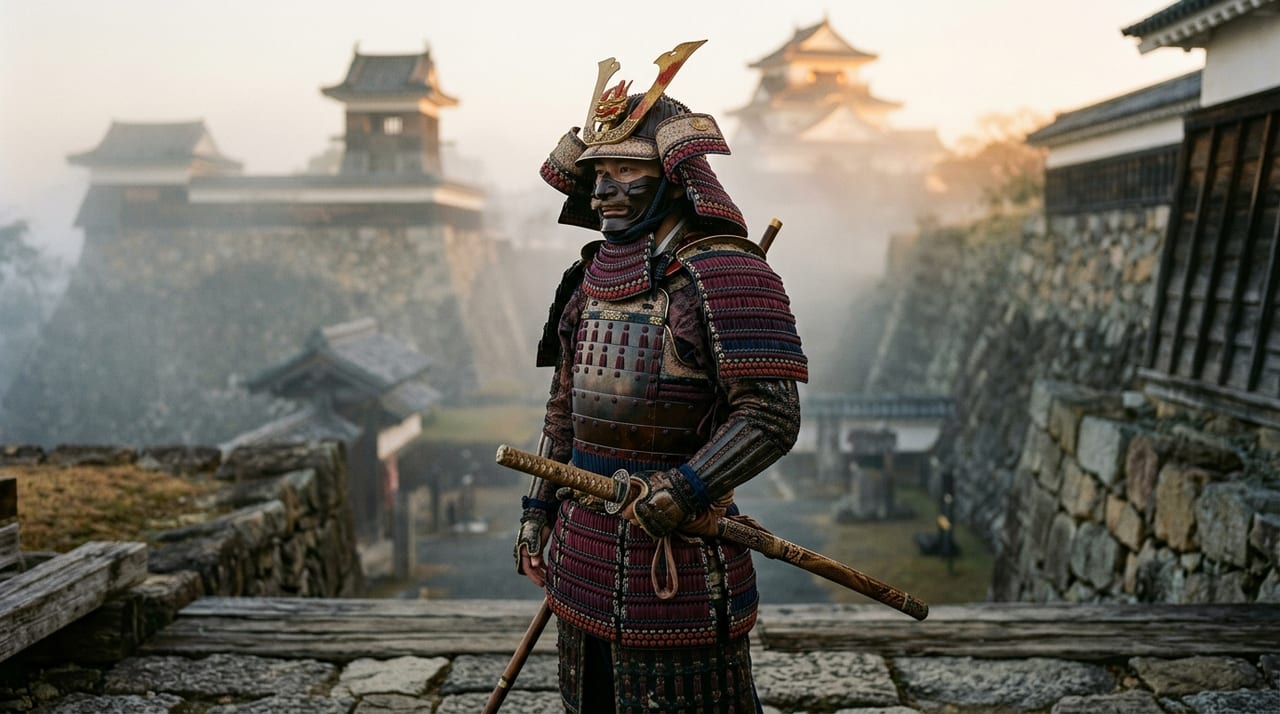
 * Image is for illustrative purposes only.
Hori Hidemasa
堀秀政
The Strategist Hailed as 'Meijin Kutarō'
Description
Hori Hidemasa (1553–1590) was a daimyo who served both Oda Nobunaga and Toyotomi Hideyoshi, renowned by the sobriquet 'Meijin Kutarō' as one of the Sengoku period's foremost prodigies. Excelling in both the literary and martial arts, he was acclaimed by his contemporaries as a preeminent military commander of his era.
Hidemasa was born in 1553 in Mino Province (present-day Gifu Prefecture). From youth, he served as a personal attendant to Oda Nobunaga, where his keen intellect and martial talent caught Nobunaga's eye. As a trusted aide, he participated in campaigns throughout the realm, and in 1578 (Tenshō 6) he led a musket unit at the Battle of Arioka Castle. After Nobunaga's death, he served Toyotomi Hideyoshi and, as a daimyo with 180,000 koku in Kitanonosho, Echizen Province, governed the Hokuriku region.
The epithet 'Meijin Kutarō' honored Hidemasa's exceptional talents. The Jōzan Kidan attributes the name to his care in managing those beneath him, while the Meishō Genkōroku explains it as reflecting a man who could guide the realm without fault.
Hidemasa died of illness at age 38 in 1590 in camp during the Siege of Odawara. When Hideyoshi learned that he had fallen ill, he is said to have asked about his condition again and again. Remembered as a prodigy whose longer life might have altered even the course of history after Sekigahara, Hidemasa remains highly esteemed today.