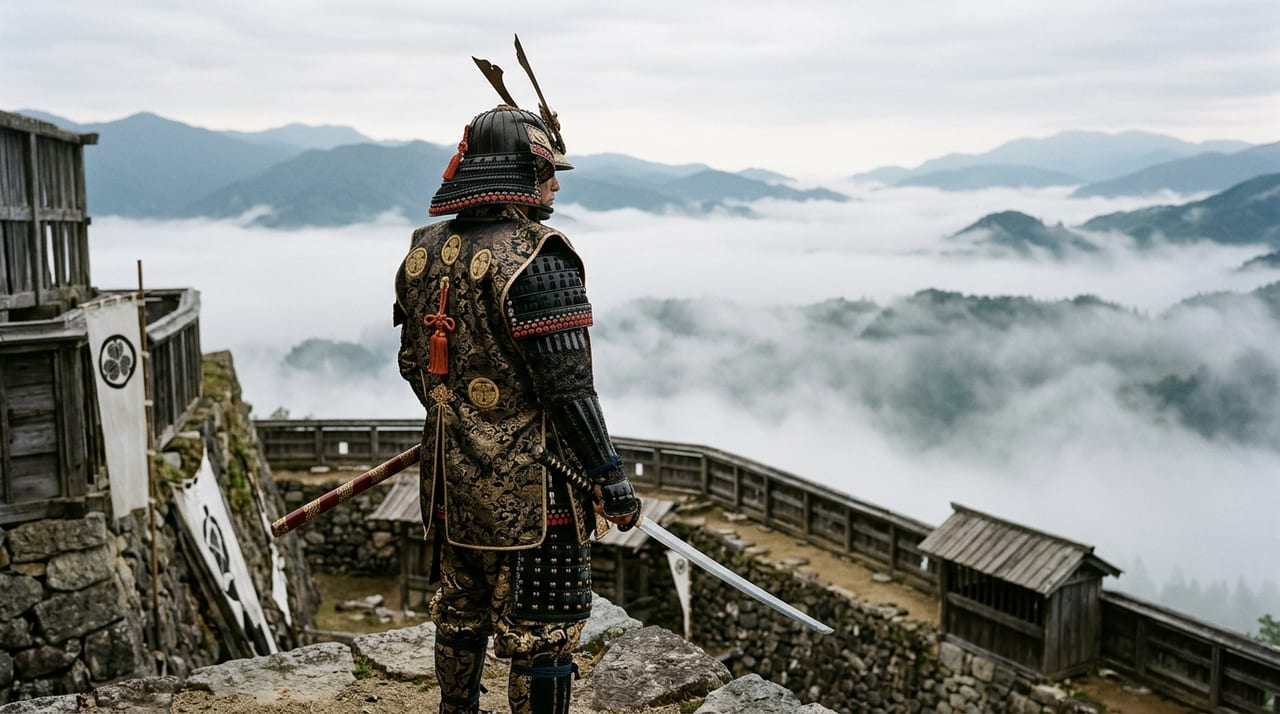
 * Image is for illustrative purposes only.
Fujiwara no Kamatari
藤原鎌足(中臣鎌足)
Founder of the Fujiwara Clan — The Statesman Who Slew Soga no Iruka and Ushered in the Taika Reform
Description
Life
Fujiwara no Kamatari was born in 614 into the Nakatomi clan, hereditary custodians of Shinto rites and court ceremony, and was originally known as Nakatomi no Kamako. From a young age he was noted for his love of learning and his knowledge of Chinese political institutions.
The Isshi Incident
In 645, seeking to overthrow Soga no Iruka, who then dominated the court, Kamatari drew close to Prince Naka no Ōe (later Emperor Tenji). According to tradition, the two became close after Kamatari picked up the prince's shoe, which had come off during a game of kemari. Together with allies including Soga no Kurayamada no Ishikawa no Maro, they planned a coup, and in 645, at the Itabuki Palace in Asuka, Naka no Ōe and his conspirators, bearing swords, struck down Iruka in the presence of the court. Iruka's father, Soga no Emishi, set fire to his own residence and took his life the following day, ending the main line of the Soga clan.
Contribution to the Taika Reform
Following this coup — the Isshi Incident — Kamatari was appointed to the newly created post of Naishin (Inner Minister) and thereafter supported Naka no Ōe in pushing through reforms including the public land and public people system, known collectively as the Taika Reform. After the Battle of Baekgang in 663, he also played a central role in diplomacy with Tang China and Silla.
Death and the Grant of the Fujiwara Name
In 669, Kamatari was injured in a fall from his horse while hawking near Yamashina and took to his sickbed. The day before his death, Emperor Tenji is said to have visited him personally, bestowing upon him the highest court rank, Taishokkan, and the surname Fujiwara. He died the following day at the age of 56.
Later Reputation
Fujiwara no Kamatari is remembered as the founding ancestor of the Fujiwara clan, which would dominate Japanese court politics for more than a millennium afterward, and as one of the pivotal figures of Japanese history for his role in the Isshi Incident and the Taika Reform.