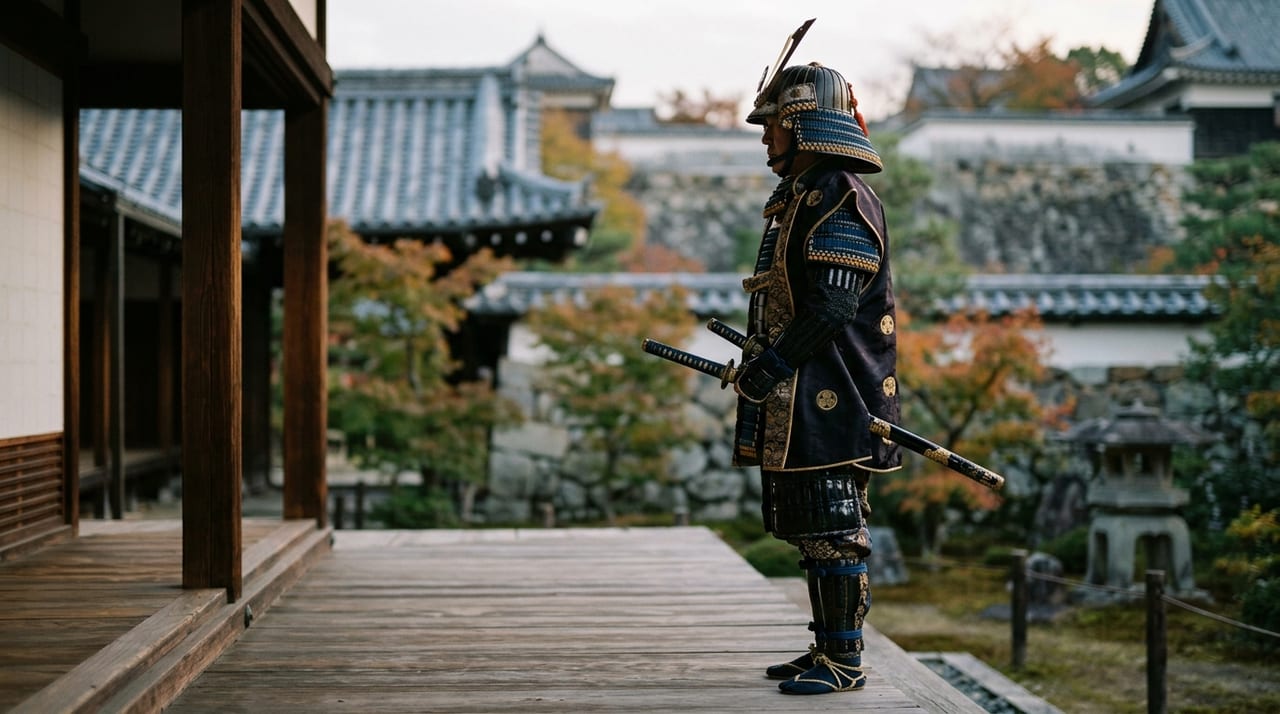
 * Image is for illustrative purposes only.
Ashikaga Motouji
足利基氏
First Kamakura Kubō
Description
Overview
Ashikaga Motouji was the fourth son of Ashikaga Takauji, founder of the Muromachi shogunate, and the first Kamakura kubō — head of the Kamakura-fu, the shogunate's eastern administration. Sent east in 1349 at the age of ten, he governed the Kantō region for eighteen years. While his elder brother Yoshiakira served as second shogun in Kyoto, Motouji's Kamakura office gave the shogunate its characteristic east–west dual structure.
Descent to Kamakura
Born in 1340, Motouji was dispatched to Kamakura in 1349 on his father's orders, exchanging places with his brother Yoshiakira. The Kantō of that period was unstable, with surviving Southern Court forces and internal shogunal rivalries overlapping, and the young Motouji governed with the support of appointed deputies.
The Kannō Disturbance and the Irumagawa Encampment
During the Kannō Disturbance between Takauji and his brother Tadayoshi, Motouji was made a figurehead of the Tadayoshi faction. Afterwards he established a camp at Irumagawa in Musashi Province, holding it as his base for roughly nine years. From there he suppressed Southern Court partisans and rebellious local warriors, consolidating the authority of the Kamakura-fu.
Restoring Uesugi Noriaki
In 1361 Motouji dismissed the Kantō steward Hatakeyama Kunikiyo, whose conduct had grown overbearing. In 1363 he recalled the previously disgraced Uesugi Noriaki to Kamakura as Kantō kanrei. This established the enduring arrangement whereby the Uesugi served as deputy to the Kamakura kubō — the basic structure of the Kamakura-fu thereafter — though it also provoked anti-Uesugi factions and contributed to the later Musashi Heiikki uprising.
Culture and Death
A devout patron of Zen and of Gozan literature, Motouji was also accomplished in waka and fostered warrior culture in Kamakura. He died in 1367 at the age of twenty-eight; illness, recorded as measles, is the traditional cause, though the Nan-Taiheiki hints at suicide. His death came only months before that of his brother Yoshiakira, forcing a simultaneous generational change at both ends of the shogunate.