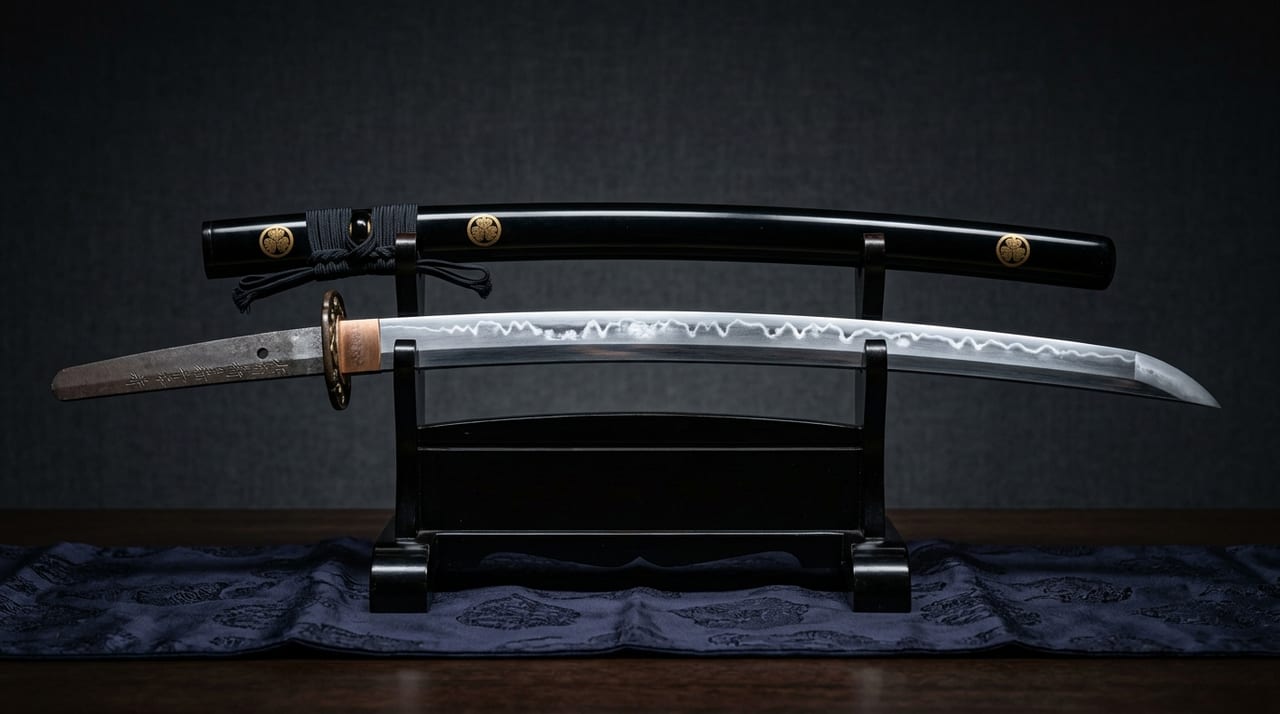
 * Image is for illustrative purposes only.
Silver-inlaid inscribed sword excavated from Eta Funayama Kofun
江田船山古墳出土 銀象嵌銘大刀
Also known as: Silver-inlaid inscribed tachi naming King Wakatakeru
Description
Discovery
This silver-inlaid sword was excavated in 1873 from the stone coffin in the rear circular mound of Eta Funayama Kofun, in Nagomi Town, Tamana District, Kumamoto Prefecture. The keyhole-shaped tumulus is believed to have been built between the late 5th and early 6th century and is renowned for the richness of its grave goods.
Overview of the Sword
The blade is a single-edged straight sword bearing a 75-character silver-inlaid inscription on the narrow spine of the blade — considered among the oldest formal written records produced within the Japanese archipelago. Beyond the inscription, both faces of the blade also carry silver-inlaid motifs of flowers, horses, fish, and birds.
Meaning of the Inscription
The inscription includes the phrase "ruling the realm, King Waka[ta]ke[ru]," with the damaged characters generally reconstructed to read "King Wakatakeru" — a figure widely identified with Emperor Yuryaku.
Scholarly Significance
The same royal name appears in gold inlay on the iron sword excavated from Inariyama Kofun in Saitama Prefecture. The discovery of swords bearing the identical royal name at sites in both eastern Kanto and western Kyushu is regarded as showing that the authority of the Yamato court extended across a wide area of the Japanese archipelago in the late 5th century.
Designation and Present Collection
The Eta Funayama Kofun finds, including this sword, were designated a National Treasure as a set in 1965. The sword is now held by the Tokyo National Museum in Taito City, Tokyo.
Legends & Stories
A Kofun-period tachi bearing a 75-character silver-inlaid inscription naming "King Wakatakeru." Together with the Inariyama Kofun sword, it provides key evidence that Yamato court authority extended from Kyushu to the Kanto region in the late 5th century.