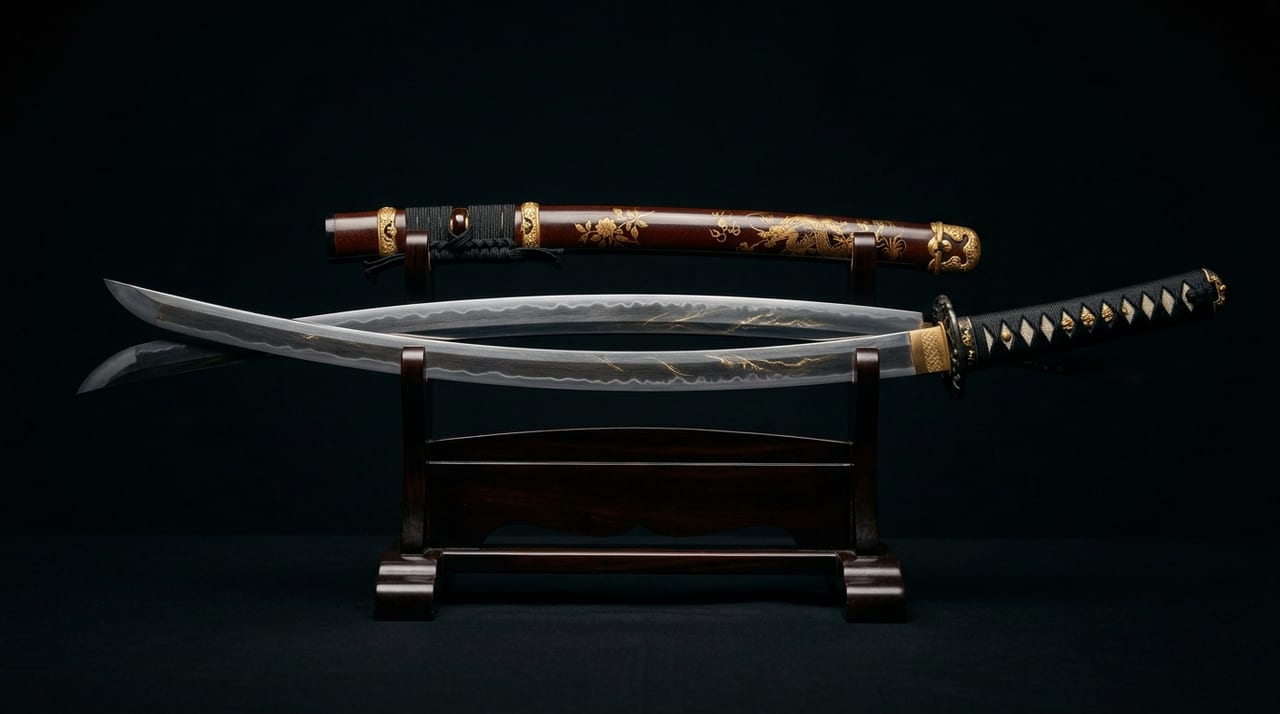
 * Image is for illustrative purposes only.
Odachi, Unsigned, Attributed to Bugo Tomoyuki
大太刀 無銘 伝豊後友行
Also known as: Odachi attributed to Bungo Tomoyuki, National Treasure with 180cm blade, Oyamazumi Shrine, Omori Hikoshichi
Description
This unsigned great sword (odachi/nodachi) is attributed to Bungo Tomoyuki, a swordsmith active in Bungo Province (modern Oita Prefecture) during the Nanbokucho period, who is remembered as one of the leading smiths of the Kyushu tradition. Confirmed signed works by Tomoyuki are extremely rare, but he was recognized for his ability to forge large, powerful blades of exceptional quality.
At 275 cm overall length with a blade measuring 180 cm — among the largest surviving Japanese swords — this blade exemplifies the "great sword" (nodachi) style that flourished during the violent civil wars of the 14th century. Such enormous blades were wielded by mounted warriors and were also prized as votive offerings to warrior-guardian shrines.
The sword's legendary connection is to the warrior Omori Hikoshichi, a samurai of Iyo Province (modern Ehime) who fought on the Ashikaga Takauji side at the Battle of Minatogawa in 1336, where Kusunoki Masashige was defeated and killed. In 1470 (Bunmei 2), Hikoshichi's grandson Omori Naoharu donated this blade along with its original nodachi mounting to Oyamazumi Shrine, together with a rice field endowment.
The steel is large-grained flowing itame, the hamon a ko-midare with gunome elements and a characteristic bo-hi groove. Despite its extraordinary size, the blade maintains structural integrity and balanced form — a testament to the technical achievements of Nanbokucho-period swordsmiths.
Designated an Important Cultural Property in 1901 and a National Treasure on February 8, 1958. The surviving original nodachi mounting (koshirae) is also designated an Important Cultural Property — making this one of the extremely rare cases where a great sword and its original mounting have survived together for over 600 years.
Legends & Stories
Traditionally attributed to the warrior Omori Hikoshichi, who fought at the Battle of Minatogawa (1336), and dedicated to Oyamazumi Shrine by his descendants. With a blade of 180 cm, it stands as one of the supreme specimens of the great-sword tradition born of the Nanbokucho civil wars.