New Arrivals — Browse our catalog for the latest authentic Japanese sword arrivals. Browse →
28th day of 2nd month, Tenshō 19 (1591)
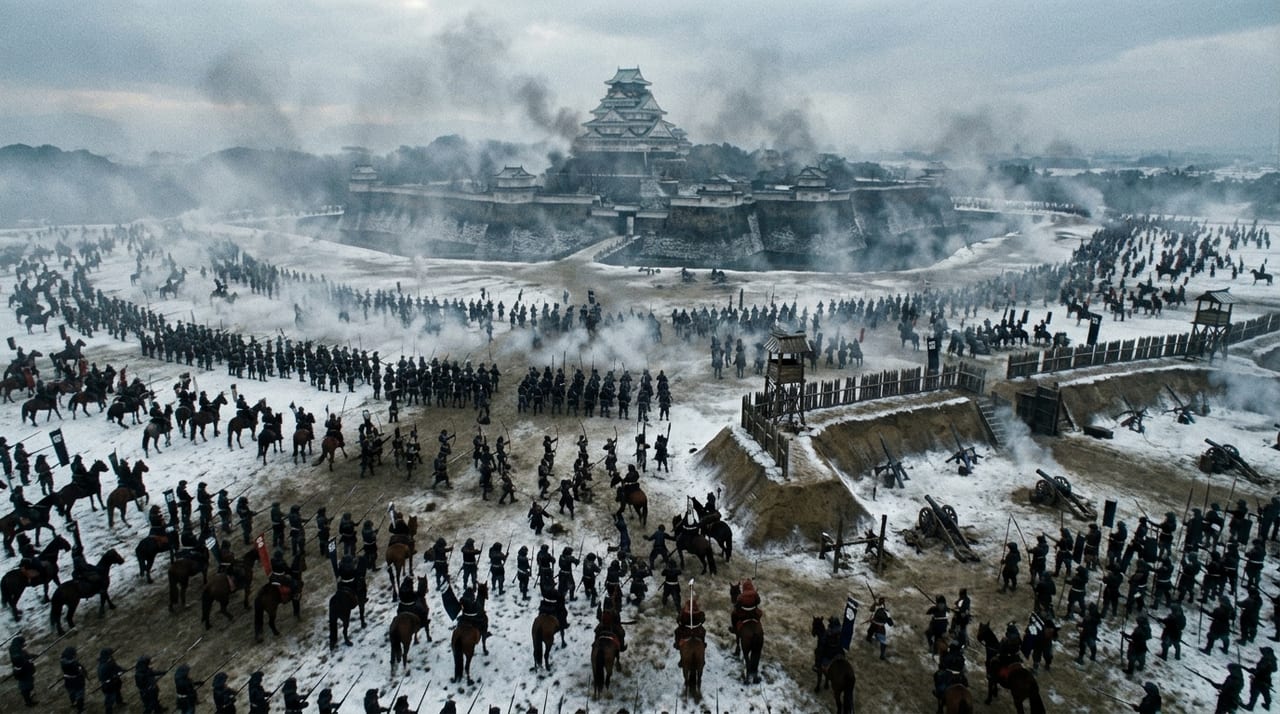
Rikyū's Juraku residence within the Jurakudai, Kyoto
Forces
Toyotomi Side (Order Issuer)
Sen no Rikyū Side
About 17 min read
Sen no Rikyū (1522–1591) was born into a merchant family (nayashū) in Sakai, Izumi Province. From childhood he studied the tea ceremony. Under Takeno Jōō he mastered the essence of wabi-cha (rustic tea), and he later refined that aesthetic to its utmost limit. History remembers him as the person who established a style of tea that embodies wabi and sabi.
Around 1583 (Tenshō 11), Rikyū became the chief tea master (sadō) to Toyotomi Hideyoshi. Hideyoshi skillfully used the tea ceremony as a political tool. Through tea gatherings to which powerful men were invited, he staged diplomacy, conciliation, and displays of power. Rikyū became an indispensable director of these events.
Hideyoshi's "portable tea room," known for its gold, was a flashy design that seems to stand at the opposite pole from Rikyū's aesthetic of wabi. Even so, Rikyū is said to have been involved in its design. As Hideyoshi's tea master, Rikyū directed numerous tea gatherings and built a vast network of contacts that included warlords, court nobles, and merchants. Over time, his influence extended into the political sphere.
From the Sengoku period through the Azuchi-Momoyama period, tea utensils were regarded as treasures of the warrior class, on a par with swords. "Famous tea utensils" (meibutsu chaki) were considered equal in value to territories and castles, and they were sometimes bestowed on daimyō as rewards. The "tea rule" (chanoyu no goseiji) promoted by Oda Nobunaga was carried on by Hideyoshi, and owning tea utensils became a symbol of authority.
Just as famous swords were believed to embody a smith's craft and a spiritual power, famous tea utensils were revered as concentrations of their maker's spirit and the spirit of their era. The "wabi tea bowls" that Rikyū favored were misshapen, subdued, and seemingly crude at first glance. They stood in stark contrast to ornate tachi mountings (koshirae), yet they were products of the same spirit, which pursued "genuine beauty."
A smith refines tamahagane steel from iron sand and forges a blade through repeated folding. In the same way, Rikyū embodied the philosophy of ichigo ichie ("one time, one meeting") by polishing the beauty that dwells in everyday vessels. A samurai polishes his sword at the risk of his life, and Rikyū polished beauty at the risk of his life. In that sense, Rikyū and the swordsmith stood on the same spiritual ground.
The world of swords has a "beauty of subtraction," in which excess decoration is pared away so that only the essence of the blade stands out. The bamboo tea scoop Rikyū chose, the unpretentious Shigaraki water jar, and the patched fukusa cloth were all products of the same aesthetic sense as the bare surface of a famous blade. Wabi tea and the sword may seem to belong to opposite worlds, but they fully agreed in their spirit of "concentration on essence."
Historians have not reached agreement on the true cause of the order for Rikyū's seppuku, and various theories are still debated. The main theories are summarized below.
In 1589 (Tenshō 17), the upper level of the Kinmōkaku gate at Daitokuji in Kyōto was completed through Rikyū's donation. A wooden statue of Rikyū, wearing setta sandals, was installed on that upper level. The gate is a place many people pass through, so each time Hideyoshi walked under it, he would pass beneath Rikyū's feet. He is said to have taken this as an insult and to have been furious.
When Rikyū, acting as an appraiser of tea wares, brokered tea utensils to his disciples, he is said to have set unreasonably high prices and enriched himself. Under Hideyoshi's regime, transparency in commercial dealings was an important political issue. According to this theory, Rikyū's conduct earned the ruler's distrust.
Another persistent theory holds that Rikyū refused to offer his daughter (or adopted daughter) to Hideyoshi, or that friction with Hideyoshi's close aides, who opposed Rikyū, was the cause. There is also a view that Rikyū's extensive network sometimes functioned as a "second center of power" alongside Hideyoshi's policies, and that this stirred Hideyoshi's suspicion.
In 1591, the year before the Bunroku campaign (1592), Hideyoshi was preparing to invade Korea. It is said that Rikyū's opposition to this plan triggered the affair, but the historical evidence for this is thin.
None of these theories has decisive documentary support, so the true cause of the seppuku remains a mystery. For that very reason, Rikyū's death has continued to powerfully stir the imagination of later cultural figures, including in Nogami Yaeko's novel and in numerous films. Rikyū's seppuku has remained a theme in Japanese culture that people keep returning to.
In the second month of 1591 (Tenshō 19), Rikyū was ordered by Hideyoshi to confine himself in Sakai. After a stay in Sakai, the order for seppuku came down shortly afterward.
On the day of his seppuku, Rikyū is said to have held a final tea gathering with his disciples. As Okakura Tenshin describes in The Book of Tea, Rikyū gave his tea utensils to the guests one by one as keepsakes. He kept only the tea bowl, which he smashed, saying, "This vessel must never again touch an unclean mouth." In that moment, the tea sage followed the logic of beauty to the end.
Rikyū died at the age of 70 by the traditional Japanese count. His death poem is as follows.
> 人生七十 力囲希咄 吾這寶劒 祖仏共殺
(Seventy years of human life. The phrase rikii-kitsu is sometimes read as a shout, but its interpretation has not been settled. With this precious sword, I cut down patriarch and Buddha alike.)
The appearance of the phrase "precious sword" (hōken) in a death poem is symbolic. Although Rikyū was a tea master, he deeply understood the spirituality of the sword. The aesthetic of wabi and the resolve of the blade share the same root in the two spiritual sources of Japan, bushidō and the Way of Tea. This death poem reads more like the words of a Zen monk or a warrior than those of a tea master. It expresses a state beyond life and death, which was the ultimate point Rikyū reached in the spirit of both tea and sword.
After Rikyū's death, his disciples formed a group of tea masters known as the "Seven Disciples of Rikyū" (Rikyū Shichitetsu), and they spread the wabi tea tradition across the land. Hosokawa Tadaoki (Sansai), Gamō Ujisato, and Furuta Oribe were renowned warriors who were also outstanding tea masters. They embodied the warrior's aesthetic, which valued swords and tea utensils equally.
Furuta Oribe succeeded Rikyū as tea instructor to Hideyoshi and then to the Tokugawa, and he developed a distinctive aesthetic known as "Oribe-gonomi." In 1615 (Keichō 20), Oribe too was ordered to commit seppuku, on suspicion of involvement in the Siege of Ōsaka. The tragedy of two generations of master and disciple both being ordered to die by seppuku embodies the eternal theme of the clash between power and aesthetic sensibility.
Even today, in the Reiwa era, the spirit of Sen no Rikyū's ichigo ichie and the spirit that dwells in each individual Japanese sword resonate deeply with each other. The sense of time stopping that a viewer feels when standing before a famous sword in a museum is essentially the same as the non-everyday stillness Rikyū sought in the tea room. Rikyū was born the son of a Sakai merchant and kept polishing beauty at the side of the ruler of the realm. Through his death, his life showed that the paths of the sword and of tea flow from the same source. Daimyō who collected tea utensils also loved swords, and warlords who loved famous swords also enjoyed tea. These two aesthetic sensibilities have always been two sides of one coin. Rikyū's seppuku, as a record of the moment when the logic of beauty was defended at the cost of life, remains at the very core of the spiritual history of the Japanese sword.
Hosokawa Tadaoki (1563–1646) was both one of Rikyū's most outstanding disciples and a renowned warlord who represented the period from the Sengoku through the early Edo era. Among the swords he owned is the "Kasen Kanesada," a blade by Izumi no Kami Kanesada (also written 之定), which is preserved at the Eisei Bunko. Tadaoki is also known for his tragic marriage to Gracia, and his life is a good example of how sword and tea were inseparably bound together in the spirit of the warrior.
Gamō Ujisato (1556–1595) was also a leading disciple of Rikyū. As lord of Aizu in Mutsu Province, he protected sword smiths. Under his rule, Aizu smiths developed, and it is said that the foundations of later Aizu swords were laid. That Rikyū died in 1591 and Ujisato died in 1595, so close together, shows how the cultures of tea and swords lived in the same spirit of the age.
In this way, Rikyū's disciples were not only bearers of the tea tradition but also carriers of sword culture. As the spirit of wabi joined with a discerning eye for swords, the warrior culture from the late Sengoku period into the early Edo period gained a rich depth. Rikyū's seppuku, as the death of a person standing at this cultural crossroads, is an event that must not be forgotten in the history of the Japanese sword.