New Arrivals — Browse our catalog for the latest authentic Japanese sword arrivals. Browse →
5th day of the 6th month, Hōji 1 (1247)
Kamakura (present-day Kamakura City, Kanagawa Prefecture)
Forces
Hōjō and Adachi clans (regent's faction)
Miura clan
About 15 min read
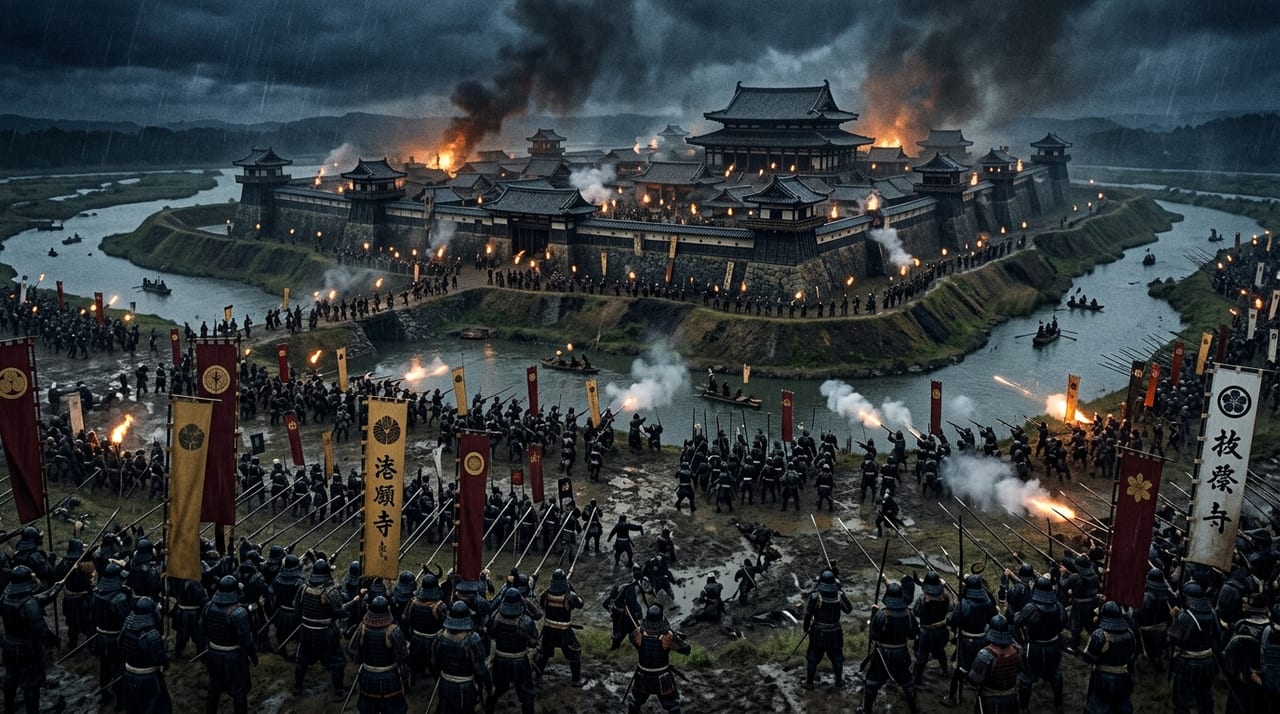
The Hōji Battle was an internal conflict within the Kamakura shogunate in which the Hōjō and Miura clans came to armed clash on the 5th day of the 6th month of Hōji 1 (1247). This incident, in which the Hōjō clan under Hōjō Tokiyori destroyed the Miura clan led by Miura Yasumura, is positioned as a turning point in the history of the Kamakura period. It was the political upheaval that decisively established the Hōjō clan's monopoly of power in the Kamakura shogunate.
The Miura clan was a prominent gokenin based on the Miura Peninsula in Sagami Province, and a warrior house of distinction that had been deeply involved in the founding of the shogunate since Minamoto no Yoritomo raised his army. Miura Yoshizumi (Yasumura's grandfather) took part in Yoritomo's rising together with his father, Yoshiaki, and afterward held an important position in the shogunate's politics. However, as the 13th century began and the Hōjō clan monopolized the regency and seized real control of shogunate politics, tension arose between the Hōjō and the Miura. From the time of Hōjō Yoshitoki (the early 13th century), purges of prominent gokenin were repeated within the shogunate. The Hiki clan (1203), the Hatakeyama clan (1205), and the Wada clan (1213) were destroyed one after another by the Hōjō. The Miura survived these purges and still held a force that could not be ignored within the shogunate. In the Wada Battle (1213), Yasumura's father, Yoshimura, colluded with the Hōjō clan to destroy Wada Yoshimori. The Miura therefore initially had a cooperative relationship with the Hōjō, but subtle rivalry over real power in shogunate politics continued.
In the 6th month of Hōji 1 (1247), tension between the young regent, Hōjō Tokiyori (then twenty years old), and Miura Yasumura reached its peak. Tokiyori's maternal grandfather, Adachi Kagemori, strongly advocated the subjugation of the Miura clan. On the 5th day of the 6th month, immediately after Tokiyori and Yasumura reached a settlement, Adachi forces raided Yasumura's residence, and armed clash broke out. Yasumura defended the residence, but it was set on fire, and he moved with his kin and retainers to the Hokkedō (Kamakura, Yoritomo's mausoleum). Against the overwhelming strength of the combined Hōjō and Adachi forces, however, the Miura were outnumbered, and Yasumura and more than 500 others took their own lives. The battle caused the near-total destruction of the Miura clan and eliminated the independent power of the prominent gokenin from the Kamakura shogunate. After this upheaval, which made the Hōjō clan's power unshakable, the shogunate's politics came to function almost as an autocracy of the Hōjō clan.
The mass suicide of Miura Yasumura and his kin, who had barricaded themselves in the Hokkedō, was remembered by later generations as an aesthetic of the warrior's death. To end one's life as a warrior in front of one's lord's spirit, at a sacred site, namely Yoritomo's mausoleum, was received as a symbol of the honor code of warrior society. The notion that "the warrior dies with grace," an idea that became the foundation of the later culture of seppuku, was gradually institutionalized and stylized through repeated collective self-destruction in power struggles within the shogunate, such as the Hōji Battle. In suicide by blade, in which a warrior cut open his own belly, the sword took on a spiritual meaning beyond that of a mere weapon: a tool for mediating death and liberating the soul. As this belief took hold, the demands placed on the quality and spirituality of the swords carried by warriors grew, and a distinctive spiritual culture formed in which swordsmiths were asked to forge "blades in which a soul resides."
After the Hōji Battle, with the Hōjō clan's complete grip on real power in the shogunate, Kamakura's sword culture developed uniquely under the Hōjō clan's tastes and patronage. Successive regents, including Hōjō Tokiyori, Tokimune, and Sadatoki, valued swords as important symbols of warrior authority. In Kamakura, tachi made by master smiths of Yamashiro, Bizen, and Yamato circulated. Among the swordsmiths active in the age of the Hōji Battle, the Bizen Fukuoka Ichimonji school (Yoshifusa, Sukemune, and others) and the Yamashiro Awataguchi school (Kunitsuna, Arikuni, and others) are known, and Awataguchi Kunitsuna is said to have been invited to Kamakura. The swords these smiths forged are the supreme works of their era, actually worn and used by Kamakura warriors, and are preserved today in museums as National Treasures and Important Cultural Properties. In particular, the majestic tachi of the Bizen Ichimonji school embody the warrior aesthetic of the mid-Kamakura period. Together with the later development of the Sōshū-den, they became the foundation for the golden age of Japanese swords.
After the Hōji Battle, the Hōjō clan's private retainer corps, the miuchibito, rose to prominence in the Kamakura shogunate and formed a dual power structure alongside the traditional gokenin system. As direct retainers of the Hōjō clan, the miuchibito held special privileges and played a role in curbing the political voice of the gokenin in shogunate politics. This institutional change strengthened, within warrior society, the notion of "loyalty based on a personal relationship with one's lord," and made the political meaning of gifting and bestowing swords even more significant. The bestowal of swords from the regent to the miuchibito functioned as a sign of an oath of loyalty and a token of favor, and became a ritual tool for maintaining the Hōjō clan's power. Sword circulation in Kamakura during this period developed in a form in which its aspect as a practical military implement and its aspect as a gift symbolizing political bonds were inseparably joined. The changes in power structure created by the Hōji Battle further deepened the culture in which swords functioned as political mediators in warrior society. The destruction of the Miura clan, a powerful gokenin house, accelerated the concentration of power in the Kamakura shogunate. At the same time, it is deeply valued in the context of sword history as a historically important event that established, as a core value of warrior society, the notion of dying for honor with a blade in hand.
In the Kamakura shogunate after the Hōji Battle, the concentration of power in the Hōjō clan also brought major changes to sword culture. In the latter half of the 13th century, master smiths were invited to Kamakura from Kyoto and Bizen, and the finest swords were made for the shogun and the regent. During this period, Awataguchi Kunitsuna of Yamashiro, and Ichimonji Sukezane and Saburō Kunimune of Bizen, are said to have gone down to Kamakura. Under their influence, Shintōgo Kunimitsu, founder of the Sōshū smiths, appeared. This was the budding of the distinctive Kamakura sword style that would later mature as the Sōshū-den. The characteristics of the Sōshū-den lie in its bold hamon, which features dramatic ōmidare and deep nioi, with fine ji-nie appearing in the jigane, a majestic hamon. This sword culture, nurtured by the outstanding statesmen Hōjō Tokiyori and Tokimune, built the soil from which the supreme smiths Masamune and Sadamune later emerged. The Hōji Battle, despite its tragic outcome, can also be seen as a historic turning point that prepared, on the stable power base of the Hōjō clan, the flowering of the Sōshū-den, the most brilliant period in the history of Japanese swords.
Among the members of the Miura clan destroyed in the Hōji Battle, some surrendered to the Hōjō clan and survived. The former domains of the Miura clan were seized and redistributed by the Hōjō clan. Records of the sword collection the Miura clan lost in the Hōji Battle are scarce. However, the many famous swords the Miura clan had accumulated over several decades since the founding of the shogunate are considered important evidence for the history of swords in the early to middle Kamakura period. They either passed into Hōjō hands or were lost in the fighting. The destruction of the Miura clan meant not only the disappearance of a powerful gokenin house, but also the severance of warrior sword culture and martial traditions that had been passed down for over a century. From the perspective of the transmission of swords in warrior society, it was an important historical loss.