New Arrivals — Browse our catalog for the latest authentic Japanese sword arrivals. Browse →
c. 1180–1192 CE (Jishō 4 – Kenkyū 3)
Kyoto (Imperial Court) → Kamakura (Shogunate)
Forces
Minamoto Clan and Warrior Government
Cloistered Court and Aristocratic Government
About 14 min read
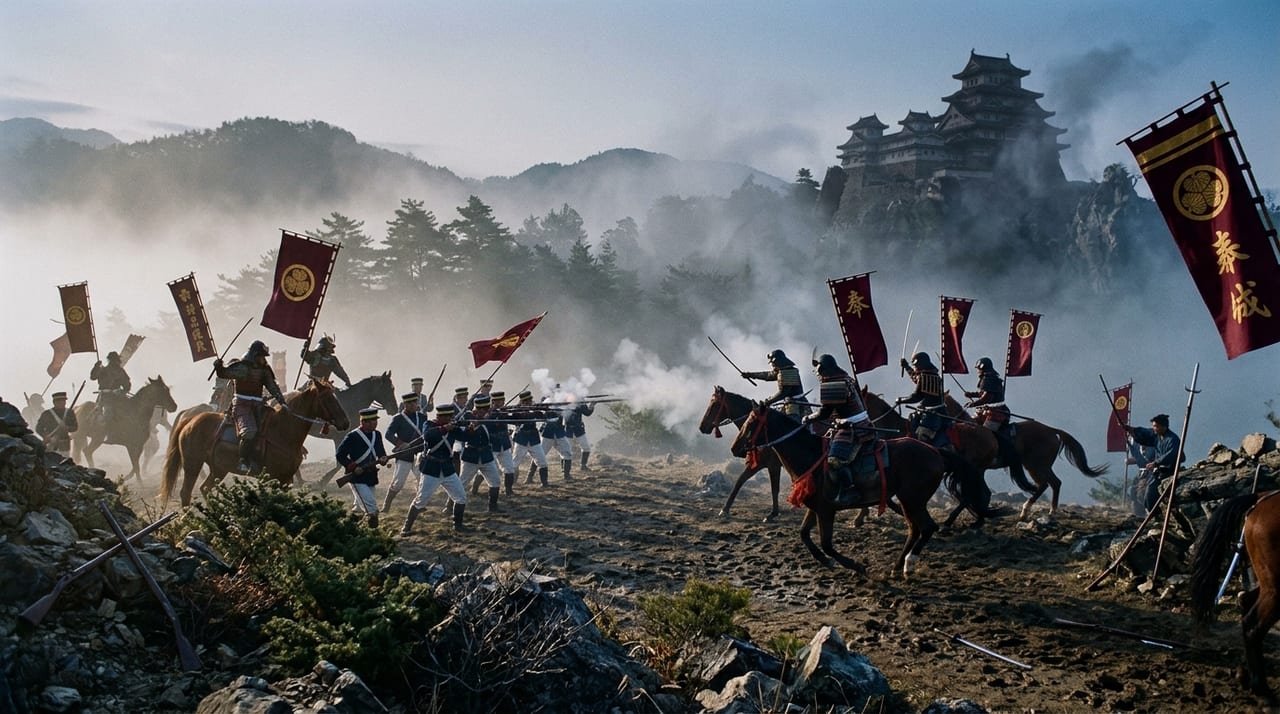
The End of the Aristocratic Age and the Transition to Warrior Rule (kizoku-jidai shūen, buke seiken e no ikō) refers to the fundamental transformation of Japan's governing system. It began with Prince Mochihito's ryōji and Minamoto no Yoritomo's rising in the 4th year of Jishō (1180), passed through the destruction of the Taira at Dan-no-ura in the 2nd year of Genryaku (1185), and reached Yoritomo's appointment as Sei-i Taishōgun in the 3rd year of Kenkyū (1192). This roughly twenty-year span was a great turning point in history. The long-standing ritsuryō and insei rule centered on the court nobility (kuge, court nobility) came to an end, and the age of the warrior (mononofu) began. In this transitional period, Japanese swords (nihontō) rose beyond mere weapons to become cultural symbols at the core of the warrior's status, office, spirit, and sense of beauty.
In late Heian Japan, Retired Emperor Go-Shirakawa continued to hold real power over the court through skillful political maneuvering. However, the foundation of that power depended on warrior bands with military strength, and it contained structural contradictions. Taira no Kiyomori stood at the apex of the court as the first warrior to become Daijō-daijin (Chancellor of the Realm), but this itself showed an essential transformation of the ritsuryō system. In the 4th year of Jishō (1180), Prince Mochihito, a son of Retired Emperor Go-Shirakawa, issued a ryōji to the Minamoto clans in the provinces calling for the subjugation of the Taira. Triggered by this, Minamoto no Yoritomo of Izu, Minamoto no Yoshinaka (Kiso Yoshinaka), and others rose in succession, and the Genpei War (the Jishō–Juei War) spread across the country. What deserves the most attention in this course of civil war is the process by which the "authority of words" of the nobility (inzen, kansenji) was rendered powerless by the "authority of the sword" of the warriors. From the time he raised arms, Minamoto no Yoritomo placed the "logic of the warrior" at the center and built his own governing institutions: the gokenin system, the jitō system, and the shugo system. These institutions eroded from the side the governing principles of the nobility, namely the ritsuryō official system and the estate (shōen) system. This was an institutional revolution, and it gave form to the warrior principle that "whoever holds the sword controls land and people."
In the 1st year of Bunji (1185), Minamoto no Yoritomo obtained from the court the right to appoint shugo and jitō, and thereby acquired an effective nationwide governing apparatus. In the 3rd year of Kenkyū (1192), he was appointed Sei-i Taishōgun, and the system of the Kamakura shogunate (Kamakura-dono, the warrior government of the East) was completed. The gokenin system Yoritomo organized was a reciprocal vassal system in which the lord (Kamakura-dono) and the retainers (gokenin) were bound by a relationship of go'on and hōkō (favor and service). In an emergency, gokenin were obligated to take up arms and hurry to battle in response to the call of "Iza Kamakura," and in return they received confirmation of their domains and grants of new fiefs.
Minamoto no Yoritomo actively used swords as political symbols. The Minamoto clan's heirloom long swords, Hizamaru and Higekiri, were repositioned in Yoritomo's era as "the treasured swords of the Minamoto" and were treated as the material basis of warrior authority. Hizamaru and Higekiri are famous blades described in the Tsurugi no Maki (Book of Swords) of The Tale of the Heike as Minamoto clan heirloom long swords commissioned by Minamoto no Mitsunaka. That tradition also served to historically legitimize Yoritomo's authority.
Another important change occurred in this transitional period. It was the budding of the concept of the union of swords with the spiritual and ethical discipline of the warrior. From the late Heian to the early Kamakura period, warriors came to associate deeply with Buddhism, especially Zen and nenbutsu, and began to link spiritual themes of life and death, impermanence, and resolve with their daily martial training. The activities of the priest Chōgen, who promoted the rebuilding of the Great Buddha Hall of Tōdai-ji, and of Eisai and others, who brought Zen from Song China, had an affinity with the spiritual discipline of warriors and sowed the seeds of the later philosophy of bushidō. It was precisely in this transitional period that acts such as caring for swords, worshipping them, and handing them down began to take on the meaning of an expression of a warrior's spirituality, resolve, and sincerity, beyond mere practical use.
In the Heian period, swords held by the court nobility (kuge) carried meaning as visual ornaments of rank and office, while for warriors they were tools of actual combat. In the insei period, tachi were dedicated to shrines and temples such as Kasuga Taisha. However, after the warrior government was established in the Kamakura period, the cultural status of swords changed fundamentally. Swords rose from ornaments of aristocratic culture to the spiritual core of warrior culture, serving as both "proof of a warrior's existence" and "symbol of warrior authority." This great transformation was a revolution in values at the root of Japanese culture, going beyond a mere transfer of political power. The historical significance of the change, from "public swords" managed by the ritsuryō state to "swords as souls," which warriors individually refined, prayed over, and handed down, is recorded as a fundamental transformation that runs through all of today's Japanese sword culture, museums, and appreciation culture.
Even after the Kamakura shogunate was established, the tension between the court (the cloistered court) and the shogunate was not completely resolved. In the 3rd year of Jōkyū (1221), Retired Emperor Go-Toba launched the Jōkyū War and tried to overthrow the shogunate, but the revolt was suppressed through a speech by Hōjō Masako and the solidarity of the eastern warrior bands. With the defeat in the Jōkyū War, the military power of the court was decisively lost, and the superiority of the warrior government was established in both name and substance. The historical transformation depicted in this event, the transition from the aristocratic age to warrior rule, thus overlapped across three dimensions: political history, cultural history, and the history of swords. Its completion was witnessed through the Jōkyū War.
Among the swords designated as Important Cultural Properties and National Treasures held in today's national museums and sword museums, works from the early Kamakura period (late 12th to early 13th century) were made precisely in this transitional period. The tachi of Yamashiro swordsmiths such as Awataguchi Kuniyasu, and the works of outstanding swordsmiths such as Bizen's Ichimonji Norimune, convey to the present day the peak of swords in the transition from aristocratic culture to warrior culture. The very fact that these masterpieces have been preserved and handed down to the present is itself proof of the value, established in this transitional period, that "swords are the souls and cultural heritage of warriors." The great historical turn of the end of the aristocratic age and the transition to warrior government permanently raised the cultural status of Japanese swords. It is an imperishable event that provided the historical basis for today's appreciation and collecting culture of Japanese swords, a theme that sword enthusiasts and researchers continue to discuss in depth even today.